Holidays in St Agnes, Cornwall – Trevaunance Cove, the Beacon & the Mining Coast

St Agnes & Trevaunance Cove
On This Page
- Holidays in St Agnes
- Best Time to Visit
- Trevaunance Cove
- St Agnes Beacon, Wheal Coates & Chapel Porth
- Things to Do in St Agnes
- History of St Agnes
- Key Buildings & Landmarks
- Notable People
- Local Events & the Bolster Legend
- Places near St Agnes
- Visitor Information
- Stay & Explore near St Agnes
- Family Holidays & Short Breaks
- Frequently Asked Questions

HOLIDAYS IN ST AGNES
St Agnes is a large, characterful village on Cornwall’s north coast, about five miles north of Redruth and ten miles south-west of Newquay. It climbs the valley from the sea at Trevaunance Cove to the old centre of Churchtown, under the great whaleback hill of St Agnes Beacon, and its Cornish name, Breanek, is thought to refer to that hill.
Few places in Cornwall show the county’s mining past so vividly. The cliffs and valleys around the village are dotted with engine houses, chimneys and old workings, and the whole coast is part of the Cornwall and West Devon Mining Landscape World Heritage Site. The most famous ruins of all, the clifftop engine houses of Wheal Coates, stand above Chapel Porth, a short walk from the village.
The village itself is full of interest, from the parish church and the steep row of 18th-century cottages known as Stippy Stappy to independent shops, galleries, cafés and pubs. St Agnes was the inspiration for “St Ann’s” in Winston Graham’s Poldark novels, and the charity Surfers Against Sewage is based here.
Down at the coast, Trevaunance Cove is the village beach – a sandy cove between towering cliffs, with lifeguards in summer, good surf, rock pools and the remains of a long-lost harbour. Along the coast are the National Trust cove of Chapel Porth, the rocky inlet of Trevellas Porth and the Blue Flag beach at Porthtowan.
For walkers, St Agnes is one of the best bases in Cornwall. The South West Coast Path runs around St Agnes Head between Trevaunance Cove and Chapel Porth, and on towards Perranporth and Porthtowan, while inland paths explore the mining valleys and the heath of the Beacon.
The village centre, around Vicarage Road and Churchtown, has a lively, independent feel. There are local shops and a SPAR, a pharmacy and the village surgery, art galleries and craft shops reflecting the many artists and makers who live in the parish, and a good choice of pubs, cafés and restaurants. The volunteer-run St Agnes Museum on Penwinnick Road tells the story of the parish’s mines, ships and people, and the village’s amateur theatre group, the St Agnes Players, stages plays each summer.
St Agnes also makes an excellent base for exploring Mid and West Cornwall. Perranporth, with its three miles of sand, is just along the coast, Truro – Cornwall’s cathedral city – is about eight miles away, and Newquay about ten. Bus route 87 links the village with all three, and the A30 is only a few minutes’ drive, making day trips to St Ives, Falmouth and the Eden Project straightforward.
Accommodation ranges from village cottages and apartments to hotels, B&Bs and holiday parks – see St Agnes holiday cottages and holidays and short breaks in St Agnes.
Best Time to Visit St Agnes
Late spring is a lovely time, with gorse and heather on the Beacon, wildflowers on the cliffs and the village’s Bolster Day at Chapel Porth. Summer brings lifeguards to the beaches, carnival week and the busiest days at Trevaunance Cove, where parking is very limited – walk down from the village if you can.
September and October offer warm seas, good surf and quieter paths. In winter the coast is wild and dramatic, perfect for brisk walks to Wheal Coates and cosy evenings in the village pubs.
↑ Back to top
TREVAUNANCE COVE
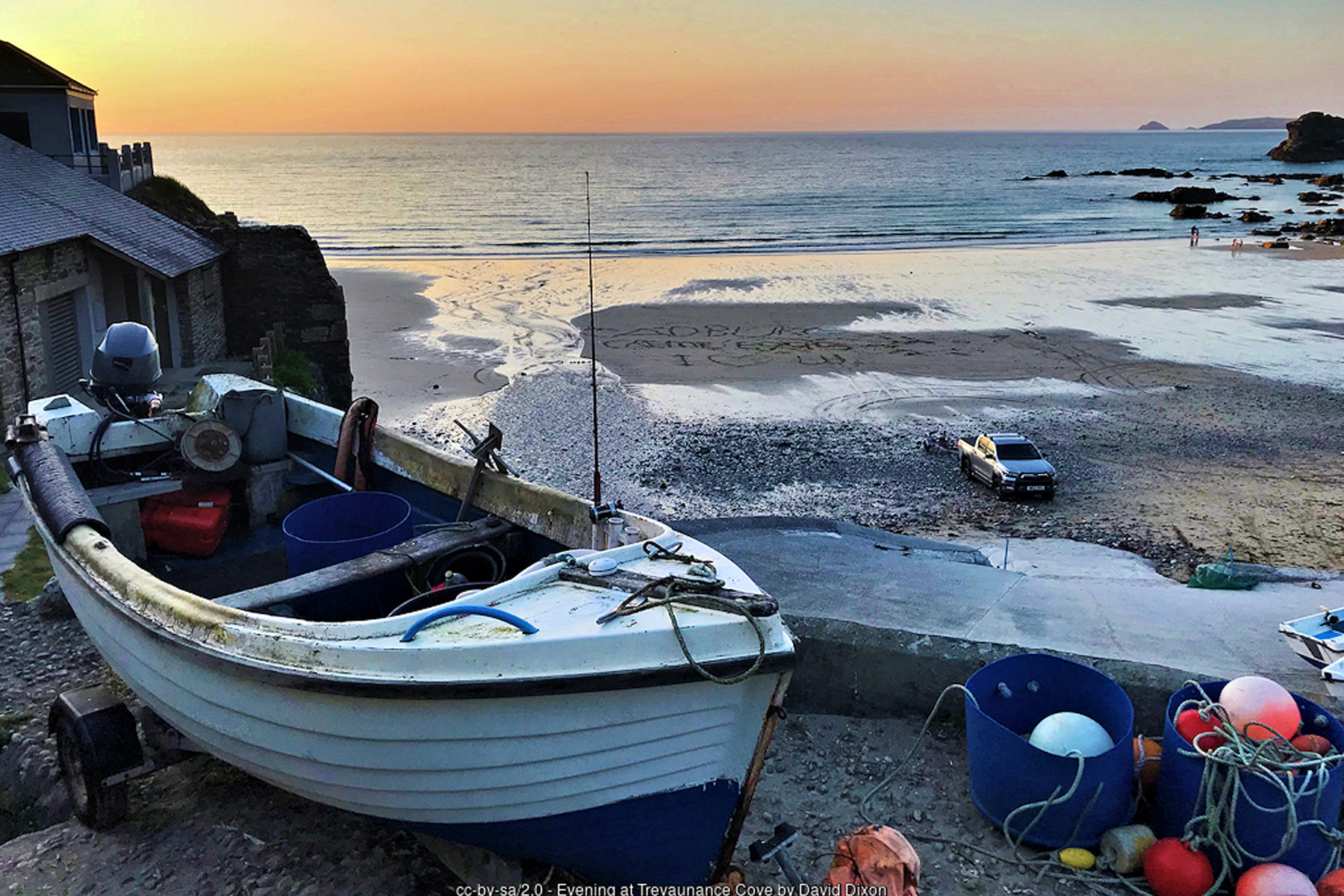
Trevaunance Cove lies at the foot of the valley below the village, reached by a steep lane from Churchtown or down Stippy Stappy. The lower beach is golden sand, with a shingle ridge at high water, a stream that small children love, and rocks and pools exposed on either side at low tide. It faces north-west into the Atlantic and is a popular surf beach, with RNLI lifeguards in season – strong currents can run here, so always swim and surf between the flags.
The cove is also a geological Site of Special Scientific Interest: two ore-bearing mineral veins can be seen in the cliff, a reminder of the mining that once filled the valley. Beside the beach are a beach café and restaurant, surf hire and toilets, and up the lane on Quay Road stands the Driftwood Spars, an 18th-century inn with its own brewery.
The Driftwood Spars is one of the best-known pubs on the north Cornish coast. Its Grade II listing describes an 18th-century building, extended in the early 19th century, that was first a public house associated with the mines and later used as sail and net lofts – though the pub itself traces its story back to a 17th-century mine warehouse and sail loft. Built of granite, slate and old ships’ timbers (the spars that give it its name), it keeps its rough-hewn beams inside. Today it is home to the Driftwood Brewery, which brews its own Cornish ales on site, and offers food, bed and breakfast rooms, an upstairs restaurant with sea views, live music at weekends and beer festivals through the year.
Parking at the cove is very limited and fills early in summer. Allow for a steep walk back up to the village. At low tide you can scramble around the rocks to Trevellas Porth, but check the tide times carefully, as the way back can be cut off. For full beach details, see our Trevaunance Cove beach guide.
↑ Back to top
Trevaunance Cove at a glance
Lifeguards: RNLI, in season
Parking: very limited at the cove (EV chargers on Quay Road)
Facilities: café, restaurant, surf hire, toilets
Surf: good, with strong currents at times
Nearby: Driftwood Spars inn on Quay Road
ST AGNES BEACON, WHEAL COATES & CHAPEL PORTH
St Agnes Beacon rises 192 metres (629 feet) above the village, a heath-covered hill in the care of the National Trust. The short climb from the car parks on Beacon Drive is rewarded with one of the widest views in Cornwall, along the north coast and inland across the old mining country, with Bronze Age barrows on the summit.
As its name suggests, the hill was long used for signal fires, and it was one of the hilltops in the chain of beacons lit across Cornwall to pass news and mark celebrations – a tradition later revived by the Old Cornwall Societies with their Midsummer fires. The summit is open heathland of heather and gorse, colourful in late summer, and paths lead down from it to the coast path, so the Beacon is easily combined with a walk to Wheal Coates and Chapel Porth.
On the cliffs below the Beacon stand the engine houses of Wheal Coates, also cared for by the National Trust. The tall engine house of Towanroath shaft, perched almost at the cliff edge above the sea, is one of the most photographed sights in Cornwall. A clifftop path links the mine with St Agnes Head, where seabirds nest and seals and dolphins can sometimes be seen.
The mine has a long history. Records suggest mining on the site as early as 1692, and the present Wheal Coates opened in 1802, reaching full production by 1815 and employing up to 140 people at its peak. It was sold in 1844 and allowed to flood, then reopened in 1872 – the year the Towanroath pumping engine house was built to drain the 600-foot shaft beside it. Tin was the main product. The mine closed when the price of tin fell in 1889, and after a final, unsuccessful attempt to rework it between 1911 and 1913 it closed for good in 1914.
Today the ruins are among the best-preserved mine buildings on the Cornish coast. As well as Towanroath, the site includes the Old and New Whim engine houses, which hauled ore and men up the shafts, a stamps house where the ore was crushed, and a calciner of 1910–1913 used to roast tin ore to remove impurities such as arsenic. The buildings were stabilised in 1986, are Grade II listed and form part of the World Heritage Site; the paths between them are rough and the shafts are capped, so keep to the marked tracks and take care near the cliff edge.
Below Wheal Coates lies Chapel Porth, a small National Trust cove at the foot of a mining valley, with a beach café and a car park. At low tide its sands join those of Porthtowan to the south-west. Inland, the remains of the Bolster Bank, an earthwork thought to date from the Iron Age or the early medieval period, run across the parish.
The beach at Chapel Porth disappears completely at high tide, so it is best visited as the tide drops, when caves and rock pools appear below the cliffs; check tide times, as parts of the cove can be cut off. The little National Trust beach café is known for its “hedgehog” – vanilla ice cream topped with clotted cream and roasted hazelnuts. Lifeguards patrol in the main season, dogs are not allowed on the beach from Easter to September, and the cove hosted the World Bellyboard Championships from 2003 to 2015. The lane down to the car park is narrow, so arrive early on busy summer days.
Chapel Porth is also the setting of St Agnes’s best-known legend. The giant Bolster, said to be able to stand with one foot on St Agnes Beacon and the other on Carn Brea six miles away, fell in love with St Agnes and plagued the people of the parish. She agreed to his love only if he filled a hole in the cliff at Chapel Porth with his blood – but the hole led to the sea, and the giant bled to death. Local tradition says the red streaks on the rocks are his blood, and every May Day weekend the village re-enacts the story at Bolster Day, with a giant puppet procession from the village to the clifftops.
↑ Back to top


THINGS TO DO IN ST AGNES
St Agnes offers a rare mix: beaches and surf, some of Cornwall’s finest cliff walking, mining heritage, and a lively village with shops, galleries and good places to eat.
For families, the beaches, rock pools and stream at Trevaunance Cove, the Beacon and the St Agnes Museum make for easy days out. On rainy days, the museum, the village’s galleries and the attractions of Truro and Newquay are all close by.
For walkers, the circuit from Trevaunance Cove over St Agnes Head to Wheal Coates and Chapel Porth is a classic. Here are some of the best things to do in and around St Agnes.
- Spend a day at Trevaunance Cove – Trevaunance Cove beach guide.
- Walk to Wheal Coates and Chapel Porth along the coast path.
- Climb St Agnes Beacon for huge views along the coast.
- Follow our St Agnes tin mines walk – St Agnes walk.
- Visit the St Agnes Museum on Penwinnick Road, run by volunteers, for mining, maritime and local history.
- Walk down Stippy Stappy and explore the old village of Churchtown.
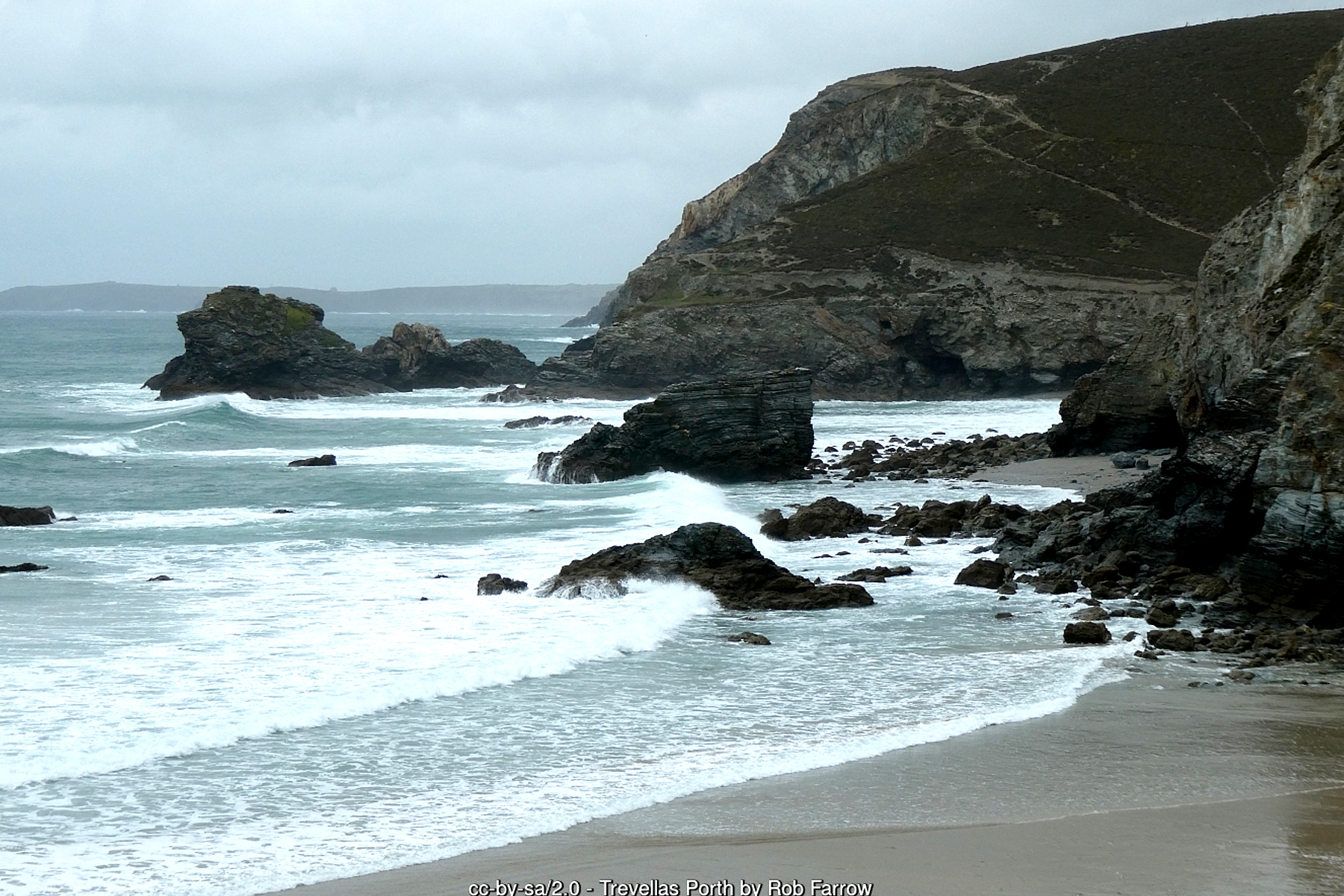
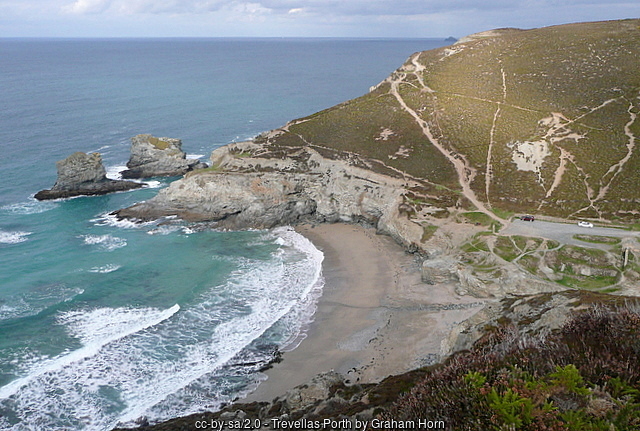
- Explore Trevellas Porth and the Blue Hills valley – Trevellas Porth guide.
- Surf at Trevaunance Cove or the Blue Flag beach at Porthtowan.
- Walk the coast path to Perranporth – see our Perranporth guide.
- Enjoy a pint at the Driftwood Spars, the 18th-century inn above the cove.

HISTORY OF ST AGNES
Flint tools show that people lived around St Agnes some seven thousand years ago, and Bronze Age barrows crown the Beacon. In the Middle Ages the village grew up around its church at Churchtown; the present church was built around 1482 as a chapel of ease, became a parish church in 1846 and was restored in 1848, its spire being rebuilt in 1905.
The great story of St Agnes is mining. Tin and copper were worked here for centuries, and by the mid-19th century the parish was full of mines – Wheal Kitty, Polberro, Wheal Coates, Blue Hills, Wheal Towan and many more. Ore was shipped from the cove to Swansea for smelting, and ships returned with coal. Mining had largely ended by the 1920s, but its landscape survives, and it is now protected as part of the World Heritage Site.
Trevaunance harbour has a dramatic history of its own. The Tonkin family, lords of the manor of Trevaunance, tried to build a harbour in the cove in 1632, 1684 and 1699 – the last attempt with Henry Winstanley, engineer of the first Eddystone Lighthouse – but each was destroyed by the sea, Winstanley’s in 1705. Later efforts cost the family dearly. A new granite harbour built at the end of the 18th century served the copper trade and a busy pilchard fishery, until its walls were destroyed by storms during the First World War. Today only fallen blocks of granite and traces of the old quay remain below the cliffs.
↑ Back to topSt Agnes – key dates
c.1482 – St Agnes church built as a chapel of ease
1632, 1684, 1699 – Tonkin harbour attempts
1705 – storm destroys Winstanley’s harbour
1761 – painter John Opie born in the parish
Late 1700s – new harbour built at Trevaunance
1846 – St Agnes becomes a parish
1903–1963 – St Agnes railway station open
1915–17 – harbour destroyed by storms
1990 – Surfers Against Sewage founded
KEY BUILDINGS & LANDMARKS
- St Agnes Church – Grade II listed, built around 1482, restored in 1848 by Piers St Aubyn, with its spire rebuilt in 1905.
- Stippy Stappy – the steep terrace of 18th-century cottages running down from Churchtown towards Quay Road.
- The Driftwood Spars – a Grade II listed 18th-century inn on Quay Road, extended in the early 19th century and later used as sail and net lofts, now an inn with its own brewery.
- Wheal Coates engine houses – the 19th-century engine houses on the cliffs above Chapel Porth, cared for by the National Trust.
- St Agnes Beacon – the 192-metre National Trust hill above the village, with Bronze Age barrows on its summit.
- St Agnes Museum – the volunteer-run parish museum on Penwinnick Road.
NOTABLE PEOPLE CONNECTED WITH ST AGNES
- John Opie (1761–1807) – the portrait painter, known as “the Cornish Wonder”, born in the parish of St Agnes, who became a Royal Academician in London.
- Thomas Tonkin (1678–1742) – the Cornish historian, of the Tonkin family of Trevaunance, whose family spent heavily on the harbour.
- John Passmore Edwards (1823–1911) – the journalist and philanthropist, born at Blackwater in the parish, who funded libraries, hospitals and institutes across Cornwall and London.
- Winston Graham (1908–2003) – the author of the Poldark novels, who lived along the coast at Perranporth and drew on St Agnes for his fictional “St Ann’s”.
LOCAL EVENTS & THE BOLSTER LEGEND
St Agnes’s best-known legend is that of Bolster, a giant who terrorised the parish. He fell in love with Agnes, who asked him to prove his love by filling a small hole in the cliff at Chapel Porth with his blood. The hole had a crack leading to the sea, so the giant bled to death – and the red-stained rocks of Chapel Porth are said to mark the spot. The legend is re-enacted each year with giant puppets on Bolster Day.
- Bolster Day (May, the Sunday before the late May bank holiday) – the giant’s story performed with puppets and music at Chapel Porth.
- St Agnes Carnival (August) – carnival week in the village, with a procession and events.
- Lifeboat Day and Victorian Fair Day (summer and winter) – village events through the year.
- St Agnes Players (summer) – summer plays by the village’s amateur theatre group.
Dates change from year to year – check our Cornwall events guide for current dates.
↑ Back to top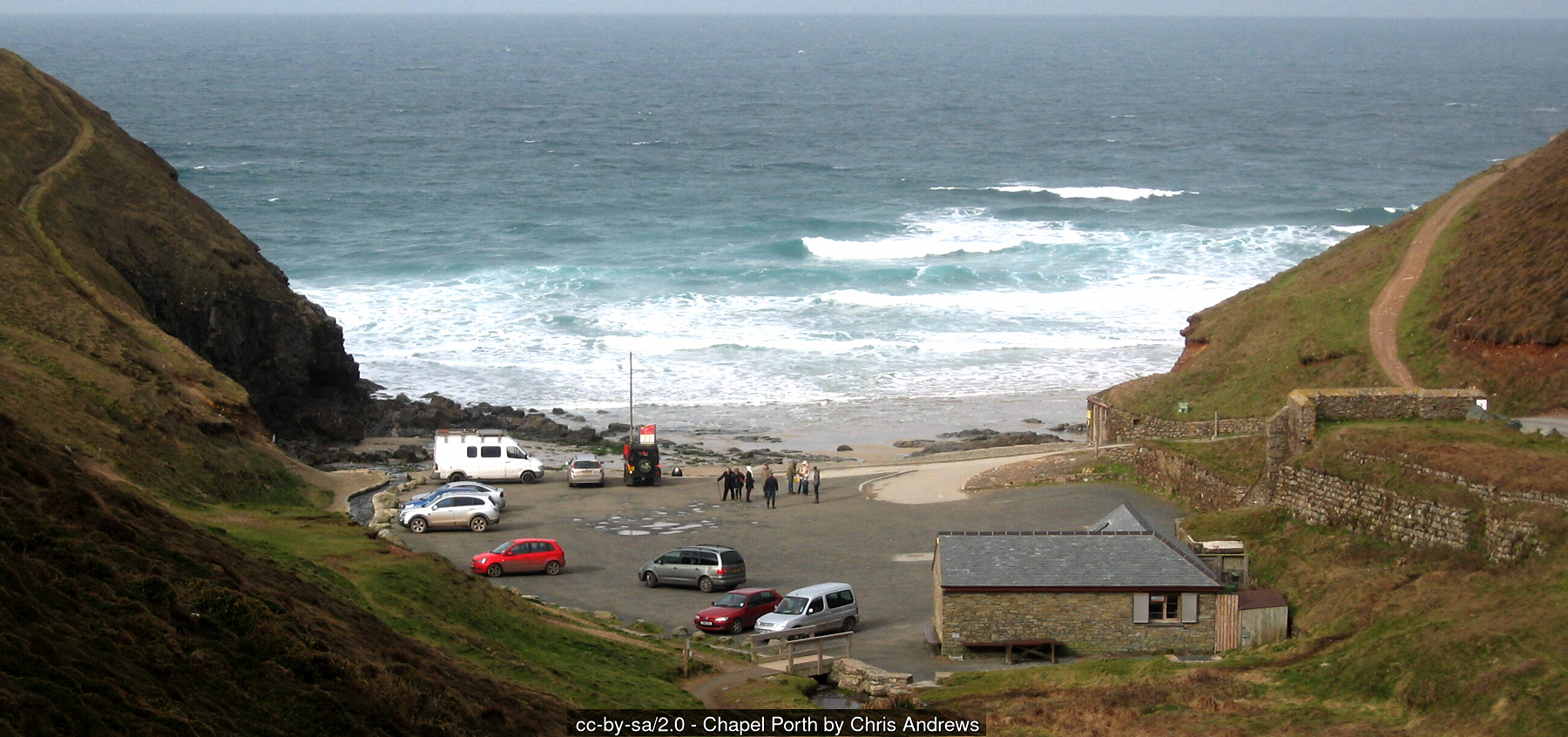
PLACES NEAR ST AGNES
- Porthtowan – the Blue Flag surf beach, about 2 miles south-west.
- Perranporth – three miles of sand, about 3 miles north-east.
- Holywell Bay and Crantock – further up the coast towards Newquay.
- Newquay – Cornwall’s surf capital, about 10 miles north-east.
- Truro – Cornwall’s cathedral city, about 8 miles south-east.

VISITOR INFORMATION
Parking & EV Charging
There is a public car park in the village centre, and small car parks at Trevaunance Cove, on Beacon Drive for St Agnes Beacon and Wheal Coates, and at Chapel Porth (National Trust). Parking at the cove and Chapel Porth is very limited and fills early in summer; the village lanes are narrow and steep. Check parking signs for charges and Blue Badge rules.
Electric vehicle charging:
- Quay Road, Trevaunance Cove – fast and rapid chargers (Be.EV), TR5 0RT
- Tesco Superstore, Tolgus Hill, Redruth – fast chargers (Pod Point), TR15 1AX
Bus & Train
Transport for Cornwall bus route 87 links St Agnes with Truro (via Royal Cornwall Hospital) and with Perranporth and Newquay, roughly hourly during the day. The nearest railway stations are Truro and Redruth, on the main line between Penzance and Plymouth. Check timetables before you travel.
Facilities & Supermarkets
The village has a good range of shops, a pharmacy, galleries, cafés and pubs, with public toilets in the village and at Trevaunance Cove. For everyday shopping:
- SPAR – 57A Vicarage Road, St Agnes TR5 0TH
- Tesco Superstore – Tolgus Hill, Redruth TR15 1AX
- Morrisons – Pool, Redruth TR15 3NH
Cafés & Restaurants
The Driftwood Spars on Quay Road is an 18th-century inn with its own brewery, and there is a café and restaurant beside the beach at Trevaunance Cove. The village centre has pubs, cafés and restaurants, and the Chapel Porth Beach Café serves the National Trust cove below Wheal Coates.
Health
The village GP is St Agnes Surgery, Pengarth Road, St Agnes TR5 0TN, and there is a pharmacy on Vicarage Road. The nearest Minor Injury Unit is at Camborne Redruth Community Hospital. Call NHS 111 for urgent advice and 999 in an emergency – ask for the Coastguard at sea or on the cliffs. The nearest A&E is the Royal Cornwall Hospital, Truro, served by bus route 87.
Disabled Access
St Agnes is a hilly village: the lanes down to Trevaunance Cove and Stippy Stappy are steep, and parking at the cove is very limited. The village centre is easier going. The National Trust car parks on Beacon Drive give level views over the coast and Wheal Coates without a long walk, though paths onto the heath and cliffs are rough and uneven.
Vets & Dogs
There are veterinary practices in Truro, Redruth and the surrounding towns – use the RCVS directory to find the nearest and out-of-hours care. Dogs are banned from Chapel Porth between 10am and 6pm from 1 July to 31 August. For Trevaunance Cove, check the signs at the beach or ask Cornwall Council’s enforcement team, as rules can change.
National Trust & English Heritage
The National Trust cares for St Agnes Beacon, St Agnes Head, Wheal Coates and Chapel Porth. Further afield are Trelissick near Truro and Trerice near Newquay. English Heritage cares for Pendennis Castle at Falmouth.
Attractions
The coast, the Beacon, Wheal Coates and the St Agnes Museum on the doorstep, with Truro, the Eden Project and the attractions of Newquay and Falmouth within easy reach.
STAY & EXPLORE NEAR ST AGNES
Local Attractions
Official Information
FAMILY HOLIDAYS & SHORT BREAKS IN ST AGNES
Family holidays in St Agnes combine beach days with plenty to explore – the sands, stream and rock pools of Trevaunance Cove, lifeguarded beaches in summer, surf lessons, the climb up the Beacon and the ruined engine houses of Wheal Coates. With Porthtowan and Perranporth close by, there is a different beach for every day of the week.
St Agnes holiday cottages range from traditional cottages in the village and near the cove to larger houses with sea views and lodges in the holiday parks around the parish. Many are dog-friendly and most have parking – a real advantage in a village of steep, narrow lanes.
St Agnes is also a great choice for a short break or weekend away, especially in spring and autumn, when the coast path is at its best and the village pubs are welcoming. Booking direct with the owner means no agency fees.
Browse St Agnes holiday cottages, or holidays and short breaks in St Agnes for every type of accommodation – all listed on Cornwall Online by their owners.
↑ Back to topFREQUENTLY ASKED QUESTIONS ABOUT ST AGNES
St Agnes is a village on Cornwall’s north coast, about five miles north of Redruth, eight miles north-west of Truro and ten miles south-west of Newquay. It lies between Perranporth and Porthtowan, below St Agnes Beacon.
The village beach is Trevaunance Cove, a sandy cove between steep cliffs at the foot of the valley, with RNLI lifeguards in season, good surf, rock pools and a stream. Chapel Porth, Trevellas Porth and Porthtowan are nearby.
There is a small car park at Trevaunance Cove, with EV chargers on Quay Road, but spaces are very limited and fill early in summer. There is a public car park in the village centre, and it is a steep walk down to the cove.
St Agnes Beacon rises 192 metres (629 feet) above sea level. It is cared for by the National Trust, has Bronze Age barrows on its summit and gives one of the widest views along the north Cornish coast.
Wheal Coates is a former tin mine on the cliffs between St Agnes and Chapel Porth. Its engine houses, including the clifftop Towanroath Shaft, are cared for by the National Trust and are part of the Cornwall and West Devon Mining Landscape World Heritage Site.
Stippy Stappy is a steep lane and terrace of 18th-century cottages in St Agnes, running down from Churchtown towards Quay Road and Trevaunance Cove.
Bolster Day is an annual pageant held at Chapel Porth in May, on the Sunday before the late May bank holiday. It re-enacts the legend of the giant Bolster, who bled to death trying to prove his love for Agnes, using giant puppets and local performers.
St Agnes inspired the village of St Ann’s in Winston Graham’s Poldark novels. Graham lived along the coast at Perranporth, and the mining landscape around St Agnes and Wheal Coates is closely linked with the Poldark story.
Yes. Transport for Cornwall bus route 87 links St Agnes with Truro, via the Royal Cornwall Hospital, and with Perranporth and Newquay, roughly hourly during the day. The nearest railway stations are at Truro and Redruth.