Talland Bay
A Small Smugglers' Cove Between Looe and Polperro, Below an Ancient Church with a Ghost-Laying Past
Talland, near Looe, Cornwall, PL13 2JA
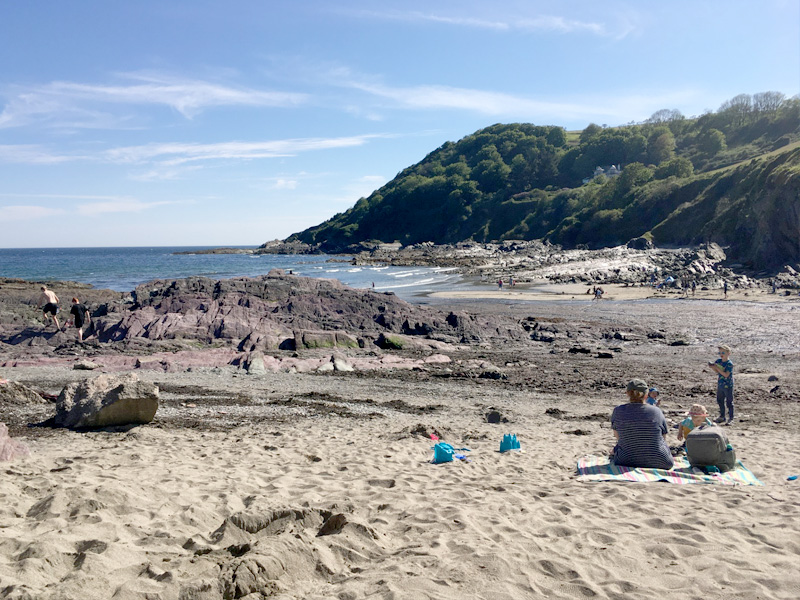
Talland Bay is one of the smallest and quietest beaches in this stretch of South East Cornwall, tucked into a fold of the coast roughly midway between the working harbours of Looe and Polperro, and reached only by narrow, high-hedged lanes that drop steeply down from the coast road. It is not one beach but two: Talland Sand to the west, the larger and sandier of the pair, and the smaller, rockier Rotterdam Beach to the east, separated at high tide by an outcrop of rock and overlooked from the hillside above by the ancient, part-detached-towered Church of St Tallanus. Framed by wooded cliffs within the South Cornwall Area of Outstanding Natural Beauty and Heritage Coast, and lying directly on the South West Coast Path, Talland trades the facilities of a larger resort beach for genuine seclusion, a long and colourful smuggling history, and some of the best rock pooling on this part of the coast.
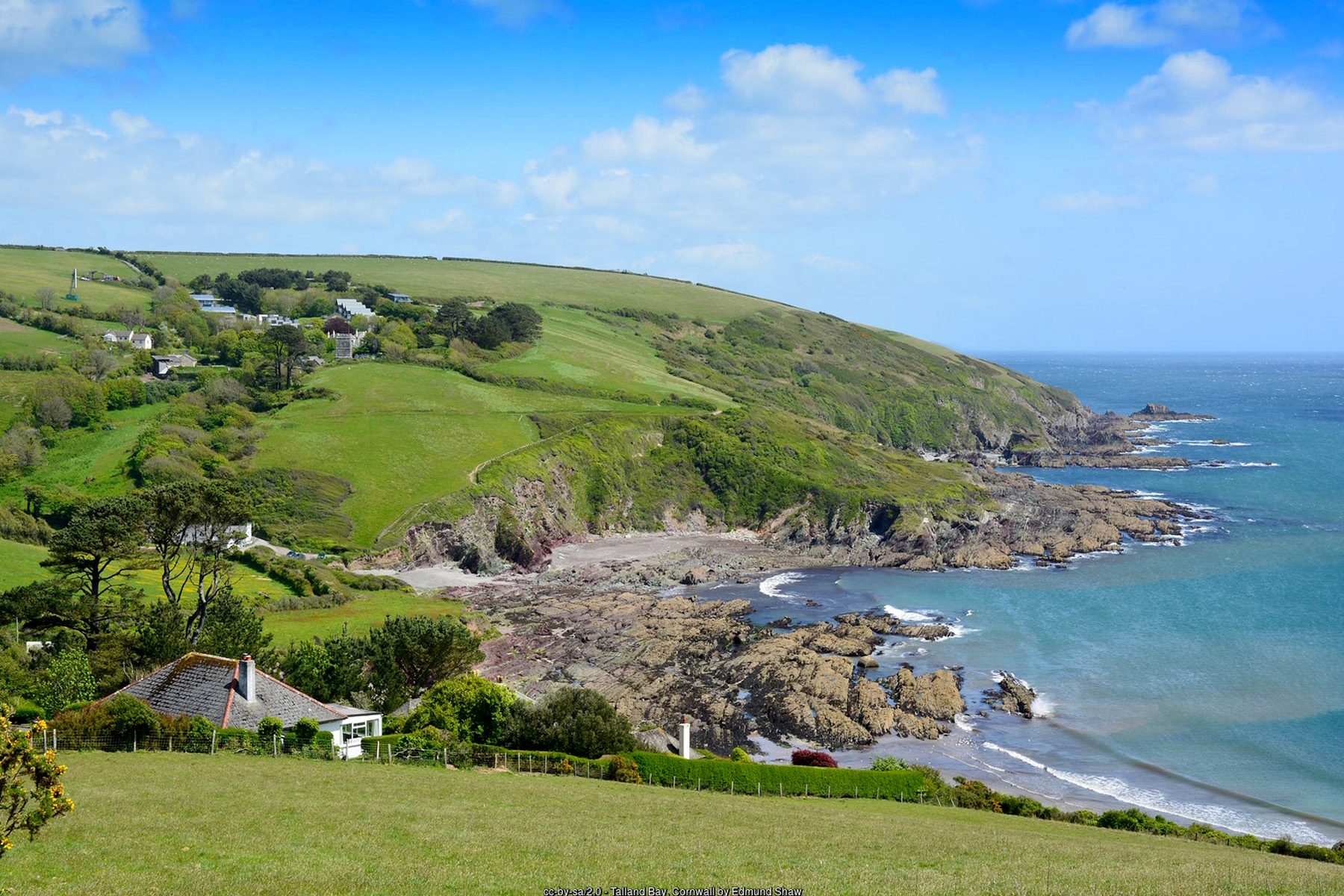
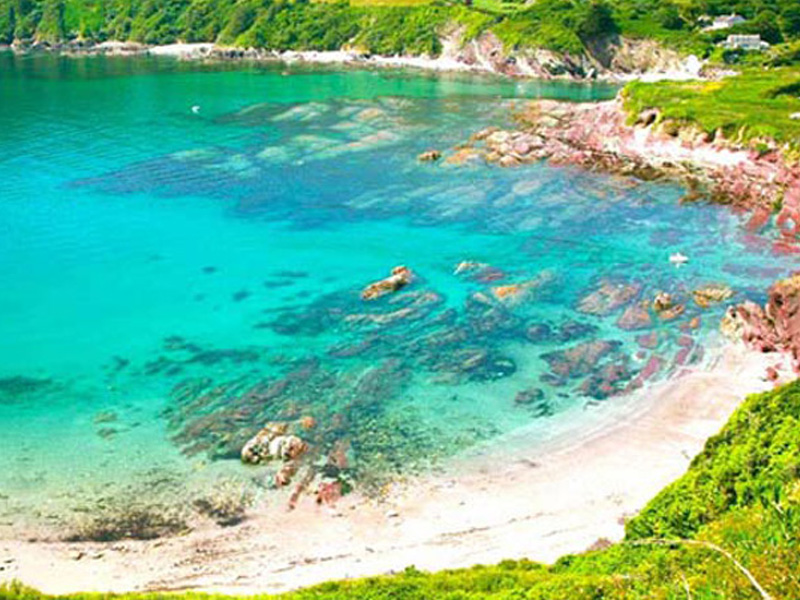
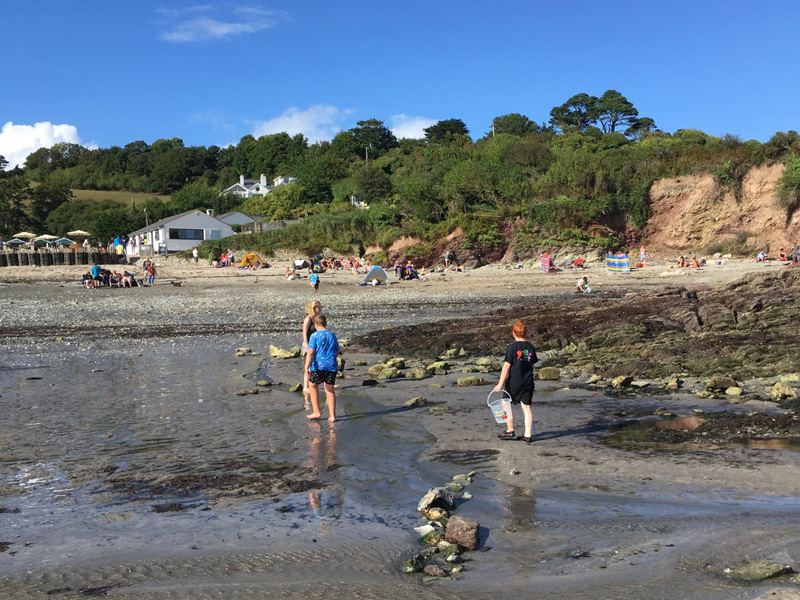
Geologically, Talland sits within the Meadfoot Group, a sequence of Devonian-age slates and sandstones around 400 million years old whose folded red, green and brown rock bands are visible in the cliffs and foreshore of the bay - the same rock that runs on through much of this coast towards Looe and Polperro. At low tide, Talland Sand reveals a reasonable spread of coarse sand over its shingle and rock base, while Rotterdam Beach stays noticeably rockier and is the better of the two for exploring rock pools, where hermit crabs, blennies and anemones can usually be found tucked among the weed. As on any small, tide-dependent cove, the amount of beach on show varies considerably between high and low water, so it is well worth checking tide times before setting off, particularly if the plan is to walk between the two coves along the shore rather than over the headland.
Talland's history is bound up, more than most Cornish beaches, with smuggling. This whole stretch of the South East Cornwall coast between the Tamar and Fowey, with Polperro at its heart, was one of the busiest smuggling grounds in eighteenth-century England, and Talland's isolated cove, out of sight of the customs officers based in the larger harbours, made an ideal landing place for brandy, tea, tobacco and other contraband run in from France and the Channel Islands. Goods put ashore at Talland were said to be carried up Bridle Lane, the old track climbing directly from the beach to Talland Church, before being distributed inland - a route that, according to local tradition, the parish's own vicar had a rather particular reason to keep clear of prying eyes.
That vicar was Richard Dodge, who held the living at Talland from 1713 until his death in 1746 and became one of the best-known figures in Cornish ghost-lore. Eighteenth and nineteenth-century writers on Cornish folklore, notably Thomas Quiller Couch and the Rev. Sabine Baring-Gould's contemporaries, recorded Dodge as a formidable "ghost-layer", supposedly able to banish troublesome spirits "to the Red Sea" with a word, and credited with facing down a phantom coach and headless horses that were said to terrorise the moor near Lanreath. Later writers, including Charles G. Harper in his 1909 study of smuggling, suggested a more worldly explanation for the parson's nocturnal reputation: theatrical ghost-hunts after dark, conducted with suitable noise and mystery along Bridle Lane, would have been a highly effective way of persuading nervous parishioners to stay indoors while contraband was carried past the churchyard. Whether wholly true or embroidered in the retelling, the story has stuck, and Dodge remains one of the stock figures of Cornish smuggling folklore alongside Polperro's own famous free-traders.
The church itself, dedicated to the obscure Celtic saint Tallanus (or Tallan), is worth the short, steep climb from Rotterdam Beach in its own right. Grade I listed, it stands on a site with a tradition of use stretching back to a fifth or sixth-century Celtic hermitage, though the building seen today is largely medieval: part of the nave and the lower stage of the tower are thought to survive from the thirteenth century, with the rest rebuilt in the Cornish Perpendicular style of the late fifteenth century, when the church marked its five-hundredth anniversary in 1990. Its most distinctive feature is its bell tower, built as a separate, detached structure to the south of the church and only physically joined to the main building in the fifteenth century - a rare and striking arrangement in an English parish church. Inside are well-preserved wagon roofs and bench ends carved between about 1520 and 1600, and in the churchyard, close to the door, stands the headstone of Robert Mark, a young Polperro man shot dead in 1802 in circumstances that different accounts describe either as a smuggler cut down while running goods or a revenue man killed in the struggle against them - the truth, like much of Talland's smuggling history, has never been entirely settled.
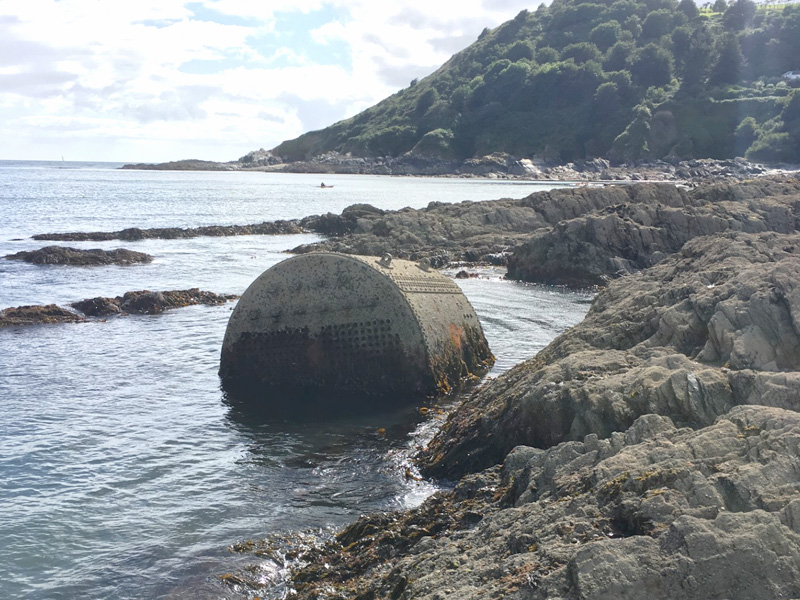
Out in the bay itself, more recent history is visible at very low tide in the shape of the boiler of the Marguerite, a French steam trawler that ran aground here in March 1922. All twenty-one of her crew were saved in a dramatic rescue by local boats, and the wreck's boiler remains a point of interest for those exploring the shore at low water. The South West Coast Path passes directly above and around the bay as part of the well-walked route between Looe and Polperro, climbing steeply out of Talland on both sides and giving fine views back along the coast; walkers should always check the latest route information before setting out, since sections of Cornwall's coast path are periodically diverted where cliffs are unstable.
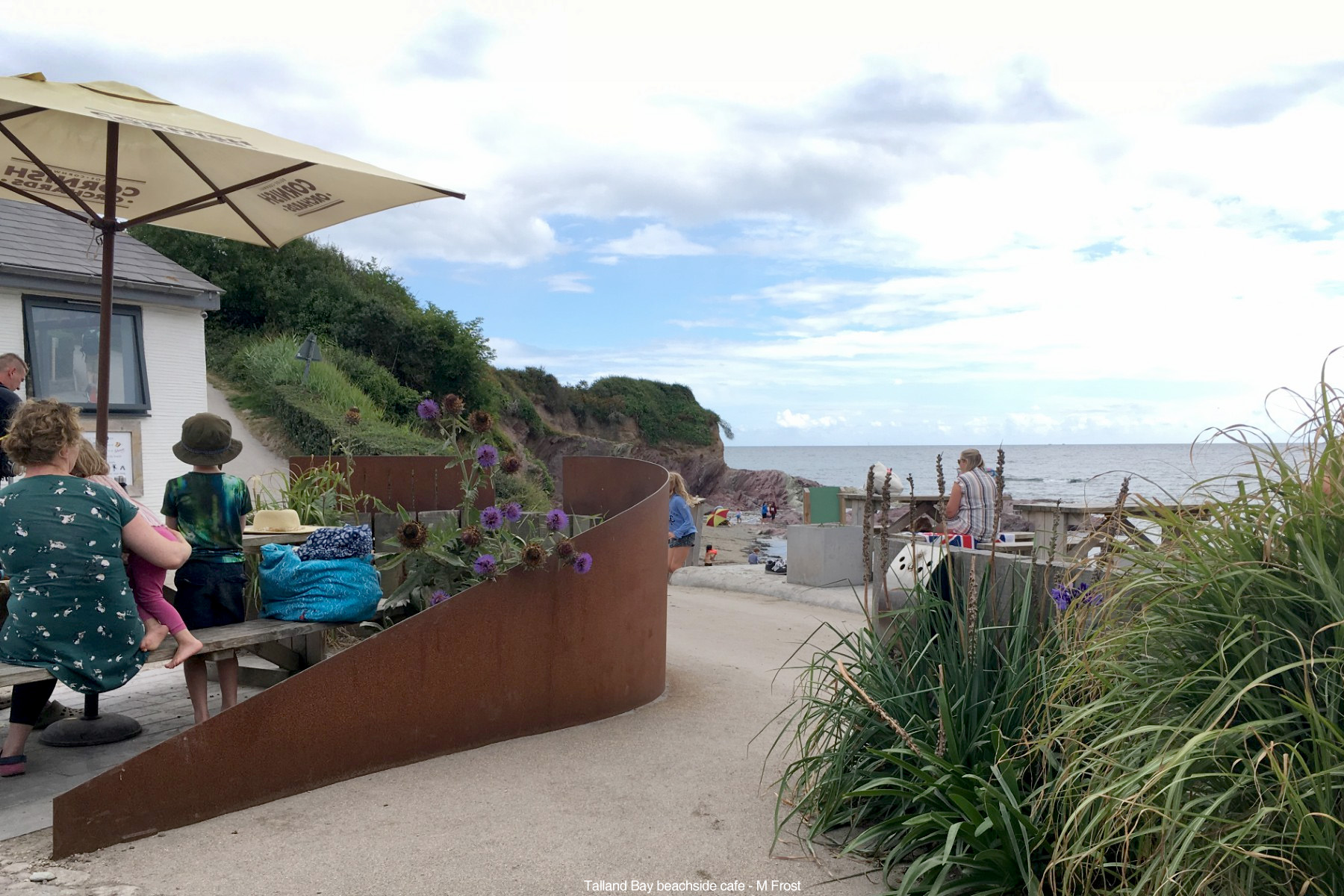
For all its history, Talland today is a genuinely low-key spot, and that is very much the appeal. There is no seafront promenade, no amusement arcade and no long run of beach shops - just a couple of small, informal beach cafes, a scatter of holiday cottages tucked into the wooded valley behind, and the two little coves themselves, quiet even in the height of the Cornish summer compared with the bigger beaches at Looe and Polperro on either side. That relative quiet, together with the coast path passing right through, makes Talland popular with walkers breaking a journey between the two towns, with families who prefer rock pools and a paddle to a wide expanse of sand, and with visitors keen to see a lesser-known corner of the coast that still carries its history close to the surface - quite literally, in the case of the Marguerite's boiler at low tide.
Practically, Talland rewards a little planning. Parking is limited to a small car park and a scattering of roadside spaces near each cove, with an overflow field sometimes opened at the busiest times of the height of summer, so arriving early in the day - or walking in along the coast path from Looe or Polperro - is the more reliable option in peak season. There is no RNLI lifeguard cover at Talland, and while the bay is relatively sheltered, the tide can turn quickly, so swimmers should take sensible precautions, particularly with children, and avoid taking inflatables out into open water. Dogs, by contrast, are welcome on the beach all year round, which, combined with the coast path on the doorstep, makes Talland a popular stop for dog walkers exploring this section of coast whatever the season.
Visitor Information
Parking
Parking at Talland Bay is limited: a small car park sits close to each cove, with a scattering of free roadside spaces along the lane between them and an overflow field sometimes used at the busiest summer times. Spaces fill quickly on fine days, so arrive early or consider walking in along the coast path from Looe or Polperro.
Facilities
A beach cafe and public toilets serve the main cove, with a further cafe near Rotterdam Beach in season. There is no RNLI lifeguard patrol at Talland Bay, so visitors should check conditions themselves before swimming.
Disabled Access
Talland Bay is a rural cove reached down steep, narrow lanes, and access onto the beach itself is over shingle, rock and sand with no purpose-built ramp, so it is not well suited to wheelchair users. There are no dedicated Blue Badge bays in the small car parks, so Blue Badge holders should check current signage on arrival.
Things to Do Nearby
- St Tallanus' Church, Talland, a Grade I listed medieval church above Rotterdam Beach with a rare detached bell tower and centuries of ghost-story and smuggling folklore
- The South West Coast Path, which climbs the headlands on both sides of the bay on its way between Looe and Polperro, with fine views back along the coast
- East Looe Beach, the sandy town beach of Looe a few miles east, with the Old Guildhall Museum and Looe Island boat trips
- Polperro, the picturesque fishing village a short walk or drive west, famous for its own deep smuggling history and harbour
- The wreck site of the Marguerite, a French trawler lost in Talland Bay in 1922, whose boiler is still visible at very low tide
Places to Stay
Talland Bay itself has no dedicated holiday accommodation listings of its own - it is a small, largely undeveloped cove rather than a resort. The nearest range of places to stay is in Looe, a few miles to the east:
Frequently Asked Questions
Page last updated: 14 September 2026.