East Looe Beach
The Sandy Town Beach of a Historic Fishing and Shark-Angling Port, Looking Out to Looe Island
The Bulwark, East Looe, Cornwall, PL13 1BX
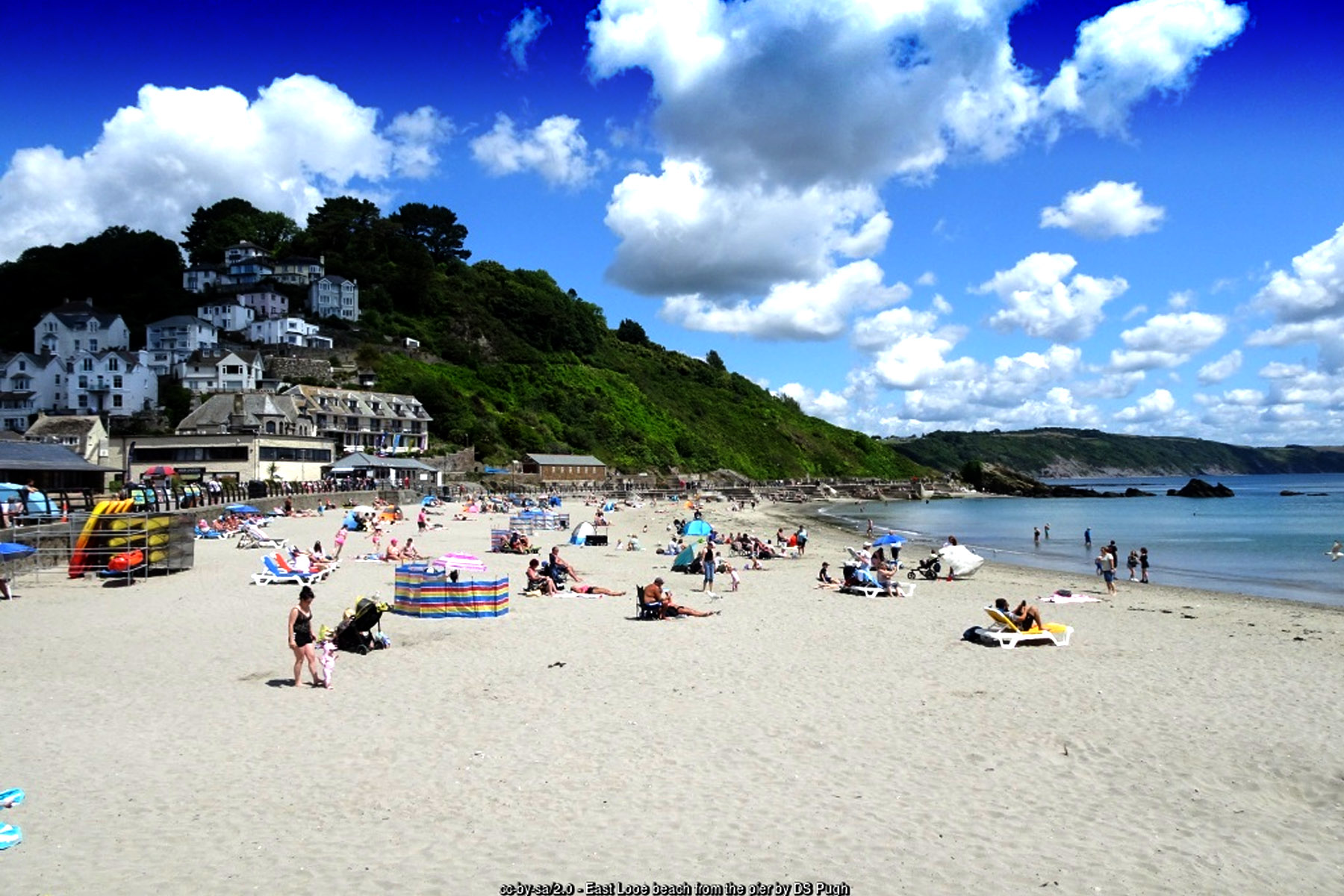
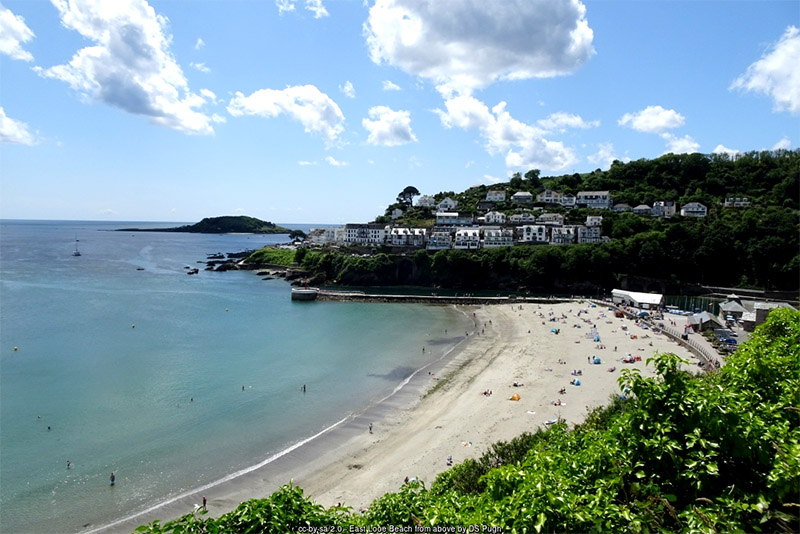
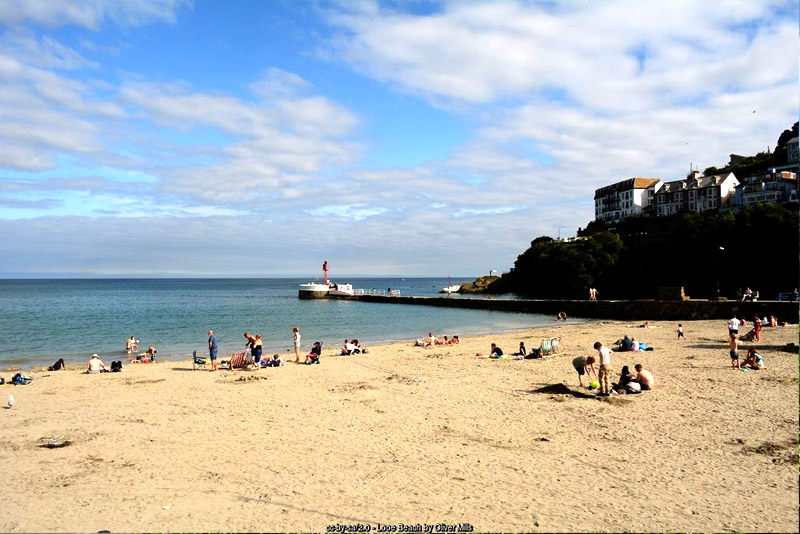
East Looe Beach is the sandy town beach of Looe, a historic fishing port in South East Cornwall, sitting right at the mouth of the River Looe on the eastern side of the harbour. The beach runs from the Victorian Banjo Pier, which shelters its wide, gently shelving western half, round towards the rockier outcrop of Pen Rocks at its eastern end, with the wooded shoulder of Hannafore visible across the water and the low, tree-topped shape of Looe Island lying about a mile offshore. Backed directly by the seafront cottages, cafes and shops of East Looe, this is a genuinely central town beach - the kind where you can be building a sandcastle within a few minutes of parking the car or stepping off the branch-line train - and it remains one of the busiest and best-loved family beaches in this corner of Cornwall through the summer season.
The town behind the beach has an unusually layered history for its size. East Looe and West Looe grew up as two entirely separate settlements facing each other across the tidal river, each with its own borough charter, its own guildhall and, for centuries, its own Member of Parliament - a legacy of the pocket-borough system that saw both tiny towns return MPs to Westminster until the Great Reform Act of 1832 swept the arrangement away. A wooden bridge is recorded linking the two towns by 1411, replaced in 1436 by a stone bridge that carried a chapel dedicated to St Anne at its centre; the present bridge, a little downstream, was built in the 1850s. East Looe and West Looe remained administratively distinct until as late as 1898, when they were finally combined into the single Looe Urban District that forms the town visitors know today, and it is still common to hear locals refer to "East Looe" and "West Looe" as though they were two different places - which, in every sense but the purely administrative one, they still are.
Long before tourism, Looe made its living from the sea in more demanding ways. Medieval Looe was important enough to supply some twenty ships to the English fleet at the Siege of Calais in 1347, and by the nineteenth century the harbour had grown into one of the busiest fishing ports on Cornwall's south coast, its boats landing huge catches of pilchards and, in more recent generations, crab and shellfish that still support a working fleet today. A lifeboat station was established on the seafront in 1866 and continues to operate from East Looe, while inland the Liskeard and Looe Union Canal, opened in 1828 to bring down copper ore and granite for export through the harbour, was itself later replaced by the Liskeard and Looe Railway of 1860 - the branch line, still running today as the scenic Looe Valley Line, that carries generations of holidaymakers down the wooded river valley to the beach.
It was in the twentieth century that Looe found a rather more unlikely claim to fame: it became, and to a large extent remains, the historic home of British shark angling. Deep water and a reliable run of blue shark and porbeagle close offshore drew big-game anglers to the port from the 1920s onwards, and in 1953 a group of enthusiasts led by Brigadier John Alan Lyde Caunter formally founded the Shark Angling Club of Great Britain in the town, establishing Looe as the sport's national headquarters and giving rise to the annual sea angling festivals that have run from the harbour ever since. The Club still operates from Looe today, though its focus has shifted decisively from trophy-hunting to conservation: since 1998 every shark caught by its members has been measured, weighed, tagged and released alive, turning what began as a big-game fishing craze into one of the longer-running citizen-science projects tracking shark movements in British waters.
That same appetite for the sea and its history is on show a short walk from the beach at the Old Guildhall Museum and Gaol on Fore Street, a remarkable survival for a small town. Built in around 1450, the building became the seat of East Looe's borough government after the town's incorporation in 1587, its upstairs courtroom later gaining a Royal coat of arms in 1705 and its ground floor housing a lock-up with three cramped cells for petty offenders. It served the town until a new guildhall was built in 1877, after which it passed to the East Looe Town Trust and was eventually restored and opened as a museum in 1972. Grade II* listed, it now displays smuggling relics, a seventeenth-century cannon recovered from Looe Bay, paintings by the local artist Samuel Cook and exhibits on the shark-angling years, the Looe Valley railway and the town's long fishing history - the original magistrates' bench and the medieval cells still intact inside.
Offshore, the low green hump of Looe Island - also known by its older name of St George's Island - has its own long and unusually varied past. Iron Age and Romano-British finds show people were using the island in antiquity, and in the medieval period it belonged to Glastonbury Abbey, worked by monks from a small priory cell before passing to the Crown at the Dissolution of the Monasteries in 1536. The Trelawny family held it from 1743 until 1921, and in 1965 two sisters, Evelyn and Babs Atkins, bought the roughly 22-acre island for themselves, living there for decades and writing about their island life before Babs's death in 2004, when the island passed by her wishes to the Cornwall Wildlife Trust. It is now run as a nature reserve within the wider Whitsand and Looe Bay Marine Conservation Area, with grey seals regularly seen hauled out or bobbing offshore and a resident population of nesting seabirds, and access to the island itself is carefully managed to protect the wildlife that has made it home.
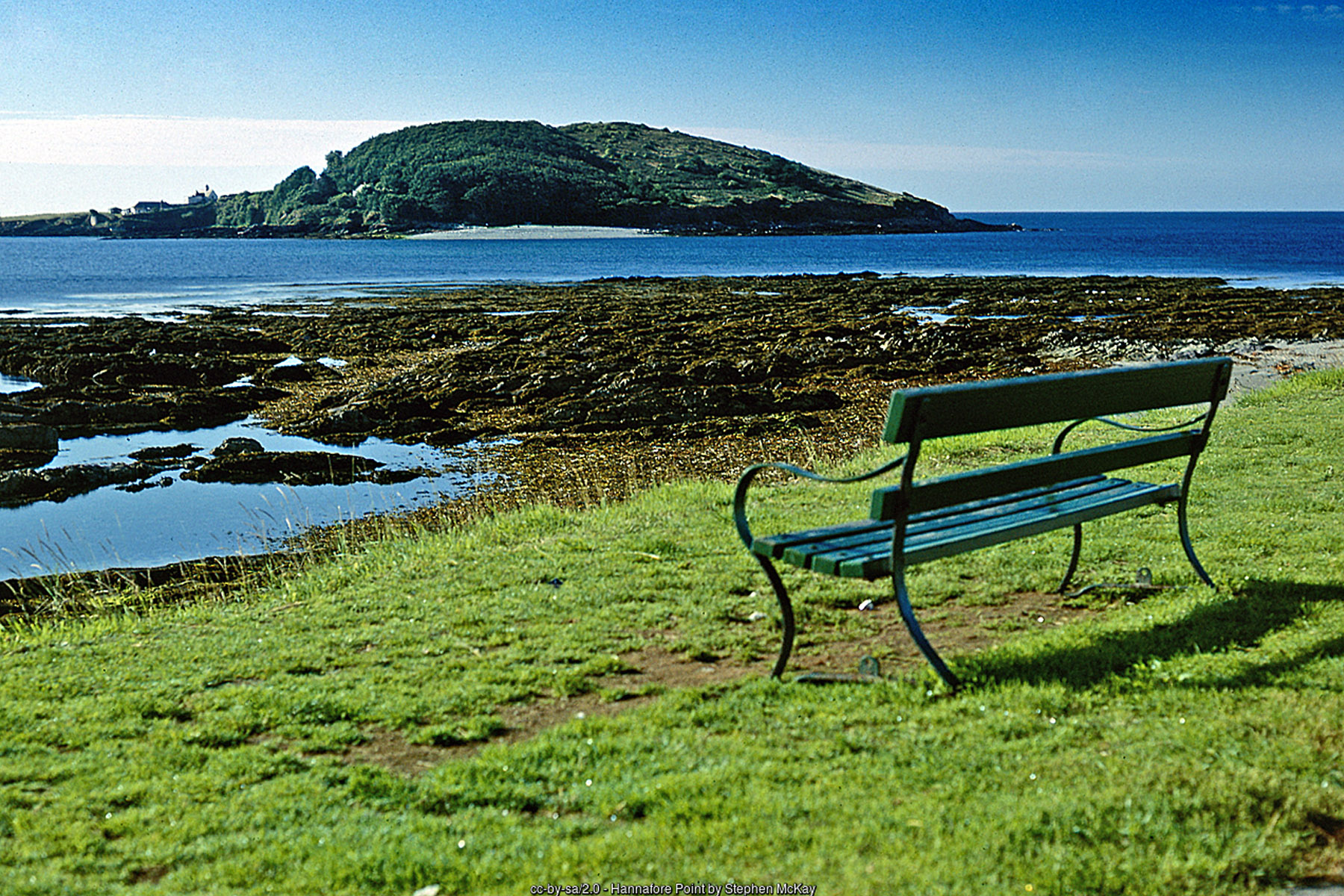
From East Looe Beach itself, the island is best appreciated from the water: seasonal boat trips run from a pontoon near the RNLI lifeboat station, typically from the end of March through to the end of October, weather and tide allowing, since the crossing and any landing on the island depend on a window of two to three hours either side of high water. The short trip out gives a good chance of seeing grey seals in the bay before landing on the island for a couple of hours to explore, with a landing fee going towards the Wildlife Trust's conservation work - a genuinely different kind of excursion for a beach day, and one that ties the modern visitor experience directly back to centuries of island history just offshore.
Back on the sand, the Banjo Pier remains the beach's defining structure. Designed by the engineer Joseph Thomas and built by Daniel Taylor in the Victorian era, its distinctive round-headed shape - said to be the original of its kind, later copied at seaside towns elsewhere - encloses the harbour mouth and, in doing so, takes much of the swell out of the western half of East Looe Beach, which is why this end, nearest the Pier Café, tends to be the busiest and most family-friendly stretch of sand. Walk east past the beach huts and the shore gradually changes character, narrowing and turning rockier around Pen Rocks, with pools worth exploring at low tide, while the sand itself, as on any beach on a tidal estuary, comes and goes through the tide cycle, so it is worth timing a visit around the tide tables if a full stretch of open sand is the aim.
The beach today makes the most of that setting with a genuinely useful spread of facilities close at hand: the Pier Café sits right on the sand, public toilets are close by, and in season sunloungers, kayaks and paddleboards can be hired for a few hours on the water in the sheltered lee of the pier, with East Looe's shops, pubs and restaurants only moments up the hill behind the seafront. There is no RNLI lifeguard patrol on the beach itself, though the RNLI does run a seasonal lifeboat station in the harbour close by, so visitors swimming in the shallow, gently shelving water near the pier should still take the usual sensible precautions. One rule that catches some visitors out is dogs: unlike many Cornish beaches that only restrict dogs in the height of summer, East Looe Beach - looked after by the East Looe Town Trust, which also runs the Old Guildhall Museum and the seafront's wheelchair-loan scheme - keeps a year-round dog ban on the sand, though four-legged visitors are warmly welcomed instead at Hannafore, the rockier beach a short walk round the coast to the west.
Visitor Information
Parking
There is no car park directly on the East Looe seafront. The nearest pay-and-display options are the large Millpool car park in West Looe (around 950 spaces), the smaller short-stay Riverbank car park in East Looe, and the harbourside Quay car parks, all a walk of roughly five to ten minutes from the beach.
Facilities
The Pier Café and public toilets sit right by the beach, with seasonal hire of sunloungers, kayaks and paddleboards, plus further shops, cafes and restaurants moments away in East Looe town. There is no RNLI lifeguard patrol on the beach itself.
Disabled Access
A slipway and ramps give reasonable access down onto the beach from the seafront, and a wheelchair can be borrowed from the Old Lifeboat Gallery / East Looe Town Trust seafront workshops. Blue Badge holders should check current signage for dedicated bays in the nearby quay car parks.
Things to Do Nearby
- Old Guildhall Museum and Gaol, the 15th-century former borough hall and lock-up on Fore Street, a short walk from the beach
- Looe Island boat trips, seasonal crossings to the Cornwall Wildlife Trust's offshore nature reserve, home to grey seals and seabirds
- Hannafore, the rockier, dog-friendly beach and coastal walk a short distance west, looking straight out to Looe Island
- Millendreath, a small sandy cove beach a couple of miles east of Looe
- Looe harbour and the Banjo Pier, the Victorian pier that shelters the beach and gives some of the best views back across the bay
Places to Stay
Frequently Asked Questions
Page last updated: 14 September 2026.