Lansallos
A Quiet Cove of Sand and Shingle Below Slate Cliffs, Guarded by a Medieval Church and an Old Smugglers' Path
National Trust Car Park, Lansallos, near Polperro, Cornwall, PL13 2PX
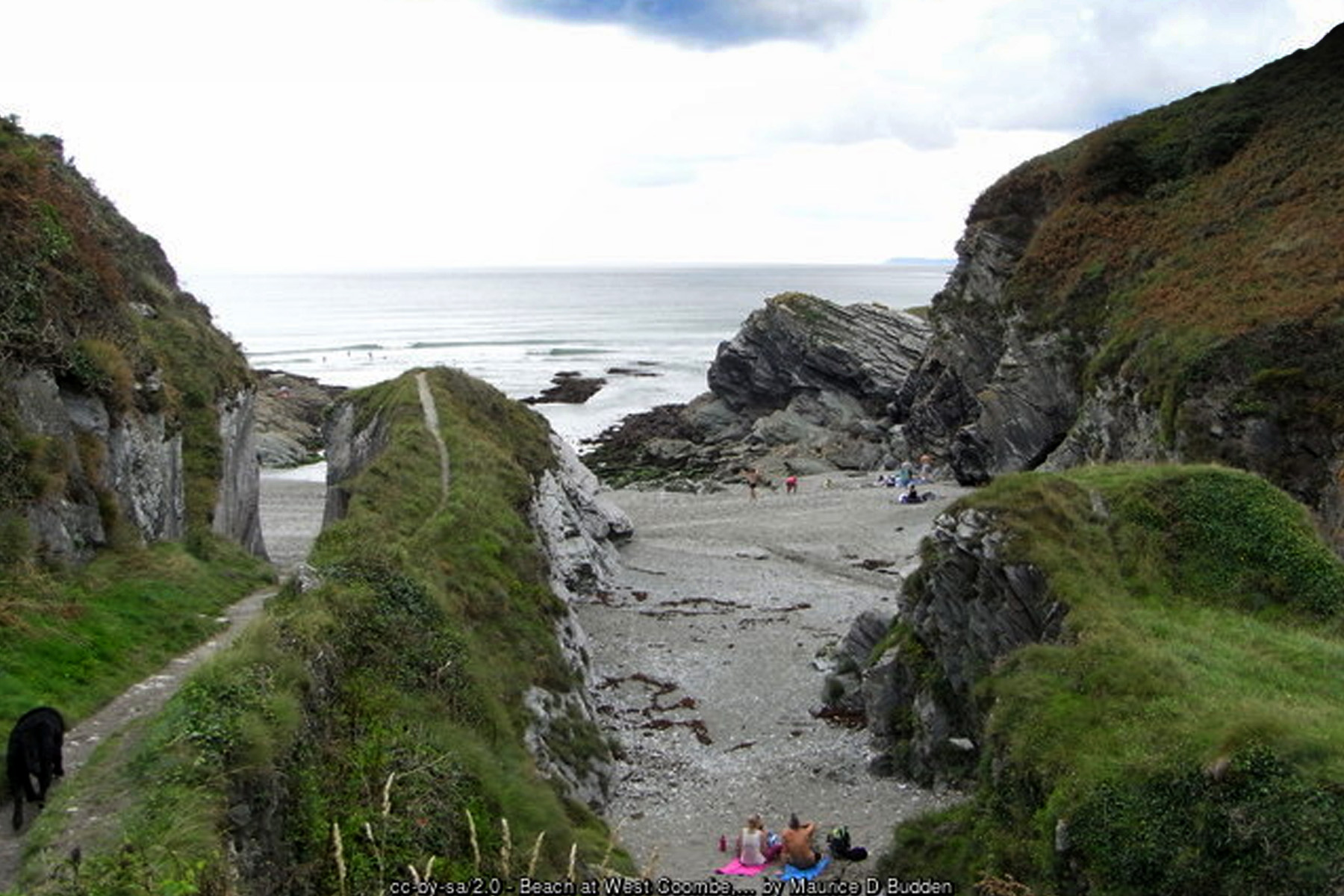
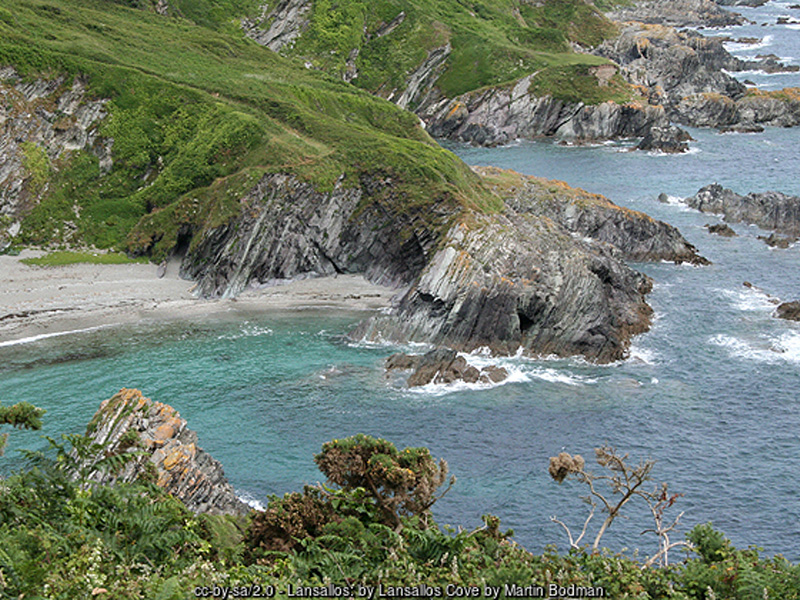
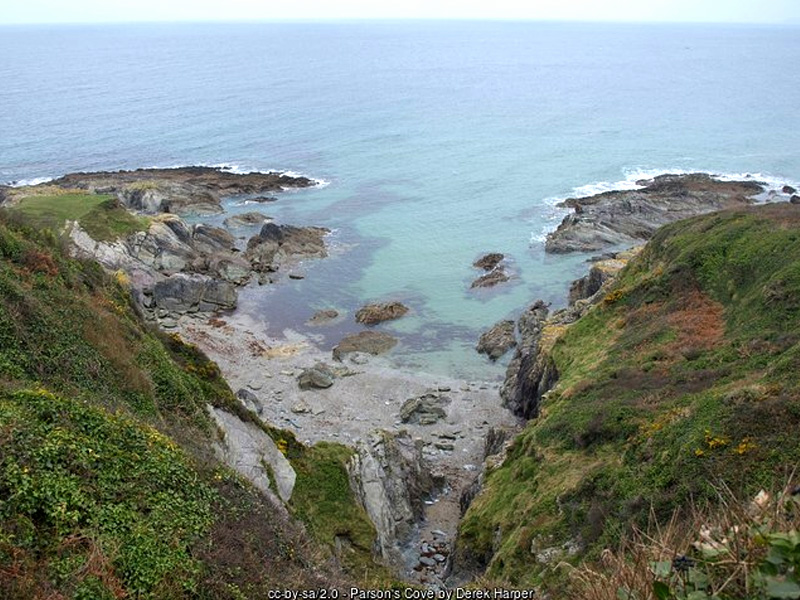
Lansallos is a small, south-facing cove of sand and shingle on the National Trust coastline between Polperro and Fowey in South East Cornwall, tucked beneath dramatic slate cliffs at the end of a wooded valley below the tiny hamlet from which it takes its name. There is no direct road down to the shore: reaching the beach means leaving the car at the National Trust car park by the church and following a half-mile path on foot, and that one simple fact keeps Lansallos genuinely quiet even at the height of summer, while Polperro, barely two and a half miles along the coast, fills its harbour car parks and narrow streets. For anyone prepared to make the walk, the reward is one of the least crowded and most unspoilt beaches in this stretch of Cornwall - a proper wild cove rather than a resort beach, with no shop, no cafe and, on many days, hardly another soul on the sand.
The hamlet of Lansallos itself amounts to little more than the church, a farm and a scatter of cottages, but its name and its parish carry an unusually long history for somewhere so small. The name is thought to derive from an old Cornish "lan", meaning a churchyard or enclosed sacred site, combined with the dedication to a Celtic saint remembered locally as Salwys - making Lansallos, in effect, "the church site of Salwys". A Christian presence here is recorded as far back as the tenth century, when a small monastic community is believed to have existed on the site, and the parish itself appears in the Domesday Book of 1086, by which time it was already a long-established manor. The present church, however, is dedicated not to Salwys but to St Ildierna, a dedication that has puzzled historians for centuries: the fifteenth-century antiquarian William of Worcester recorded relics of a bishop by that name here in 1478, though other sources suggest the saint may in fact have been a woman, and no one today can say for certain who St Ildierna really was.
St Ildierna's Church, which stands right beside the car park and is well worth a look before or after the walk down to the beach, was formally consecrated on 16 October 1321, though it is thought to have replaced an earlier Norman building on the same sacred site. Grade I listed, it still holds genuinely ancient fabric: a Norman font dating from around 1100-1130, together with fragments of what may be an even older Celtic font once used, tradition holds, by St Salwys himself. Its wagon roofs, among the finest of their kind in Cornwall, have been dated by dendrochronology to building campaigns of the late fifteenth and early sixteenth centuries, when a south aisle and porch were added, followed by a north chapel completed as late as the 1540s; inside, a set of oak pews carved with Renaissance ornament from roughly 1520 to 1560 survives alongside a carved "green man" on one of the tower arch capitals. Discoveries made during Victorian and Edwardian restorations uncovered stone effigies of a knight and a lady, thought to be members of the medieval Hywys family, and an Elizabethan slate memorial to Margery Smith, who died in 1579, signed by the Cornish craftsman Peter Crocker. The church suffered a serious arson attack in 2005 but was carefully restored, with new oak and glass screens installed in 2011, and a peal of eight bells, hung in 1937, still rings out over the churchyard and its ancient Celtic cross today.
From the car park, the walk down to the beach drops through East Coombe, a steep, thickly wooded valley with a stream running alongside the path, before joining the South West Coast Path near the shore. Part of the route follows a stretch of old cart track cut directly into the rock - a genuine smugglers' path, its surface still visibly rutted by the iron-shod wheels of carts that once hauled fish, and less legally, brandy and other contraband, up from the cove in centuries past. Near the beach, a small stream tumbles down as a modest waterfall close to the ruins of what is said to have been a fifteenth-century watermill, adding a last piece of quiet drama to the approach. It is an attractive walk in its own right, through gorse and sea campion on the open cliff slopes, with grey seals and fulmars sometimes spotted offshore, and clear views out to the Udder Rock daymark for those who detour along the clifftop - but it is not an easy one. The path is naturally uneven throughout, crossing several stiles and gates, with steps of varying height and a final stretch down to the sand over smooth rock that can be slippery when wet. The National Trust is candid that there is no wheelchair-friendly route here, and the walk is not realistically manageable with a pushchair either - this is a beach for those able to walk the best part of a mile there and back on rough, sometimes steep, ground.
The coastline at Lansallos, along with the beach itself, is owned and managed by the National Trust as part of its landholding along this section of the South East Cornwall coast, which extends east towards Lantivet Bay and Lantic Bay and on towards Polruan and Fowey, and west towards Polperro. Once down at the shore, the cove itself is a genuinely pretty spot: a compact, south-facing beach of sand with a good scattering of shingle, framed by the same dark, folded slate cliffs that run the length of this coastline, with rock pools to explore towards the sides at lower states of the tide. There is nothing here in the way of facilities - no cafe, no shop, no toilets at either the car park or the beach, the nearest public toilet being some two miles away at the Lantivet Bay car park - and mobile phone reception is generally available only back up at the car park, not down on the sand. Dogs are welcome on the beach all year round, unlike many of Cornwall's more commercial beaches which impose seasonal bans, though owners are asked to keep them under close control, not least because livestock may be grazing in the fields the path passes through. With no RNLI lifeguard cover, as at most of Cornwall's quieter coves, visitors should take the same sensible precautions as anywhere remote and unpatrolled: check tide times before setting out, keep a close eye on children near the water, and allow enough time and daylight for the walk back up.
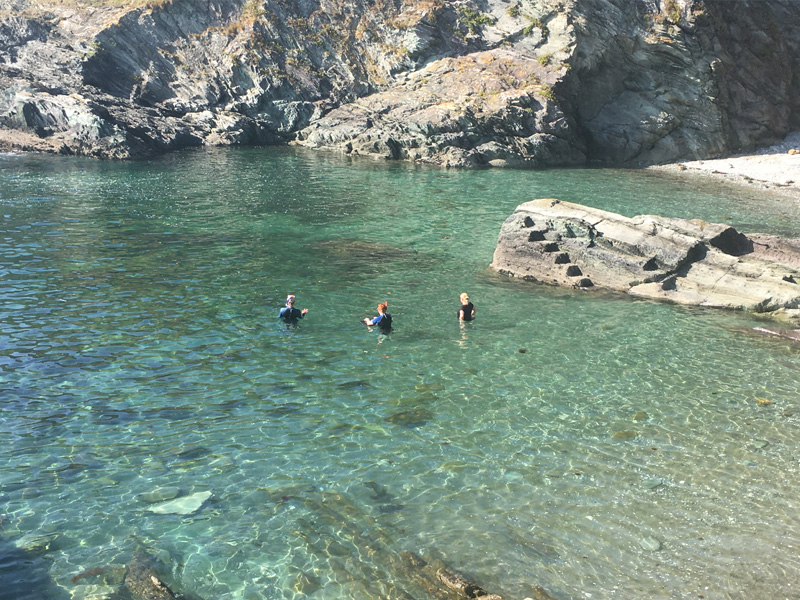
Nearby: Palace Cove, Lantivet Bay
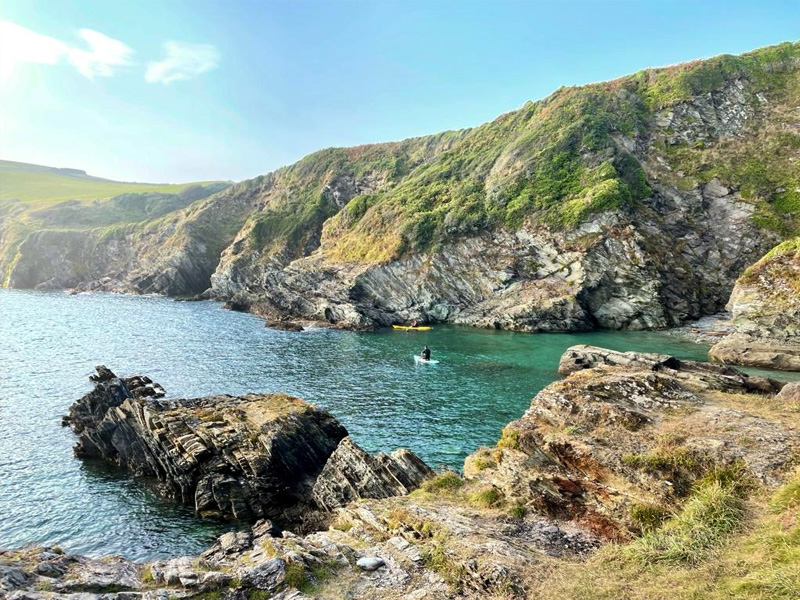
Further along the coast path towards Lantic Bay lies Lantivet Bay, and within it a smaller, even quieter cove known as Palace Cove. It takes its unusual name from an old pilchard "palace" - a fish-curing cellar of the kind once common along this coast in the heyday of the Cornish pilchard fishery - the remains of which can still be made out on the shore above the beach. Palace Cove is south-facing and sheltered, with a beach of shingle and rock rather than the sand found at Lansallos itself, and its own approach is, if anything, more demanding: the most direct route is from the National Trust's separate Frogmore car park (PL23 1NP), roughly a mile away across farmland and along the coast path, over ground that National Trust guidance describes as involving steep climbs, steps and stiles, with a scramble over rocks near the shore that can be slippery when wet. The cove is also tide-dependent, with much of its beach only exposed at lower states of the tide, so it is worth checking tide times before setting out rather than relying on the walk alone. As at Lansallos, there are no facilities of any kind at Palace Cove and no lifeguard cover, and the route is not suitable for pushchairs, wheelchairs or anyone with significant mobility difficulties; young children should be kept close given the loose rock underfoot. For walkers who have already made the effort to reach Lansallos, Palace Cove and the wider Lantivet Bay make a natural, if equally strenuous, extension of the same stretch of protected National Trust coastline.
What ultimately sets Lansallos apart is simply how little it has changed. It holds no Blue Flag or Seaside Award, appears in none of the resort listings alongside Cornwall's busier family beaches, and is unlikely ever to feel crowded, precisely because getting there takes real effort. For walkers following the South West Coast Path, or visitors happy to trade convenience for solitude, that is exactly the point: a wild, little-altered corner of the Cornish coast, a genuinely ancient church at the top of the path, and a quiet cove at the bottom that most passing tourists never see.
Visitor Information
Parking
A National Trust pay-and-display car park sits in Lansallos hamlet, beside the church, roughly half a mile from the beach on foot. Typical charges are around £2.50 up to one hour, £5 up to four hours and £9 for a full day, free for National Trust members and Blue Badge holders; payment is by cash or the JustPark app. Daytime parking only - no overnight camping.
Facilities
There are no facilities at all at Lansallos beach or the car park - no cafe, shop or toilets. The nearest public toilet is around two miles away at the Lantivet Bay car park, and the nearest shops, cafes and pubs are in Polperro, about two and a half miles away. Mobile signal is generally available only up at the car park.
Disabled Access
Lansallos is not suitable for wheelchair users or pushchairs. The half-mile path to the beach is naturally uneven, with stiles, gates and steps of varying height and a steep, sometimes slippery final descent over rock. Blue Badge holders park free at the car park itself, but there is no accessible route down to the sand.
Things to Do Nearby
- St Ildierna's Church, Lansallos, the Grade I listed medieval church beside the car park, consecrated in 1321
- Lansallos Coastal and Woodland Walk, a National Trust circular walk taking in the smugglers' track, the coast path and Udder Rock viewpoint
- Polperro, the picturesque fishing village and harbour a couple of miles west along the coast
- Lantic Bay, another National Trust cove reached on foot, a little further east towards Fowey
- Palace Cove, Lantivet Bay, a secluded shingle-and-rock cove named after an old pilchard-curing cellar, reached via the National Trust's separate Frogmore car park (PL23 1NP) between Lansallos and Lantic Bay
Places to Stay
Lansallos has no dedicated accommodation listings of its own - it is a hamlet with a church, a farm and a National Trust car park. The nearest hub for places to stay is Polperro, about two and a half miles away.
Frequently Asked Questions
Page last updated: 15 September 2026.