Polperro
Cornwall's Most Famous Smuggling Village, its Tidal Harbour and Small Harbour Beach
The Warren, Polperro, near Looe, Cornwall, PL13 2RB
Polperro is one of the most photographed and best-loved fishing villages in Cornwall, tucked into a narrow, steep-sided combe in the far south-east of the county between Looe and Fowey. Whitewashed and slate-hung cottages are stacked up the valley sides almost on top of one another, funnelling down to a tight tidal harbour where working fishing boats still lie against the quay. Just outside the harbour mouth is a small sand-and-shingle beach, tidal enough to disappear almost entirely at high water and to reappear as the sea drops away - a beach that is really an extension of the harbour itself rather than a conventional stretch of sand, and which suits a slow wander with an ice cream rather than a full day camped out with windbreaks and buckets. What draws most visitors to Polperro, in truth, is not the beach at all but the village that surrounds it: one of the most complete and unspoilt harbour settings anywhere on the Cornish coast, with a genuinely remarkable history of fishing and, notoriously, smuggling behind every cottage door.
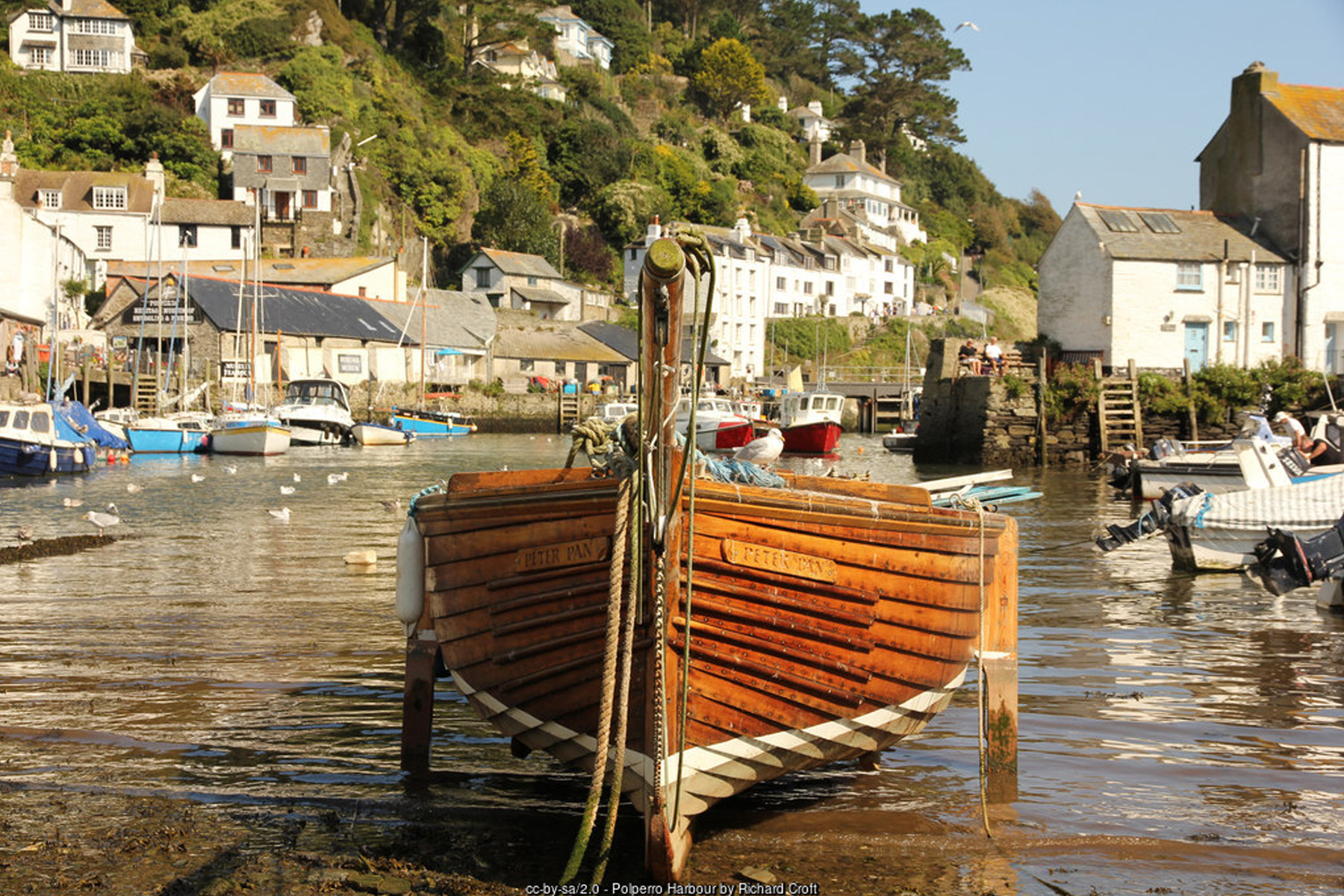
Fishing has shaped Polperro for centuries, and pilchards in particular. For generations, the village's cottages were built with fishing gear and the pilchard catch stored at ground level and living quarters in a loft above, and a large part of the local economy depended on the huge pilchard shoals that were netted, pressed and salted for export, principally to Catholic Europe, until the shoals themselves went into decline through the twentieth century. Out of that fishing tradition came a distinctive local boat, the Polperro Gaffer: a small, carvel-planked, gaff-rigged fishing lugger of around 26 feet, developed after the Great Gale of 1891 devastated the older, lug-rigged Cornish fishing fleets and government support encouraged a new generation of sturdier, more seaworthy boats, many of them built just along the coast in Looe. Polperro Gaffers fished mainly for pilchard in late summer and worked long lines and seine nets for the rest of the year, and their reputation for exceptional sea-keeping was famously proved when Dr Peter Pye sailed one of these small open boats around the world in the 1940s. Today a working fleet of around a dozen commercial fishing vessels still operates from Polperro harbour, landing crab, scallops and flatfish, a living link to that older pilchard-fishing economy even as tourism has become the village's main source of income.
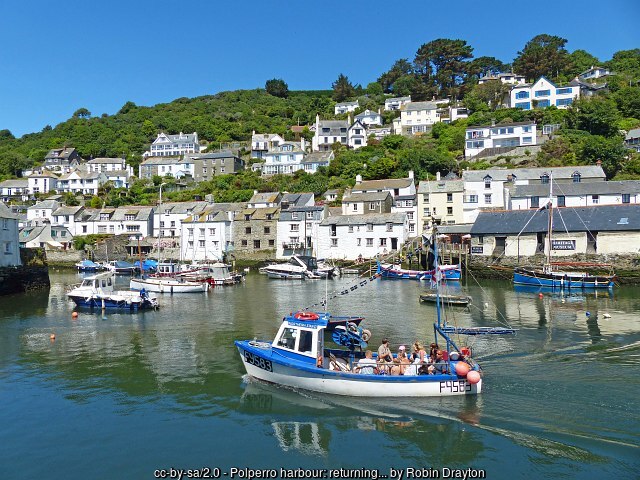
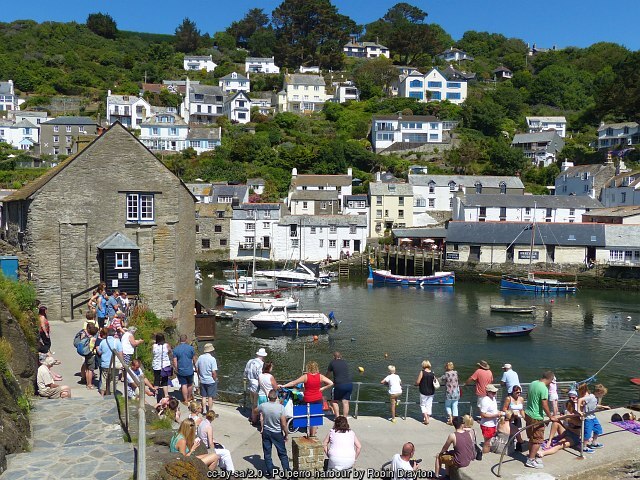
Fishing, however, is only half of Polperro's story, and probably not even the half that most visitors come to hear about. This is genuinely one of Cornwall's most notorious historic smuggling villages, a reputation earned rather than invented. Free-trading in Polperro is recorded as far back as the twelfth century, but it reached its height in the second half of the eighteenth century, when Britain's long wars with America and France pushed import duties on everyday goods to punishing levels, and smuggling brandy, spirits, tobacco and other goods, much of it shipped in from Guernsey, became a highly organised local trade rather than a matter of the occasional daring run. Polperro's own creek, leading into a deep, secluded valley that was difficult to approach by land, made it close to ideal for the purpose, and by most accounts almost the whole village had some stake in "the trade," whether landing contraband, storing it in cellars and outbuildings, or moving it on by pack-horse and wagon over Bodmin Moor towards Plymouth and London.
The single most important figure in that story is Zephaniah Job, a Polperro merchant and accountant who, between the 1770s and his death in 1822, became known as the village's "Smugglers' Banker." Job kept the books for Polperro's free-traders, financed smuggling voyages, insured cargoes, managed the finances of smugglers' families when their menfolk were caught, and even issued his own promissory notes that circulated locally almost as currency - in effect running smuggling as a well-organised business rather than a series of individual crimes. Alongside Job in local legend stands Willy Wilcox, a smuggler said to have lived in a cottage above a sea cave on the beach just beyond the harbour wall, connected to his house by a secret tunnel through which contraband could be moved unseen; tales differ on exactly how Wilcox met his end, drowned or trapped by the tide while moving goods through his tunnel, but Willy Wilcox's Cave is still pointed out today, and his ghost is said to linger there still. The sea claimed grander cargoes too: the East Indiaman Albemarle ran ashore near Polperro on 9 December 1708 laden with diamonds, coffee, pepper, silk and indigo, and the precise site of her wreck has never been found.
That history is told in detail at the Polperro Heritage Museum of Smuggling and Fishing, also known as the Harbour Museum, which occupies a former pilchard-processing building right on the harbourside. Run today by the volunteer Polperro Harbour Trust, the museum holds a remarkable photographic archive of the village stretching back to around 1860, along with ship models, family history records and displays covering both the fishing and smuggling trades from the late eighteenth century onwards. It is normally open daily from Easter through to October half term, with a modest admission charge for adults and free entry for under-16s, and makes an excellent hour's stop for anyone wanting the real detail behind the legends told on a harbourside walk.
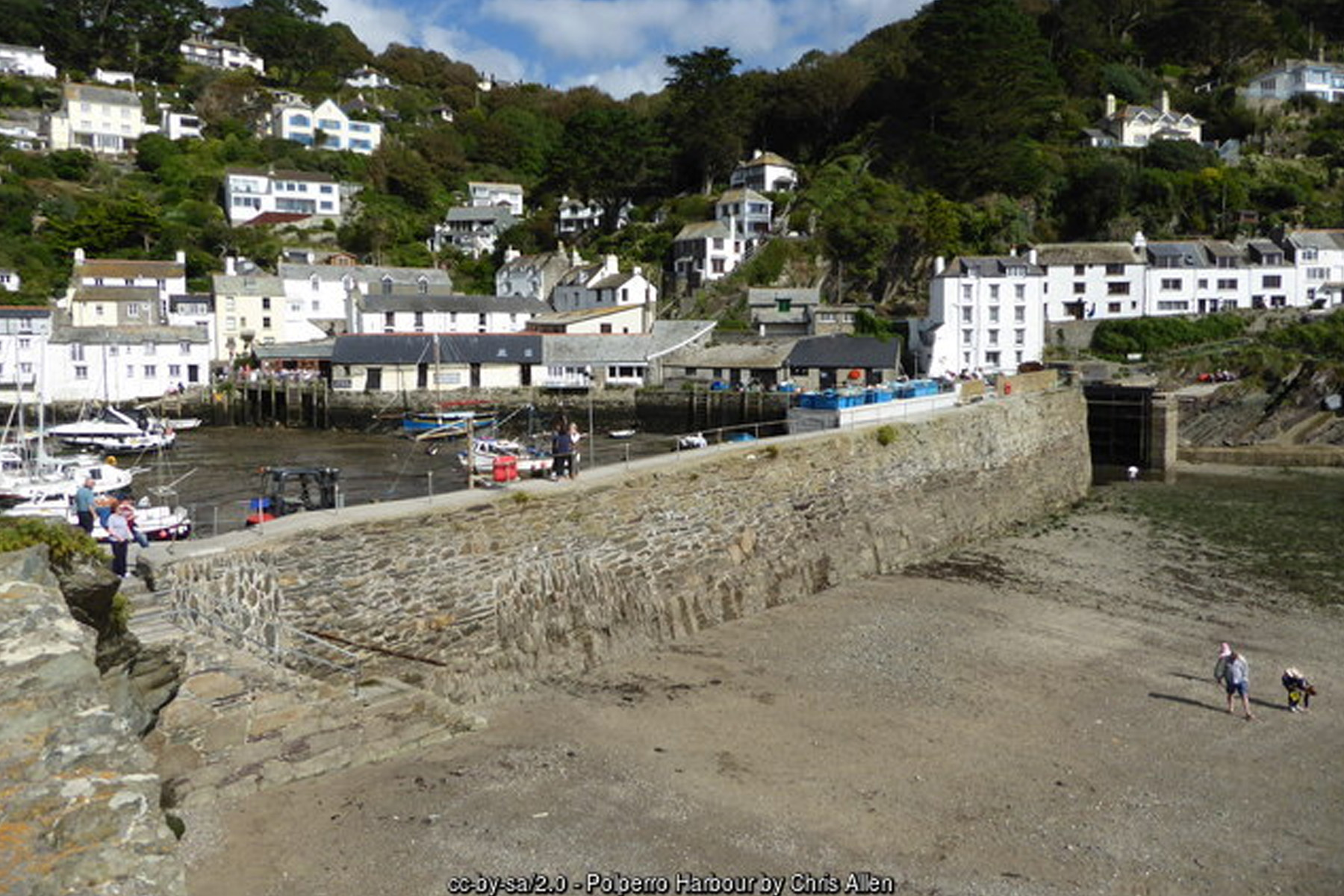
The harbour itself is worth lingering over regardless of the history. It is properly tidal, drying out substantially at low water to expose mud, rock and the small sand-and-shingle beach that lies just outside the harbour mouth, before filling again with the rise of the tide - so the character of a visit changes considerably depending on when you arrive, and it is worth checking tide times if you want to see the beach at its best rather than mostly underwater. Among the older buildings crowded around the water is the House on Props, a distinctive cottage said to date from the sixteenth century and built out over the water on wooden posts, along with the old Watch House and a working fish quay still used by the harbour's fishing boats. On the west side of the harbour mouth, below Chapel Cliff, is Chapel Pool, a tidal swimming pool built into the rocks in the 1940s where generations of local children have learned to swim; it is reached down a flight of fairly steep steps beside the Blue Peter Inn, is at its best a couple of hours either side of low tide, and disappears completely under the sea at high water, so it rewards the same tide-watching patience as the harbour beach itself.
One of the things that keeps Polperro feeling so unspoilt is also one of the first things a visitor needs to know: cars are not allowed into the centre of the village, and in any case its lanes are far too narrow and steep for casual driving. Almost everyone arrives on foot from the Crumplehorn car park at the top of the valley, a pay-and-display car park that takes coins, from which it is a level walk of around ten to fifteen minutes down into the heart of the village along the stream that once powered a working mill. Through the main Easter-to-October season, a seasonal shuttle service - run in recent years as a tuk-tuk service, and in earlier years as a horse-drawn bus, a favourite subject for visitors' photographs - carries those who would rather not walk between the car park and points within the village centre, with a separate luggage transfer available for anyone staying locally. Once down in the village, everything is on foot: narrow cobbled lanes lined with craft shops, galleries, traditional pubs and well-regarded seafood restaurants lead down to the harbour, and the coast path continues on to Chapel Pool and beyond, giving access west towards the quiet National Trust beach at Lansallos and east along the cliffs to the sandier beach at Talland Bay, about a mile away.
There is no RNLI lifeguard patrol anywhere in Polperro, on the harbour beach or at Chapel Pool, and the harbour is a genuinely working one shared with fishing boats coming and going, so a visit here calls for the same common sense as any unpatrolled Cornish beach: check the tide, keep a close eye on children around the water and slipways, and treat the steep steps down to Chapel Pool with care. None of that dims Polperro's appeal, though. Combine a beach that comes and goes with the tide, a harbour still worked by real fishing boats, one of the best-documented smuggling histories anywhere in Cornwall, a purpose-built museum to tell that story properly, and a village too pretty and too narrow for its own traffic, and it is easy to see why Polperro remains one of the most-visited small villages on the whole Cornish coast.
Visitor Information
Parking
Cars are not allowed into Polperro village centre. Park instead at the Crumplehorn car park at the top of the valley (pay-and-display, coins only) and walk down into the village, a level walk of around 10-15 minutes. A seasonal shuttle service (run in recent years as a tuk-tuk service) operates between the car park and the village centre through the Easter to October season for those who would rather not walk.
Facilities
Public toilets, pubs, cafes, restaurants, galleries and craft shops are all found in the village around the harbour. The Polperro Heritage Museum of Smuggling and Fishing on the harbourside is normally open daily from Easter to October half term. There is no RNLI lifeguard patrol on the beach or at Chapel Pool.
Disabled Access
Polperro is a genuinely difficult village for wheelchair and pushchair users: the walk down from the car park is level but long, the village's lanes are narrow and cobbled in places, and the small tidal beach and the steep steps to Chapel Pool are not step-free. Blue Badge holders should ask locally about any dedicated bays near the Crumplehorn car park before visiting, and allow extra time for the walk in and out of the village.
Things to Do Nearby
- Polperro Heritage Museum of Smuggling and Fishing, the village's fishing and smuggling history told on the harbourside, run by the volunteer Polperro Harbour Trust
- Chapel Pool, the 1940s tidal swimming pool on Chapel Cliff, a short walk from the harbour via steps beside the Blue Peter Inn
- Talland Bay, a sandier beach about a mile east along the coast path
- Lansallos, a quiet National Trust beach reached down a wooded valley to the west
- Polperro harbour itself, still home to a working fleet of around a dozen fishing boats landing crab, scallops and flatfish
Places to Stay
Frequently Asked Questions
Page last updated: 14 September 2026.