Prussia Cove
The Smugglers' Coves of Mount's Bay - Once the Kingdom of John Carter, "King of Prussia"
Prussia Cove, Rosudgeon, near Perranuthnoe, Cornwall, TR20 9BA
Prussia Cove sits on the Mount's Bay coast of west Cornwall, tucked between the village beach at Perranuthnoe to the west and the long sandy sweep of Praa Sands to the east, at OS grid reference SW 556 299. It is worth saying plainly at the outset: this is not a conventional family sand beach, and anyone expecting one will be disappointed. What Prussia Cove actually is - and what makes it worth the detour - is a tight cluster of small, rocky coves cut into the cliffs of a still largely private estate, threaded together by narrow paths, deep old cart-track grooves worn into the rock, and a history of smuggling so well documented that it has become one of the best-known chapters in the story of Cornwall's eighteenth-century "free trade".
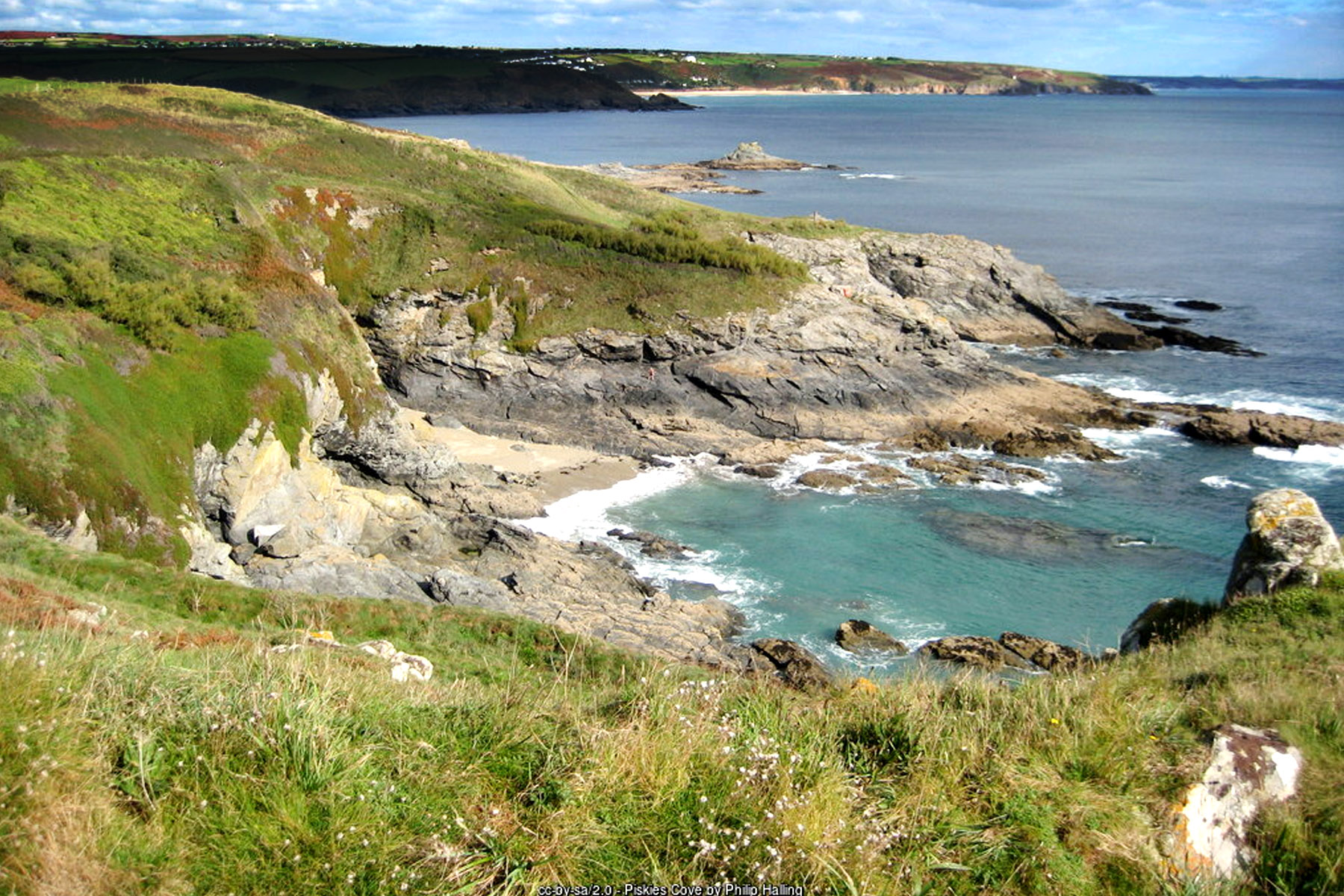
The site is properly a group of four small coves running west to east - Piskies Cove, Bessy's Cove, King's Cove and Coule's Cove - collectively still often known by the estate's old Cornish name, Porthleah, meaning roughly "slab-stone cove", a fair description of the flat, tilted slabs of rock that line much of the shore here. Before the smugglers made it famous, the whole area was simply called King's Cove; the name Prussia Cove only took hold in the late eighteenth and early nineteenth centuries, once local memory had fixed firmly on the exploits of one man.
John Carter, the "King of Prussia"
That man was John Carter, born in 1738, one of ten children of Francis Carter and Annice Williams of Breage and Germoe, a short distance inland. Exactly how he came by his nickname is not entirely settled - some accounts say it was a boyhood game he played as a child that stuck as a name for life, while others say it grew from a supposed likeness to Frederick the Great of Prussia, whom Carter was said to admire - but by the time he was running his smuggling operation from these coves, "the King of Prussia" was the name everyone used, and it has attached itself to the place ever since. Carter operated the business with two of his brothers, Harry and Charles, out of a family of Carters who between them had a remarkable number of children and an equally remarkable reputation along this stretch of coast.
What set Carter apart from many smugglers of the period was less the scale of the operation - though it was substantial, providing work and cheap contraband tea, brandy and tobacco to a wide circle of local people - than his reputation for a strange kind of honesty. He was a committed Methodist, and the best-known story told about him describes customs officers seizing a cargo of his tea while he was away from the cove; on his return, Carter and his men are said to have broken into the Penzance custom house at night, but took back only the goods that were rightfully his, leaving everything else the officers had seized from other smugglers untouched. It is the kind of story that has done a great deal to soften Carter's reputation over two centuries of retelling, turning a criminal enterprise into something closer to local folk legend.
His brother Harry Carter went on to write his own account, The Autobiography of a Cornish Smuggler, and it is Harry's story that supplies the most dramatic single episode connected with the family's trade. On the night of 31 January 1788, while running a cargo aboard the lugger Revenge into Cawsand Bay further along the Cornish coast, Harry's crew mistook two approaching boats from the naval vessel HMS Druid for a rival landing party and opened fire, killing one sailor and wounding several more. In the fight that followed six of the smugglers were killed and ten were captured and forced into naval service; Harry himself was badly wounded but escaped by throwing himself into the sea and hauling himself ashore on the ship's ropes, and with a reward of £300 on his head he eventually fled to America aboard another smuggling vessel. He later returned, gave up smuggling for good, and spent his later years as a Methodist preacher. Another brother, Charles Carter, was tried in London in 1793 for smuggling brandy, found guilty, ordered to repay several times the value of the seized goods, and ended up in a debtors' prison for a period as a result.
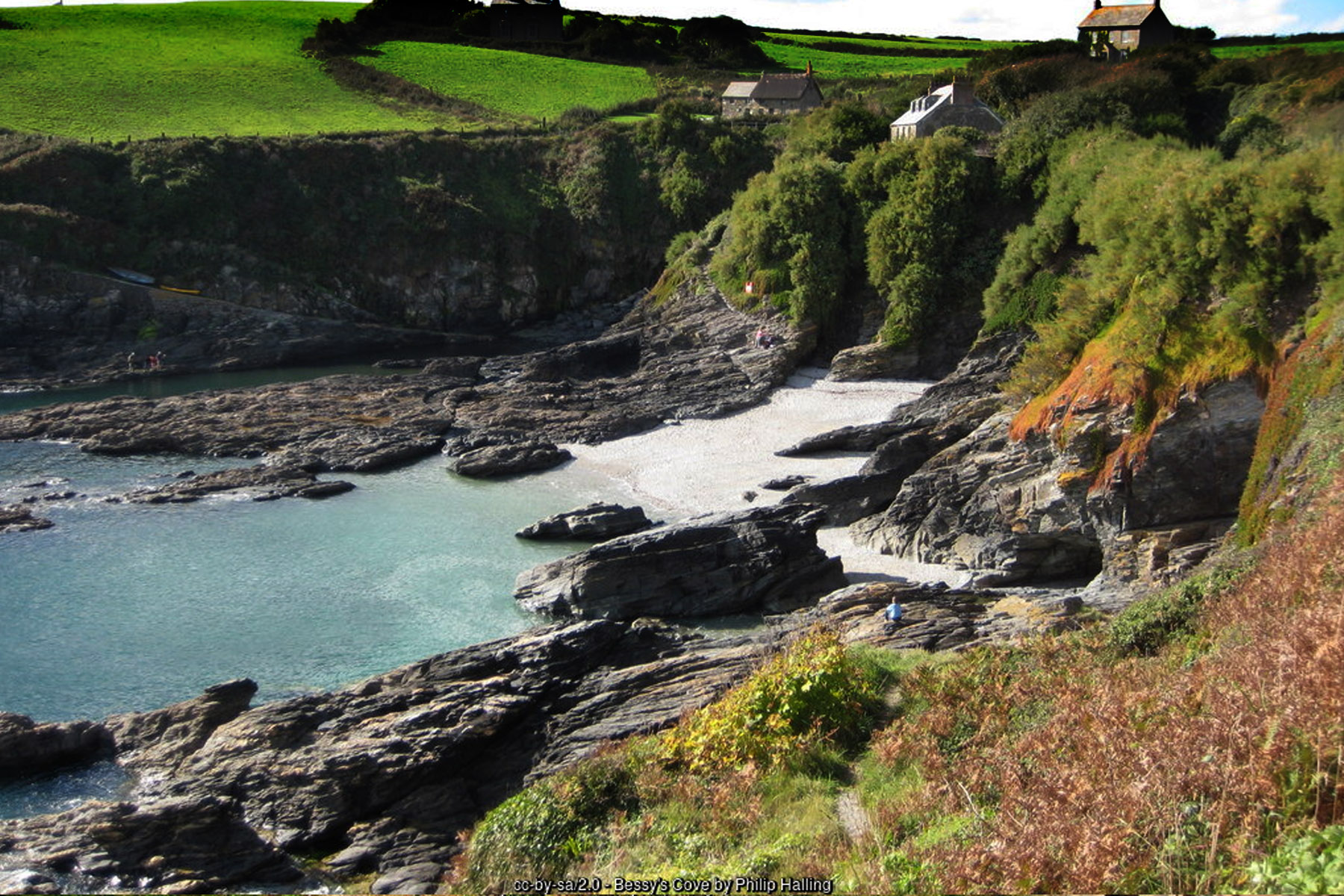
The Carters' operation depended entirely on the geography of these coves - narrow, easily hidden gullies, small caves and a shoreline that could not be watched from any single vantage point - and, by some accounts, on secret passages said to connect the shore to houses on the cliff above. It could not last. By 1801 customs officers had begun intercepting vessels bound for the cove, seizing around a hundred ankers of spirits from one landing, and John Carter handed control of the business to his son-in-law shortly before his own death, intestate, in November 1803. The lease on the cove was put up for sale that same year, and the final blow to any hope of a smuggling revival came in the mid-1820s, when the Coastguard built a row of cottages directly overlooking Coule's Cove specifically to keep watch over it - cottages that still stand today, now Grade II listed, and stand as a quiet, permanent monument to the trade they were built to stop.
From smugglers' hideout to musicians' retreat
The story of Prussia Cove does not end with the smugglers. The wider estate around the coves passed through various private hands through the Victorian era - a substantial house was built here in 1885 for a retired archdeacon, and in 1911 the architect Philip Tilden began an ambitious house at Porth-en-Alls on the site, a project left unfinished when the First World War intervened. In April 1947 the battleship HMS Warspite ran aground nearby while under tow to be broken up for scrap, a sudden and dramatic postscript to the area's long relationship with the sea. Its rocks and coves have also drawn film crews over the years, including the BBC's 1975 Poldark and the 2004 feature film Ladies in Lavender, starring Judi Dench and Maggie Smith, both making use of the cove's unspoiled, cut-off character.
That same character is what has made the Prussia Cove estate home, since 1972, to the International Musicians Seminar, a chamber-music course founded by the Hungarian violinist Sándor Végh and Hilary Tunstall-Behrens. Still based at Porth-en-Alls on the estate, the seminar remains a genuinely prestigious fixture in the classical music world, currently with Sir Simon Rattle as president and the cellist Steven Isserlis as artistic director, and it continues to run its long-standing spring and autumn courses on this quiet corner of the Cornish coast, drawing professional musicians from around the world to a setting that could hardly feel further removed from a concert hall.
Geology, wildlife and a private landscape
The coastline either side of Prussia Cove, from Cudden Point to the cove itself, is recognised as a Site of Special Scientific Interest for both its wildlife and its geology, and forms part of what is now the Cornwall National Landscape (the area formerly designated an Area of Outstanding Natural Beauty). Geologists have taken a particular interest in unusual coastal tufa and speleothem deposits found in small caves around Prussia and neighbouring Stackhouse coves - mineral formations more usually associated with limestone country, an intriguing anomaly on a coast built from much older, harder rock. For the ordinary visitor, the appeal is more straightforward: contorted, sea-battered cliffs, deep rockpools at low tide, gullies cut by the sea over thousands of years, and the low granite walls of old fishing net stores and boat winches scattered around the coves, evidence of a small fishing community that once worked here alongside - and sometimes instead of - the smugglers.
It is important to be clear that most of the land around Prussia Cove remains part of a private estate. There is no public right to wander freely across the fields and cliffside gardens above the coves, and several of the smaller coves, including much of Piskies Cove, are effectively inaccessible to anyone without local knowledge of the paths. Public access to the shoreline itself is maintained through the South West Coast Path, which runs directly through the site on its way between Perranuthnoe and Praa Sands, and via a single lane down from the small hamlet above. This is what gives Prussia Cove its particular flavour among Cornish beaches: it is a place you walk to and through, on a public path crossing private land, rather than a beach with its own dedicated visitor infrastructure.
What you will actually find today
Visitors who make the short walk down the lane and onto the coast path reach Bessy's Cove first and most easily - the largest and most visited of the four, with a reasonable patch of shingle and sand exposed at low tide, sheltered granite sides, and the tumbledown remains of old fishing huts above the tideline. King's Cove and Coule's Cove, further along, are smaller and quieter still, overlooked by the old Coastguard cottages, while Piskies Cove at the western end is the wildest and least visited of the four. None of them offer much sand at high tide, when the sea reclaims most of the shore, so timing a visit around the tide tables makes a real difference to how much beach there actually is to enjoy. The water here can be clear and inviting on a calm day, good for a snorkel around the rocks, but this is not a beach for a lounging, all-day family visit in the way that nearby Praa Sands is - it rewards a shorter, more exploratory visit, ideally combined with a walk along the coast path in either direction.
Visitor Information
Parking
Parking is very limited: a small, privately run field car park sits at the end of the lane, some way back from the coves themselves, and it fills up quickly on busy summer days. There is no large public car park here, so arriving early or visiting outside peak season is strongly advised.
Facilities
There are no visitor facilities at Prussia Cove itself - no shop, cafe or public toilets, and no RNLI lifeguard cover at any time of year. The nearest shops, pubs and cafes are in Perranuthnoe and Praa Sands, both within easy reach by car or on foot via the coast path.
Disabled Access
Access is difficult: a narrow lane and coast path lead down to the coves with uneven, rocky ground and no level path to the shore, so this site is not practical for wheelchair or pushchair users. There is no dedicated Blue Badge parking provision at the cove.
Things to Do Nearby
- Perranuthnoe, the nearest village beach, a short walk or drive to the west along the coast path
- Kenneggy Sands, a quieter, undeveloped beach a little further east towards Praa Sands
- Praa Sands, the large family sand beach and village a short distance to the east
- The South West Coast Path, which runs directly through the Prussia Cove estate between Perranuthnoe and Praa Sands
Places to Stay
Prussia Cove itself has no dedicated holiday accommodation listings of its own - much of the surrounding land is private estate. The nearest places with a good choice of places to stay are the neighbouring villages, and Praa Sands in particular has a well-established range of options:
Frequently Asked Questions
Page last updated: 14 September 2026.