Praa Sands
A Mile of South-Facing Sand and Dunes in Mount's Bay - Cornwall's Favourite South-Coast Surf Beach
Praa Sands, Penzance, Cornwall, TR20 9TQ
Praa Sands is a broad, gently curving mile of pale, shell-flecked sand facing south across the western reaches of Mount's Bay, midway along the coast between Penzance and Helston, just off the A394. It is the largest and most popular beach in this stretch of West Cornwall after Marazion itself, and it looks the part: a long, open sweep of sand backed by low, undulating dunes and framed at either end by rocky headlands, with a small village of the same name tucked in immediately behind it. Where Marazion's identity is bound up with the view across the water to St Michael's Mount, Praa Sands is a beach that simply gets on with being a beach - a genuine, all-day, sand-between-your-toes stretch of coast that has become one of the most reliably busy family and surfing beaches on Cornwall's south coast.
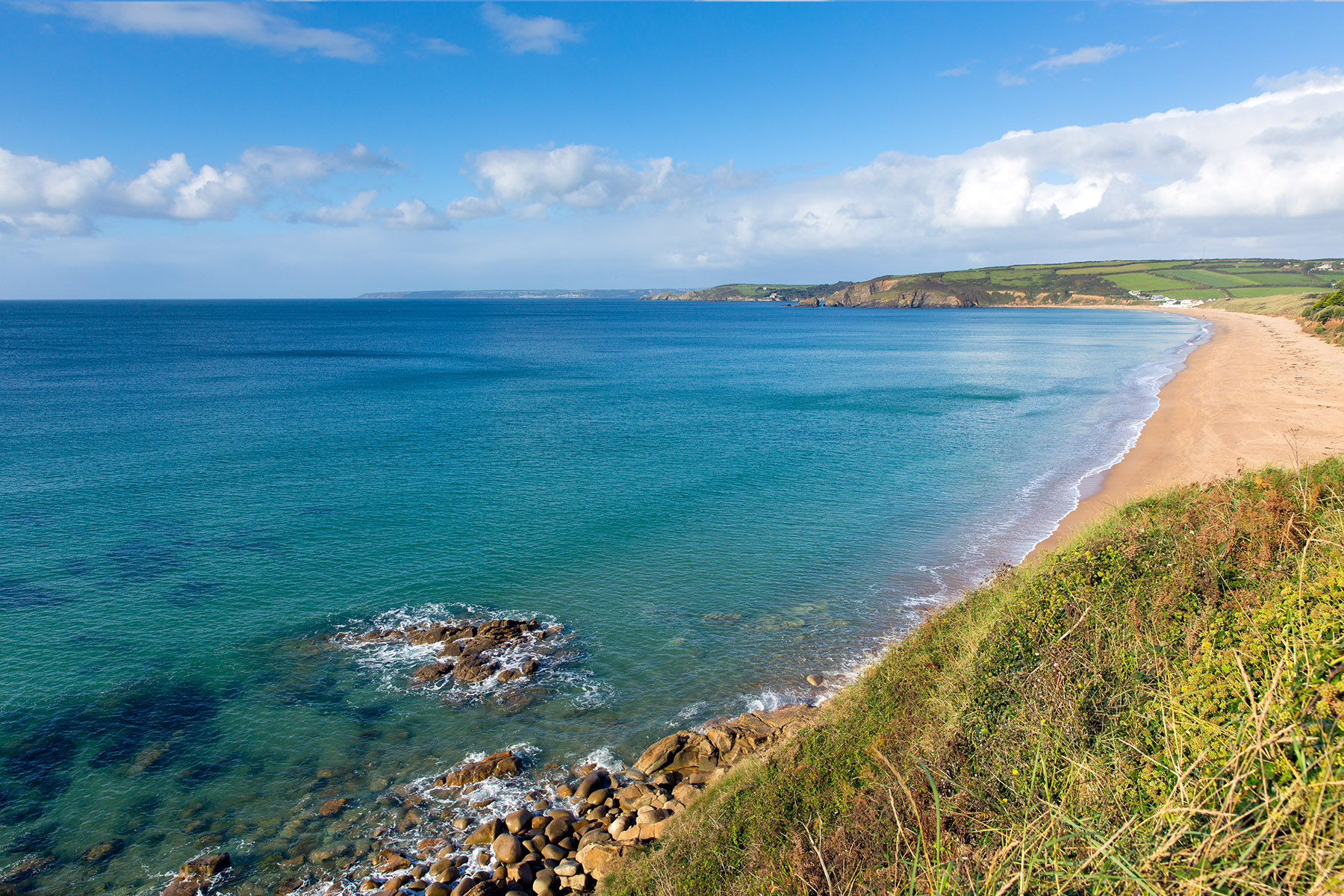
The beach sits within the Cornwall National Landscape (the area formerly known as the Area of Outstanding Natural Beauty), and its geology is part of the draw for anyone who looks a little closer than the sand itself: at the western end, close to the village, Folly Rocks forms a Site of Special Scientific Interest, notable among geologists for its exposures of granite porphyry, a coarse igneous rock quite different from the granite that makes up most of Cornwall's better-known headlands. Storms and heavy winter seas can strip back the dry sand considerably along this stretch, and the low cliffs at the beach's southern end are subject to ongoing erosion, while the dune system behind the beach is fragile enough that visitors are asked to keep off the dunes themselves and use the marked paths down onto the sand rather than cutting new routes through the marram grass.
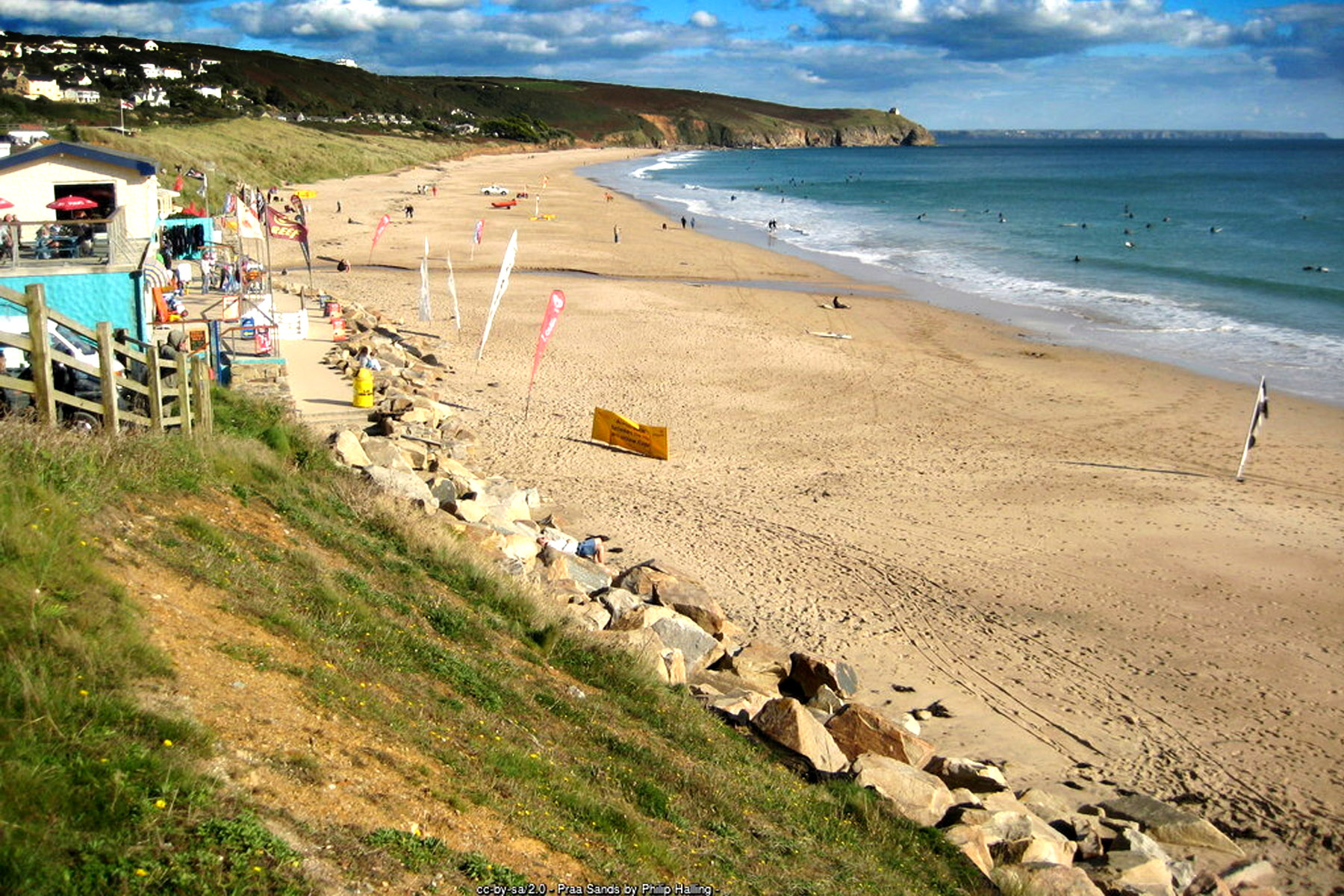
The village behind the beach, small as it is, punches well above its weight for facilities. At the western end, closest to the main car park, a cluster of businesses forms the heart of the beach scene: The Welloe, a beachfront restaurant and bar with a "ringside seat for the surf and sand below" serving pizzas and seafood and welcoming well-behaved dogs on the lead, sits right at the water's edge, while the StonesReef complex nearby brings together the Boatshed Activity Centre for watersports hire, the Stones Reef Beach Bar & Kitchen, Slipway Ice Cream, and the Beachcomber self-catering holiday cottages under one roof, describing itself as offering everything needed to "play, eat, drink and sleep" without leaving the beach. A general store and surf shop in the village covers the basics for a day on the sand, and Global Boarders, a surf school established in 2005 and one of the longest-running in the area, runs lessons and hires out surfboards, kayaks, stand-up paddleboards and wetsuits directly from the beach, making Praa Sands a genuinely easy place to learn to surf rather than just watch other people doing it.
Surfing is, in fact, one of the main reasons experienced Cornish beachgoers rate Praa Sands so highly. As a south-coast beach, it catches swell that many south-facing Cornish beaches miss out on, and it has a reputation for punchier, more powerful waves than the classic gentle family beach - waves that can break heavily and close to shore, especially around high tide, giving it a slightly different character from the mellower sand of somewhere like Marazion. That makes it a genuine destination for experienced surfers and bodyboarders, particularly when the more famous north-coast breaks are blown out or too rough, while beginners are well catered for through lessons with the local surf school and by choosing calmer, smaller-swell days. Families, meanwhile, tend to gravitate to the shallower water and gently shelving sand around the lifeguarded western end near the village, where the beach's holiday character - rock pools to explore at the eastern end, plenty of space for sandcastles, and cafes and ice cream within easy reach - comes to the fore.
That said, Praa Sands is not a beach to take for granted, and it is worth being honest about its hazards rather than glossing over them. Strong undercurrents and rip currents can develop here, especially at low water and when the sand shelves away quickly close to the shoreline, and the safest time to swim is generally on a rising tide when conditions allow, well within the lifeguarded area. RNLI lifeguards patrol Praa Sands seasonally - typically with daily cover from early May into late September, plus weekend and school-holiday cover around Easter and into October half term, with patrol hours of 10am to 6pm - and the RNLI's own advice for this beach is unambiguous: no flags means no lifeguards, so only swim between the red and yellow flags when they are flying, and never swim alone. Much of the beach, especially away towards the quieter Hendra end to the east, falls outside the lifeguarded zone even during the season, so it pays to stay close to the patrolled stretch if you are not a confident, experienced sea swimmer.
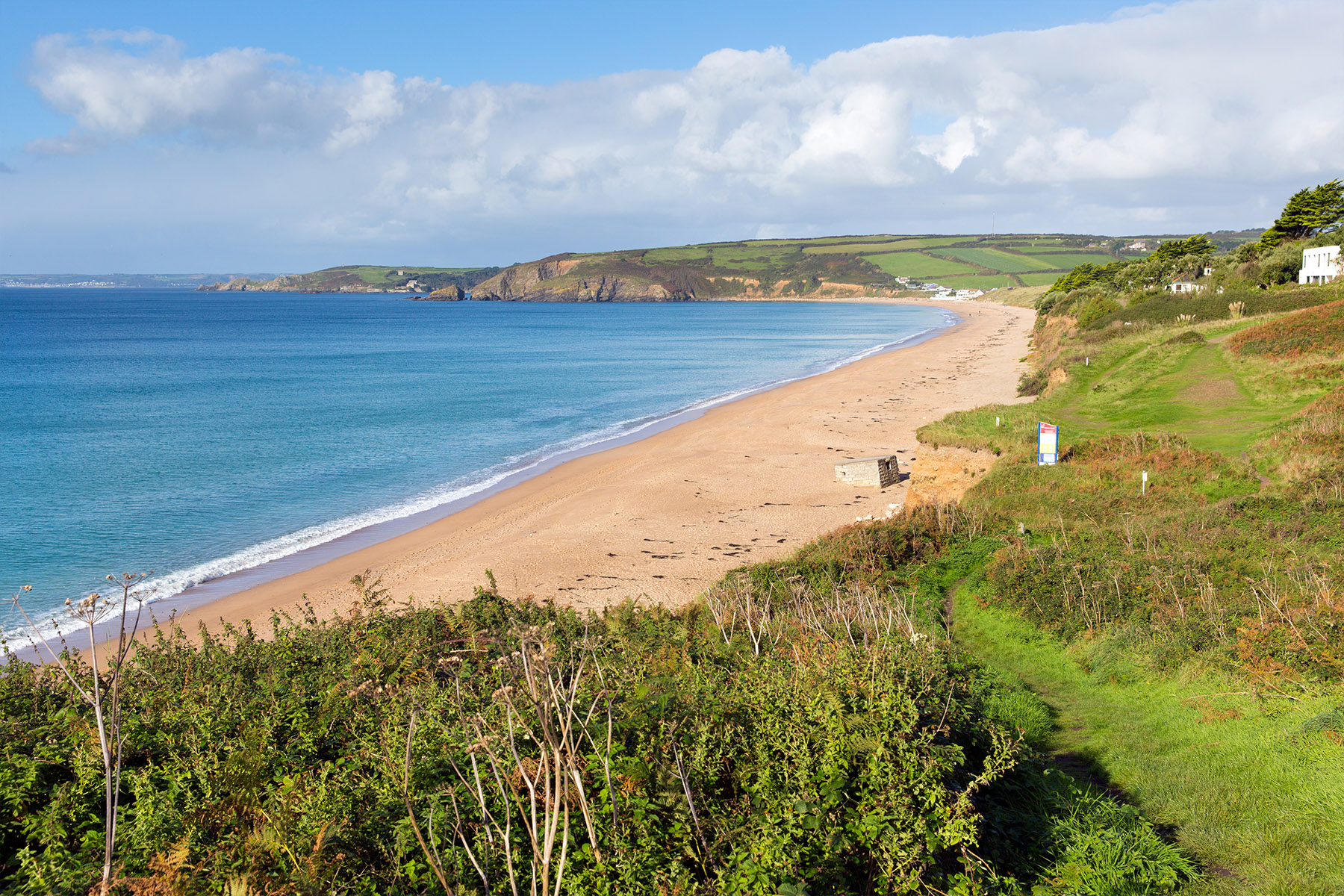
History has left its own mark on this stretch of coast. A granite memorial on the green at Praa Sands, unveiled in 2013, commemorates the crew of a Sunderland flying boat, piloted by Colin Walker, which was deliberately beached here during the Second World War after running into difficulty - remarkably, without loss of life - and the beach was also used for testing military landing craft and canoes during the war. Older still is the area's mining history: a pumping engine associated with the Mount's Bay Consols mine once stood at the beach's western end, part of the same nineteenth-century industry that has left far more dramatic traces a short distance to the east.
That mining heritage is best explored by following the South West Coast Path east out of Praa Sands towards Rinsey Head and Trewavas Head, a walk of a mile or two along dramatic, wildlife-rich clifftop that is one of the most rewarding short excursions in this part of Cornwall. At Rinsey, reached from its own small National Trust car park, the engine house of Wheal Prosper stands on the cliff edge above a small, tide-dependent cove; walking on from there, the coast path leads to the far more striking sight of Wheal Trewavas, a pair of substantial nineteenth-century copper mine engine houses perched dramatically on the sea cliffs, nearly a hundred feet above the waves, close to Trewavas Head itself. Wheal Trewavas worked its undersea copper lodes from the 1830s into the 1840s, employing around 160 men at its peak before flooding brought mining to an end; both engine houses are Grade II listed and the site is one of the most photographed ruins on this coast, though visitors are strongly advised to keep strictly to the coast path, since numerous mine shafts, some hidden in the gorse and bracken, remain in the surrounding ground. The whole stretch, from Praa Sands through Rinsey to Trewavas Head, is also good ground for spotting choughs, peregrine falcons and, out to sea, porpoises, dolphins and even basking sharks in the right season.
Praa Sands does not currently hold Blue Flag or Seaside Award status - Cornwall's official 2026 list for both awards does not include the beach - though this has little bearing on its enduring popularity with both local families and visiting surfers. Dogs are welcome on the beach for most of the year, subject to the same seasonal restriction that applies at many of Cornwall's busiest beaches: no dogs are permitted between 10am and 6pm from 1 July to 31 August, under Cornwall Council's Public Spaces Protection Order, with dogs free to enjoy the beach at all other times. Parking, unlike at some of Cornwall's more old-fashioned beach car parks, is on a pay-and-display basis rather than free, reflecting the beach's popularity and the private ownership of some of the parking close to the sand - it is well worth checking current rates and any time limits on arrival, particularly in peak season when spaces fill quickly.
Visitor Information
Parking
Pay-and-display car parking is available close to the beach at the western end, near the village. There is no large free car park here, so check current charges and any time limits on arrival, especially in peak season.
Facilities
Toilets near the car park, a general store and surf shop, beachfront pubs, restaurants and cafes including The Welloe and the StonesReef complex, and a surf school offering lessons and equipment hire. RNLI lifeguards provide seasonal cover - check current dates locally.
Disabled Access
Access from the car park to the sand at the western end is relatively level and manageable, though the beach itself is soft sand rather than a hard surface. Blue Badge parking provision should be confirmed with Cornwall Council or the relevant car park operator before you travel.
Things to Do Nearby
- Kenneggy Sands, a quieter, more secluded sandy beach a short distance west along the coast
- Prussia Cove, a cluster of small coves further along the coast towards Perranuthnoe, once the haunt of Cornish smugglers
- The South West Coast Path, which runs along the top of the beach and leads east towards Rinsey Head and Trewavas Head
- Rinsey and Trewavas Head, where the cliffside ruins of the Wheal Trewavas copper mine engine houses, and the smaller Wheal Prosper engine house at Rinsey, are a dramatic reminder of Cornwall's mining past, reached on foot along the coast path
Places to Stay
Frequently Asked Questions
Page last updated: 14 September 2026.