Back to English Heritage Cornwall
Dupath, Callington, Cornwall PL17 8AD | 0370 333 1181
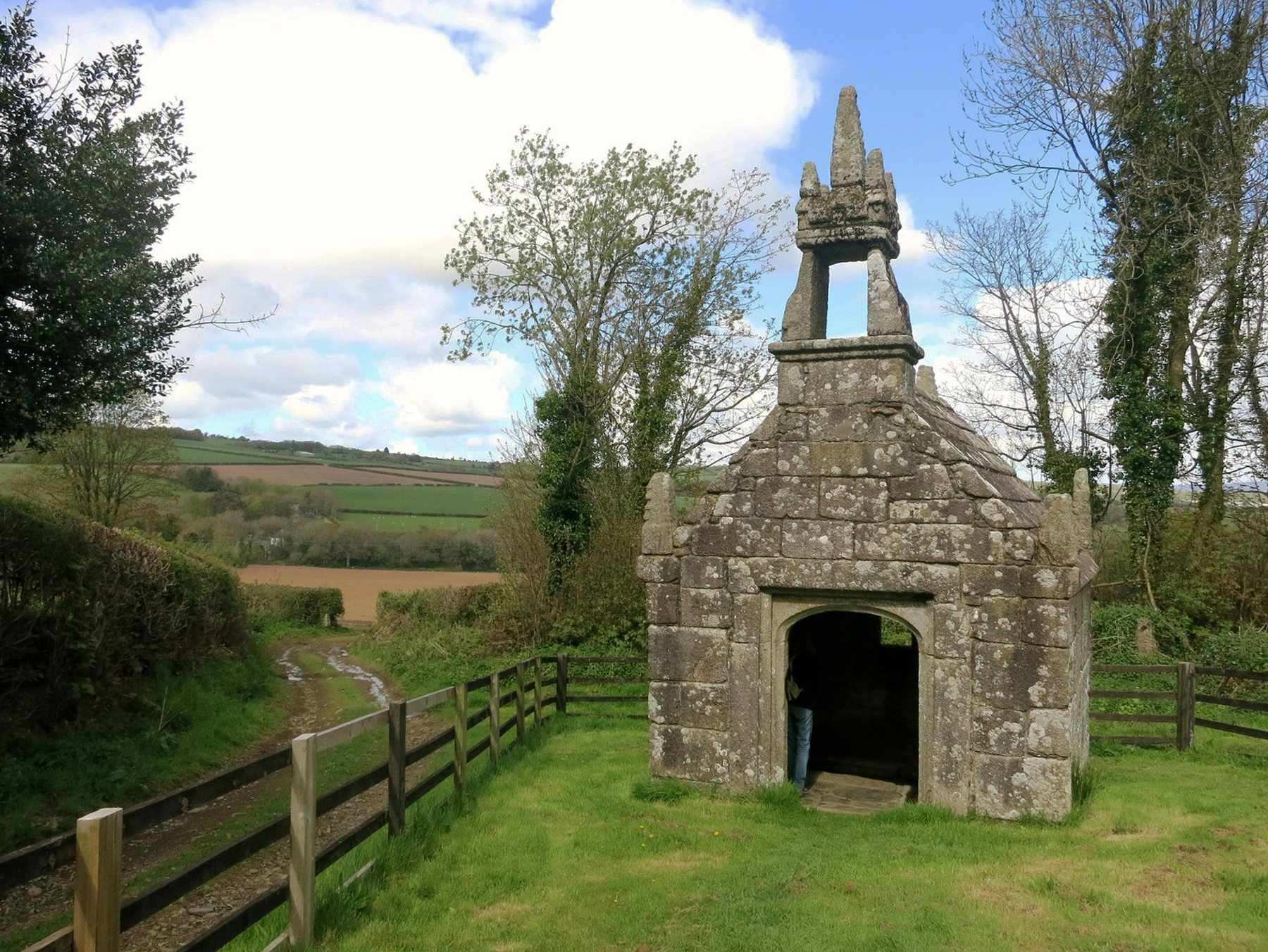
Tucked away on a working farm near Callington, Dupath Well is one of the most complete and best-preserved holy well-houses anywhere in Cornwall. Built around 1510 by Augustinian canons from the nearby St Germans Priory, this small granite chapel was raised over a natural spring that had already been venerated for generations, and it survives today looking much as it must have done more than five hundred years ago.
Holy wells were once a familiar feature of the Cornish landscape, with around forty such structures built across the county during the medieval period. Dupath is an unusually late and grand example of the type: a proper stone building, complete with a steeply pitched slate roof, weathered corner pinnacles and an ornate bell turret above the entrance, rather than the simple stone surrounds found at many other Cornish wells. Inside, the spring still flows beneath the threshold, feeding a sunken granite basin that was once used for bathing.
The well was closely associated with cures for whooping cough, and pilgrims are thought to have left offerings at the spring in much the same way people still toss coins into wishing wells today — a source of income the canons of St Germans are recorded as having guarded closely. Local folklore added a darker story of its own: a legend tells of two Saxon chieftains, Colan and Gottlieb, who fought a fatal duel here over a woman, with Colan dying at the spring he had ridden to reach.
Dupath Well is owned by English Heritage and cared for day-to-day by the Cornwall Heritage Trust. It remains free to visit throughout the year, and its quiet farmland setting, a short walk from the car park at Dupath Farm, makes it an easy and rewarding stop when exploring this corner of south-east Cornwall alongside Cotehele, Launceston Castle and the prehistoric monuments of Bodmin Moor.
Location Map
Visitor Guide
Dupath Well is reached via brown tourist signs off the A388 between Callington and Saltash, following a farm track onto Dupath Farm. A designated parking area is provided within the farmyard, though visitors should drive slowly and watch for farm traffic and animals. From the car park, a narrow footpath with uneven, sometimes muddy surfaces leads a short distance to the well-house itself.
Once inside, take a moment to appreciate the building's careful construction: the granite gutter channelling the spring beneath the entrance threshold, the sunken bathing pool, and the small windows in each side wall balanced by a larger, more decorative window in the east wall. Water still flows continuously through the structure and out into a circular medieval trough outside, a reminder that this was, and in a small sense still is, a living spring rather than a museum piece.
A visit to Dupath Well need only take fifteen to twenty minutes, making it an easy addition to a day exploring south-east Cornwall. It combines particularly well with Cotehele a few miles to the south, Launceston Castle to the north, or the prehistoric sites of Bodmin Moor such as the Hurlers and Trethevy Quoit to the west.
Because the well-house sits within an active farmyard rather than a purpose-built visitor site, there is no ticket office, shop or interpretation panel on site — part of what gives Dupath its quiet, undiscovered character compared with Cornwall's better-known attractions. Visitors are simply free to walk in, explore the building at their own pace and listen to the sound of running water that has continued, largely undisturbed, for more than five centuries.
History
Dupath Well was built around 1510, making it one of the last and grandest of Cornwall's medieval holy wells to be constructed. It was raised by Augustinian canons from St Germans Priory, a few miles to the south, who owned the land on which the spring rises. Unlike the simple stone surrounds found over many Cornish springs, Dupath was given a substantial chapel-like building of dressed granite, complete with a steep slate roof, ornamental pinnacles at each corner and a bellcote above the doorway — architecture more usually associated with a small chapel than a well.
The spring itself was already venerated before the canons built over it, part of a wider medieval tradition in which around forty springs across Cornwall were enclosed within purpose-built structures. Dupath's waters were credited with the power to cure whooping cough, and it is likely that pilgrims left small offerings at the well in the hope of a cure, providing a modest income for the priory in a practice that religious houses of the period are known to have carefully protected.
The Reformation of the 16th century officially condemned the veneration of holy wells as a superstitious, pre-Christian practice, yet local devotion to sites like Dupath persisted long afterwards in folk memory if not in official religious life. Over time the well accumulated its own local legends, most notably the story of Colan and Gottlieb, two Saxon chieftains said to have fought to the death over a woman, with the dying Colan reaching the spring in a final, unsuccessful bid to save himself.
The well-house survives remarkably intact. Inside, the spring flows beneath the entrance threshold and is channelled through a granite gutter into a sunken stone basin that was used for bathing, with the overflow directed outside into a circular medieval trough. Little structural change has been made to the building since the 16th century, and it remains a Grade I listed building and a scheduled monument in recognition of its rarity and completeness among Cornwall's surviving holy wells.
Today Dupath Well is owned by English Heritage and managed by the Cornwall Heritage Trust, which maintains it as one of the finest surviving examples of a Cornish holy well and keeps it freely open to visitors throughout the year. Alongside King Doniert's Stone, the Hurlers and Trethevy Quoit, it forms part of a group of smaller, free-to-visit Cornish heritage sites that the Trust cares for on English Heritage's behalf, each offering a very different window onto the county's long and layered past.
Important Features
- The well-house: a granite chapel-like building of c. 1510, one of the most complete surviving holy well structures in Cornwall.
- Corner pinnacles and bellcote: weathered decorative stonework giving the building the appearance of a small chapel.
- The sunken bathing pool: a stone basin fed by the spring, historically used by those seeking a cure for whooping cough.
- The east window: a larger, two-light decorated window contrasting with the plainer windows on each side wall.
- The medieval trough: a circular stone trough outside the building that still receives the spring's overflow.
- Local legend: the story of Colan and Gottlieb, two Saxon chieftains said to have duelled to the death at the well.
Visitor Information
Parking
A designated parking area is available within the farmyard at Dupath Farm. Please drive carefully — this is a working farm.
Facilities
There are no facilities at the well itself. Callington, around a mile away, has cafes, shops and pubs.
Disabled Access
A narrow footpath with uneven surfaces leads from the farmyard to the well-house; there is no formal step-free route.
- Opening times: open any reasonable time during daylight hours, year-round.
- Public transport: limited bus services run to Callington; the well is then reached via the A388 and a farm track, roughly a mile away.
- Toilets: none at the site; facilities are available in Callington.
- Food and drink: none on site; cafes and pubs are available in nearby Callington.
- Shop: no shop on site.
- Dogs: welcome on leads, though please be mindful of farm animals in the surrounding yard and fields.
- Booking: not required — free entry, no ticketing.
- Family facilities: no baby-changing facilities on site; the farmyard setting means close supervision of children is advised.
- Additional access: smoking, vaping, barbecues and naked flames are not permitted at the site.
- Visit duration: around fifteen to twenty minutes.
Things to Do Nearby
Launceston Castle
Launceston
The imposing ruin of a Norman castle with a unique tower-within-a-tower keep, once the county's administrative capital.
Find Out MoreThe Hurlers Stone Circles
Minions, nr. Liskeard
Three Bronze Age stone circles set on the open moorland of Bodmin Moor, a grouping unique in England.
Find Out MoreTrethevy Quoit
Darite, nr. St Cleer
One of Cornwall's finest Neolithic burial chambers, a dramatic granite dolmen near St Cleer.
Find Out MoreCallington
Nearest town
A historic market town on the edge of the Tamar Valley, with shops, cafes and pubs.
Find Out MoreCotehele
St Dominick, nr. Saltash
A late-medieval Tudor house and estate above the Tamar Valley, cared for by the National Trust.
Find Out MoreFrequently Asked Questions
Official English Heritage Site
For the latest access information, events and any temporary restrictions, check the official English Heritage page for Dupath Well before you travel.
Explore More Cornwall Heritage
All English Heritage Sites Cornwall Attractions National Trust Cornwall
Page last updated: 25 August 2026.