Loe Bar
The Great Shingle Barrier that Created Cornwall's Largest Lake
Loe Bar, near Porthleven, Cornwall, TR13 0RD
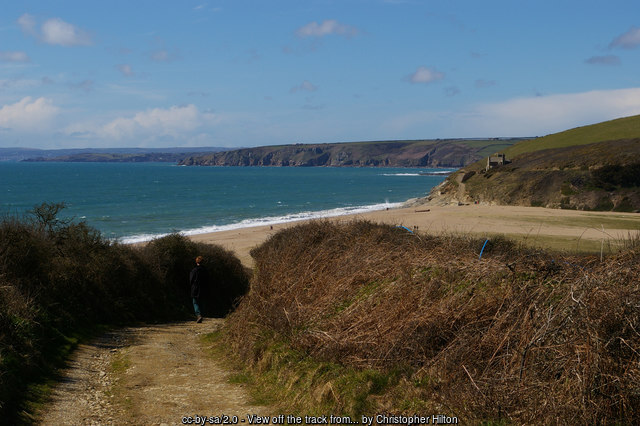
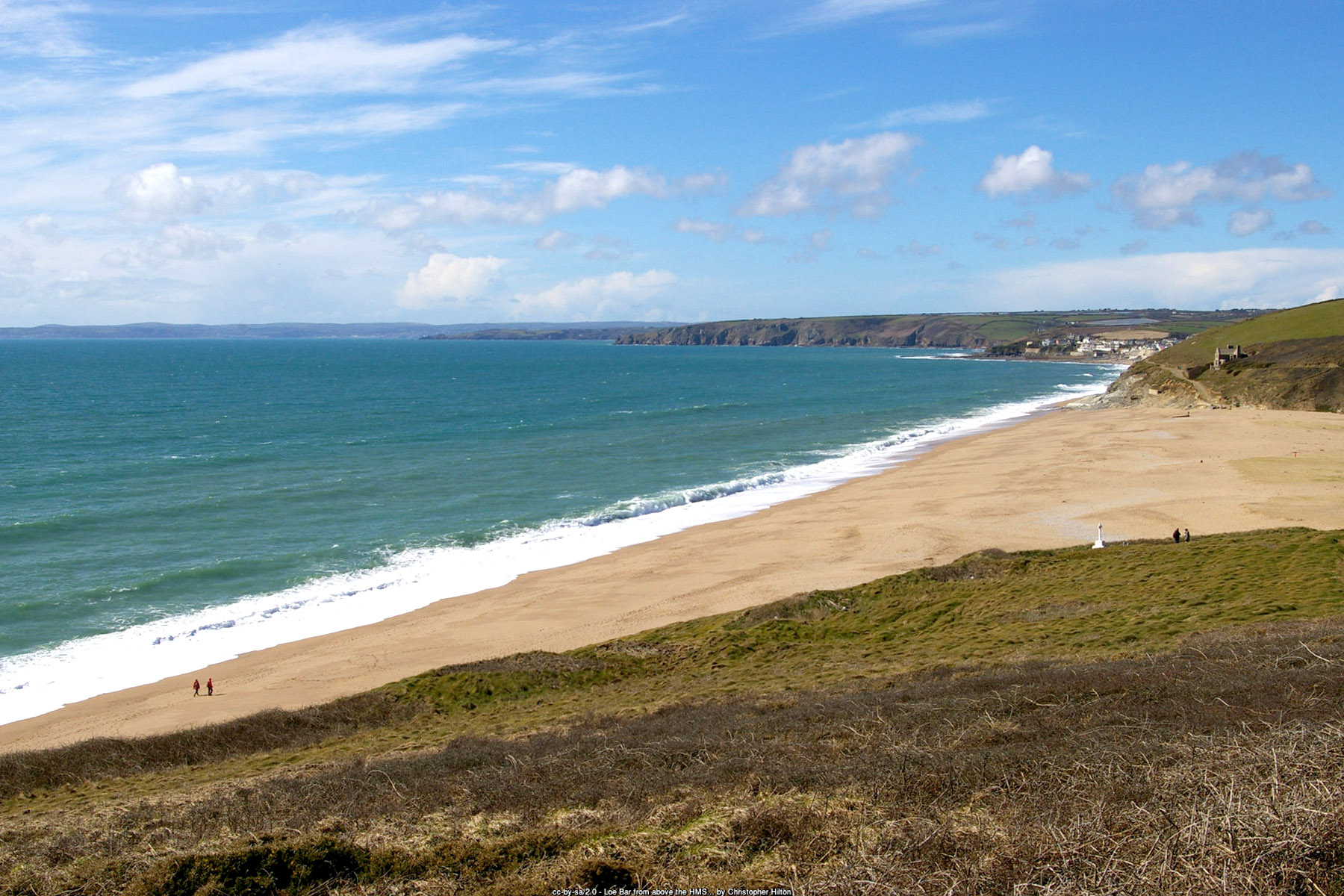
Loe Bar is one of the most physically dramatic and geologically unusual stretches of coastline anywhere in Cornwall: a vast, arcing bank of shingle roughly half a mile south of Porthleven that stands between the open sea and Loe Pool, Cornwall's largest natural freshwater lake. There is no direct road to it and no car park at the beach itself. Visitors reach it on foot, either along the South West Coast Path or down through the wooded grounds of the National Trust's Penrose Estate, and that lack of easy access is part of what has kept it so wild. It sits within the Cornwall Area of Outstanding Natural Beauty, is designated a Site of Special Scientific Interest and a Geological Conservation Review Site, and carries a history that runs from prehistoric coastal change through naval disaster, life-saving invention, centuries-old flood-control tradition and Arthurian legend, all wrapped around one very simple and very serious message for anyone standing on its shingle: this is not a beach for swimming.
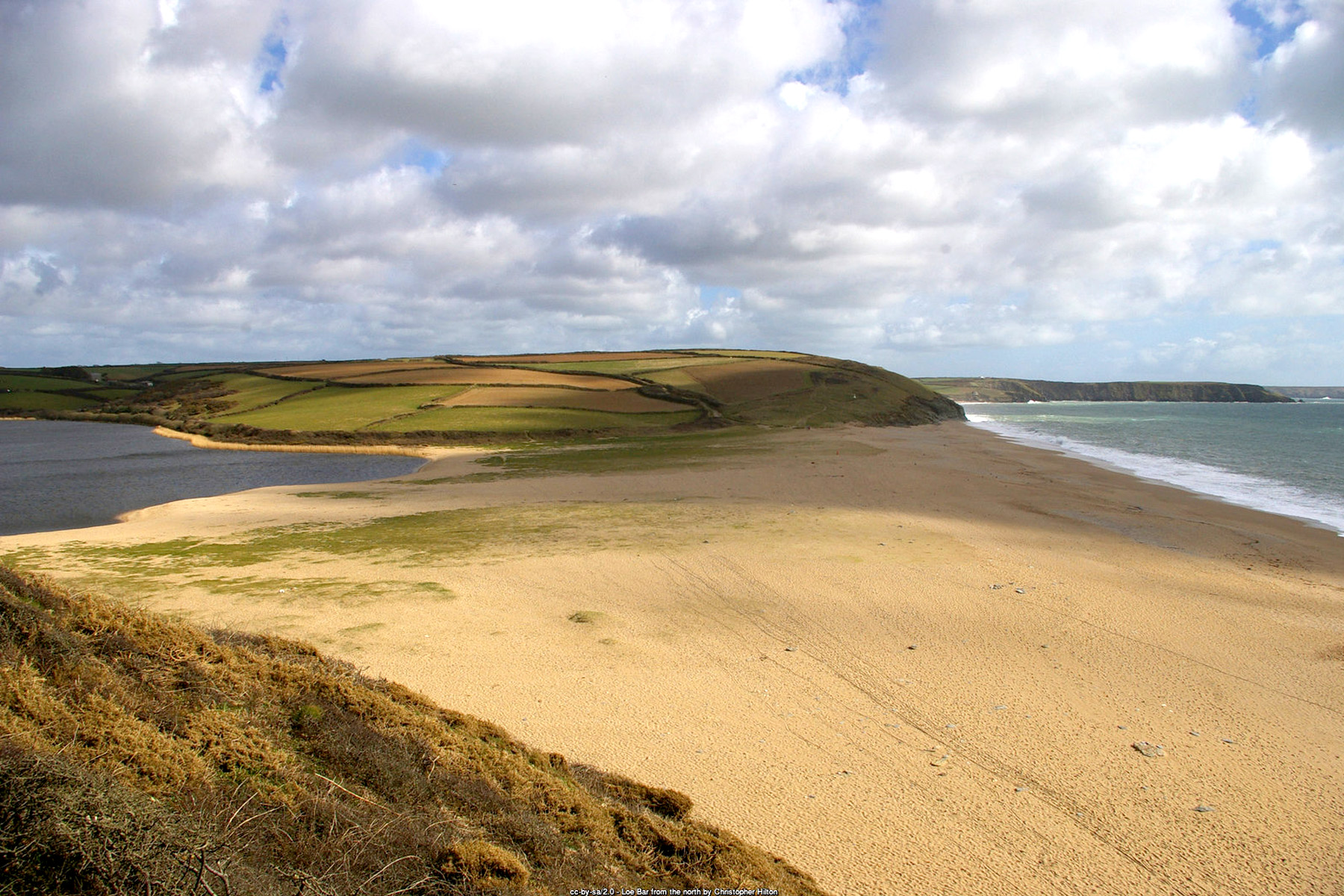
The bar itself is the geological star of the show. It is a barrier beach made up predominantly of shingle - approximately 86 per cent chalk flint, around 9 per cent quartz, with the remainder gritstone and other material - much of it thought to have been carried along the coast by longshore drift rather than derived purely from local rock. Wave action has built this bank up over a very long period, quite possibly spanning centuries or even millennia, and there is good evidence that it has grown substantially since around the 1300s. In doing so it did something no ordinary beach does: it sealed off the mouth of the River Cober, which once flowed out to sea here as an open tidal estuary, and in the process created Loe Pool, a lake now covering around 50 hectares (about 120 acres) and recognised as the largest natural body of fresh water anywhere in Cornwall. For much of its history the pool was not fully fresh at all - because the bar remained porous, seawater continued to seep through it and the lake stayed brackish - and it only became predominantly freshwater after around 1875, when the artificial drainage adit that lets the lake empty into the sea was enlarged. The whole formation is a rare, slow-motion demonstration of how a beach can reshape an entire river system, and it is precisely this process that has earned Loe Bar and Loe Pool their Geological Conservation Review status.
That same isolation and rarity make the area ecologically outstanding, even if a 2010 condition assessment found Loe Pool in "unfavourable condition," citing inappropriate water levels and pollution from agricultural run-off and sewage discharge as ongoing pressures. The lake and its fringing wetlands support rare aquatic plants and are a genuinely significant site for birds, with over 1,200 wildfowl recorded overwintering here and close to 80 bird species using the site across the year. Loe Bar itself is home to the only British population of a distinct subspecies of the sandhill rustic moth, known as leechi, found nowhere else in the country, and conservation work in recent years has included efforts to reintroduce strapwort, an extremely rare plant that had not been recorded at the site since 1915. It is a landscape that rewards a slow, observant walk rather than a quick dash across the shingle - as much a nature reserve as a beach, and managed accordingly by the National Trust as part of its wider Penrose Estate.
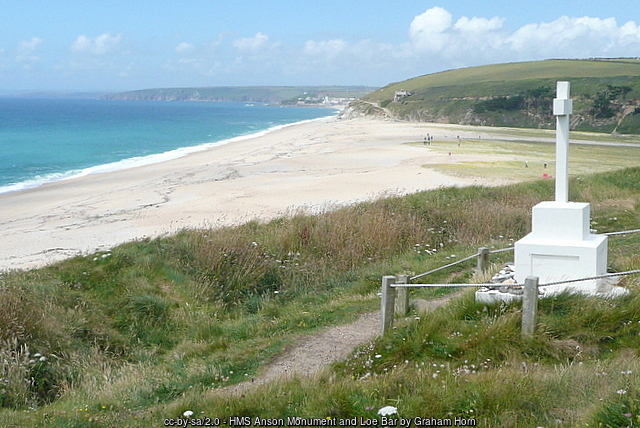
The bar's exposed, unprotected position facing straight into the prevailing weather has also made it one of the most dangerous stretches of coast in Cornwall for shipping, and its history includes two of the county's worst maritime disasters. In 1796, an unidentified troopship was wrecked here with the loss of more than 600 lives, an almost unimaginable death toll for a single wreck on this coast. Just over a decade later, in 1807, the Royal Navy frigate HMS Anson was driven ashore in a violent storm and broke up close to the bar, killing more than 100 sailors within sight, and often within reach, of people on shore who could do nothing to save them. That helplessness had a lasting and genuinely important consequence. Henry Trengrouse, a Helston cabinet maker who witnessed the Anson disaster from the shore, was so affected by watching men drown almost within reach of dry land that he devoted himself to solving the problem, and went on to invent the rocket life-saving apparatus - a rocket-fired line that could be shot out to a stricken vessel to establish a means of rescue. It became the basis for life-saving equipment used around the British coast for well over a century afterwards, a rare case of a specific, documented Cornish shipwreck leading directly to an invention that went on to save countless other lives elsewhere. The Loe Bar disasters also had a quieter legacy on land: the scale of the losses, and the numbers of drowned sailors washed ashore, contributed to changes in the law governing the Christian burial of people lost at sea.
Because Loe Bar dams the River Cober, the pool behind it has always posed a flood risk to Helston, the town a little further upstream, whenever heavy rain pushes water levels up with nowhere to drain except through the bar's own porous shingle or a narrow adit. The response to this is one of the area's most distinctive traditions: cutting the bar. For centuries, when floodwater threatened, local people would manually dig a channel through the shingle during storms to let the pooled water escape into the sea, an operation historically carried out roughly every three to four years and traditionally accompanied, in the old custom, by presenting the Mayor of Helston with a symbolic pair of leather gloves at Loe Bar - a formality that had to precede the cutting under ancient charter. Manual cutting of the bar reached its peak of frequency in the 1800s, and the very last hand cut took place as recently as 1984. Mechanised assistance was introduced from 1979, when a JCB was first used to help breach the bar, and management has since moved on further still: by 2018, three six-tonne pumps had been installed at Loe Bar specifically to manage the pool's water levels, reducing the need to physically cut the shingle bank open at all.
Loe Bar also carries one of Cornwall's most enduring pieces of Arthurian legend. Local tradition holds that this is the spot where Sir Bedivere, at King Arthur's dying command, cast the sword Excalibur into the water, watching a hand rise from the lake to catch it before it sank from view. The same legend is claimed for Dozmary Pool out on Bodmin Moor, and there is no way to settle which site came first in the oral tradition, but it was Loe Pool that the Victorian poet Alfred, Lord Tennyson chose to fix in print, weaving it into his celebrated Arthurian poem cycle Idylls of the King. That choice did a great deal to cement Loe Pool's association with the Excalibur story in the popular imagination, and the lake's still, dark, reed-fringed water, glimpsed from the coast path above the bar, makes it easy to see why both this spot and Dozmary Pool have long been thought a fitting setting for the legend.
None of this history changes the very practical advice for anyone visiting today: do not swim at Loe Bar. The seabed shelves extremely suddenly just offshore, and a powerful undertow and rip current can develop with little warning, conditions that have produced a genuine, repeated history of drownings here rather than a beach that merely looks intimidating. Locally there is a long-standing, half-joking, half-serious superstition that the Loe claims a life every seven years - a saying that reflects a real historical pattern rather than invented folklore, and one that every account of the beach takes seriously. There is no lifeguard cover at Loe Bar at any time of year. When a swell is running, the beach does draw experienced surfers, but this is firmly not a spot for beginners, and nobody should surf here alone given the total absence of any safety cover. Loe Bar has no Blue Flag or Seaside Award status, and given the hazards described above, that should come as no surprise - this is a place to be respected and admired rather than swum in.
Getting there takes a little more planning than most Cornish beaches. The nearest parking is the National Trust car park at Penrose, close to Helston, and from there it is roughly a mile's walk through Penrose's mixed woodland and open parkland, joining the South West Coast Path for the final approach to the shingle. There is nothing at the beach itself in the way of facilities - no café, no toilets, no shop - though all of those are available back at the main Penrose Estate car park area, making a there-and-back walk a practical way to combine the beach with refreshments either side. The beach itself is predominantly shingle rather than sand, made up of that mixed geological pebble material described above, and underfoot conditions are consistent with a natural, unmanaged barrier beach rather than a groomed seaside resort. Dogs are welcome at Loe Bar throughout the year, with no seasonal ban of the kind seen at many more developed Cornish beaches, though the surrounding land's SSSI status and its importance for overwintering and breeding birds mean owners should keep dogs under control rather than letting them range freely through the fringing reedbeds and grassland.
Visitor Information
Parking
There is no parking at Loe Bar itself. The nearest option is the National Trust car park at Penrose, near Helston, from which it is roughly a mile's walk through woodland and along the coast path to reach the beach.
Facilities
There are no facilities at the beach itself - no toilets, café or shop. A café and toilets are available back at the Penrose Estate near the car park, either before or after the walk down.
Disabled Access
Access to Loe Bar involves an unsurfaced woodland and coast path walk of about a mile from the Penrose car park, with no direct vehicle access to the beach, so this route is not practicable for wheelchair users or pushchairs. Blue Badge holders can use the standard Penrose Estate car park, but from there the walk itself remains unsurfaced and uneven.
Things to Do Nearby
- Porthleven Beach, the town's flagship harbour beach, a short walk to the north
- Flambards, the theme park and Cornish life exhibition at Helston
Places to Stay
Frequently Asked Questions
Page last updated: 11 September 2026.