Polstreath Beach
A Quiet Shingle Cove Down 200 Steps, a Quarter of a Mile North of Mevagissey
Polstreath, near Mevagissey, Cornwall, PL26 6TH
Polstreath is the quietest of Mevagissey's three beaches, a small shingle cove on the South West Coast Path barely a quarter of a mile north of the working harbour, yet a world away from it in atmosphere. Screened by wooded cliffs and reached only on foot, it is easy to miss altogether from the coast path above, and the effort of getting down to it - a flight of around two hundred steps cut into the hillside - keeps numbers low even at the height of the Cornish summer, when Mevagissey's own harbourside can be thoroughly busy just a short walk away.
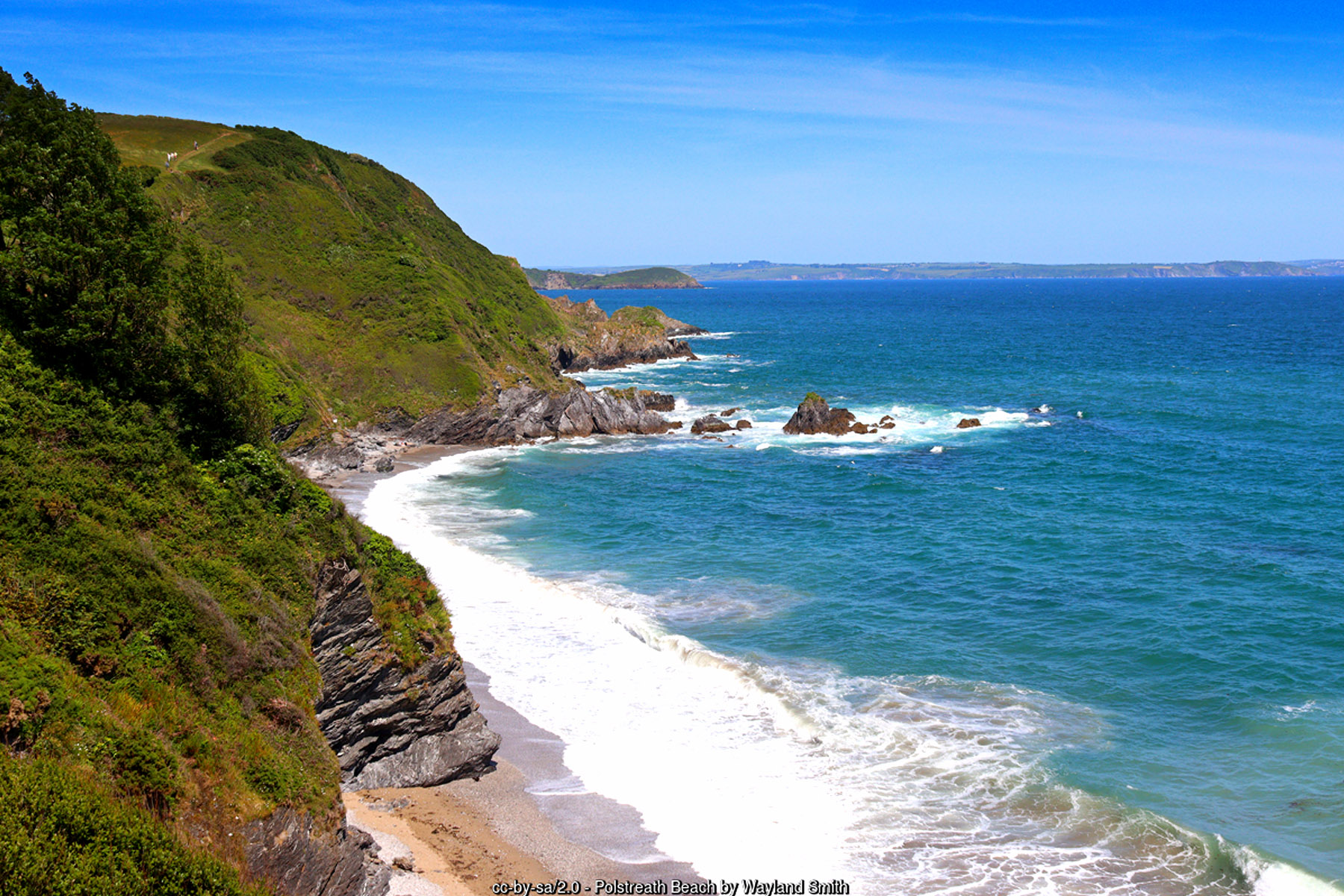
The walk to Polstreath begins in Mevagissey itself, following the South West Coast Path north out of the harbour and climbing along the wooded cliff top for around fifteen to twenty minutes before the beach comes into view below. From there, the two hundred or so steps down through the trees are the only way in - there is no road access and no car park at the beach itself, which is precisely what has kept Polstreath as unspoilt as it is. The climb back up is, inevitably, the price of the peace and quiet found at the bottom, and visitors should factor a slower, steadier pace back to the top into their plans, particularly on a warm day.
The cove itself is compact, shingle underfoot with patches of coarser sand nearer the waterline, and framed on both sides by rocky outcrops that shelter the water and offer some modest rock pooling as the tide drops. The clear, calm water here is popular for a gentle swim or paddle away from any crowds, and the rocks at each end draw a steady trickle of local anglers after mackerel and bass, particularly in the warmer months. Views from the beach look out cleanly across the English Channel, with Mevagissey's own harbour wall and the rooftops of the town visible around the headland to the south - a reminder of just how close, in a straight line, Polstreath actually sits to the bustle of the town, even though it feels considerably further away underfoot.
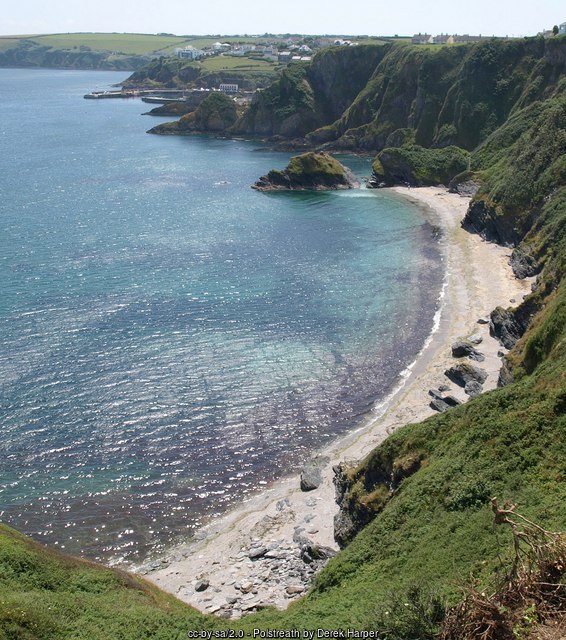
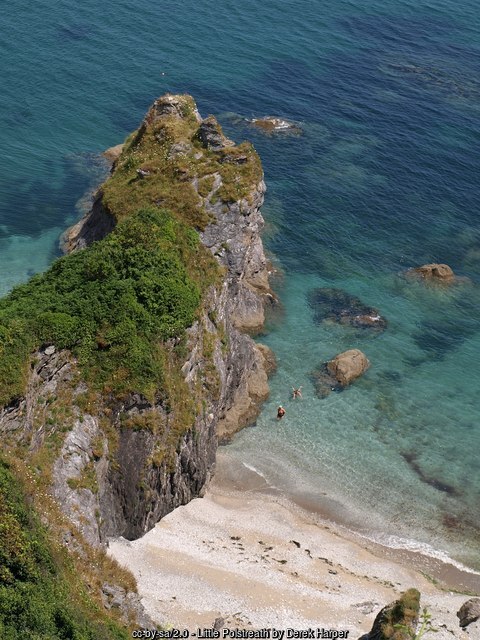
Because Polstreath has no facilities of any kind - no toilets, café or shop - a visit here works best as a deliberate, self-contained outing: bring what is needed for the visit, and treat the walk back to Mevagissey, with its full range of harbourside pubs, cafés and shops, as the natural place to refuel afterwards. There is no RNLI lifeguard patrol at the beach, so swimmers should take the same sensible precautions appropriate to any small, unwatched Cornish cove, particularly around the rocks at each end where currents can run a little stronger. A seasonal dog restriction broadly covering Easter to the end of summer applies here, in common with many Cornwall Council-managed beaches, though as with any seasonal rule it is worth checking current signage at the top of the steps before heading down, since exact dates can shift slightly from year to year.
What Polstreath offers, in the end, is precisely the kind of quiet, slightly hidden cove that rewards visitors willing to make a short effort for it: genuine seclusion within easy striking distance of a major Cornish fishing town, clear water, a bit of rock pooling and fishing, and views back along the coast that make the climb back up feel entirely worthwhile.
Geologically, this stretch of coast sits within the Gramscatho Group, a sequence of folded Devonian slates and sandstones that runs along much of south Cornwall between St Austell Bay and the Roseland, and the same grey-brown rock forms the low headlands sheltering Polstreath on both sides. The clear water and rocky margins support a reasonable variety of shore life at low tide - shore crabs, blennies and a good scattering of seaweed among the boulders - and the cove's position on the open Channel coast, without the shelter of a harbour wall, means it also picks up a touch more wave action than the beach at Mevagissey's own harbour, part of what makes it a genuine, if modest, draw for shore anglers as well as families happy to explore the rocks.
The coast path itself, both above Polstreath and on the approach from Mevagissey, is part of the wider South West Coast Path network and offers fine, largely uninterrupted views out across the English Channel, with the wooded cliffs behind the beach sheltering typical coastal scrub and a reasonable range of common woodland and seabird species. Because the walk in involves both a coast path section and a genuinely steep flight of steps, it is worth allowing more time for the return journey than the outward one, and bringing suitable footwear rather than beach sandals for the steps themselves - a small piece of practical planning that makes a real difference to how enjoyable the visit turns out to be.
Visitor Information
Parking
There is no car park at Polstreath. Park in one of Mevagissey's town car parks and walk north along the South West Coast Path, around 15 to 20 minutes, before descending roughly 200 steps to the beach.
Facilities
There are no facilities at Polstreath itself. The nearest toilets, shops and cafés are back in Mevagissey, about a kilometre away along the coast path. There is no RNLI lifeguard patrol.
Disabled Access
Polstreath is not accessible by wheelchair or with limited mobility - the only way down is via around 200 steps from the coast path. No dedicated Blue Badge bays are confirmed nearby - check current signage in Mevagissey.
Things to Do Nearby
- Mevagissey Harbour itself, with boat trips, fresh seafood and the working fishing fleet
- Mevagissey Harbour Beach and the town's working harbour, a short coast path walk south
- The Lost Gardens of Heligan, one of Cornwall's most celebrated gardens, a short drive from Mevagissey
- The South West Coast Path, which continues north from Polstreath towards Pentewan and St Austell Bay
Places to Stay
Polstreath has no holiday accommodation listings of its own - it is a small, undeveloped cove reached on foot from Mevagissey, which offers the widest range of places to stay:
Frequently Asked Questions
Page last updated: 16 September 2026.