Mevagissey Harbour Beach
A Low-Tide Beach at the Heart of One of Cornwall's Most Complete Working Fishing Ports
Mevagissey Harbour, River Street, Mevagissey, Cornwall, PL26 6UE
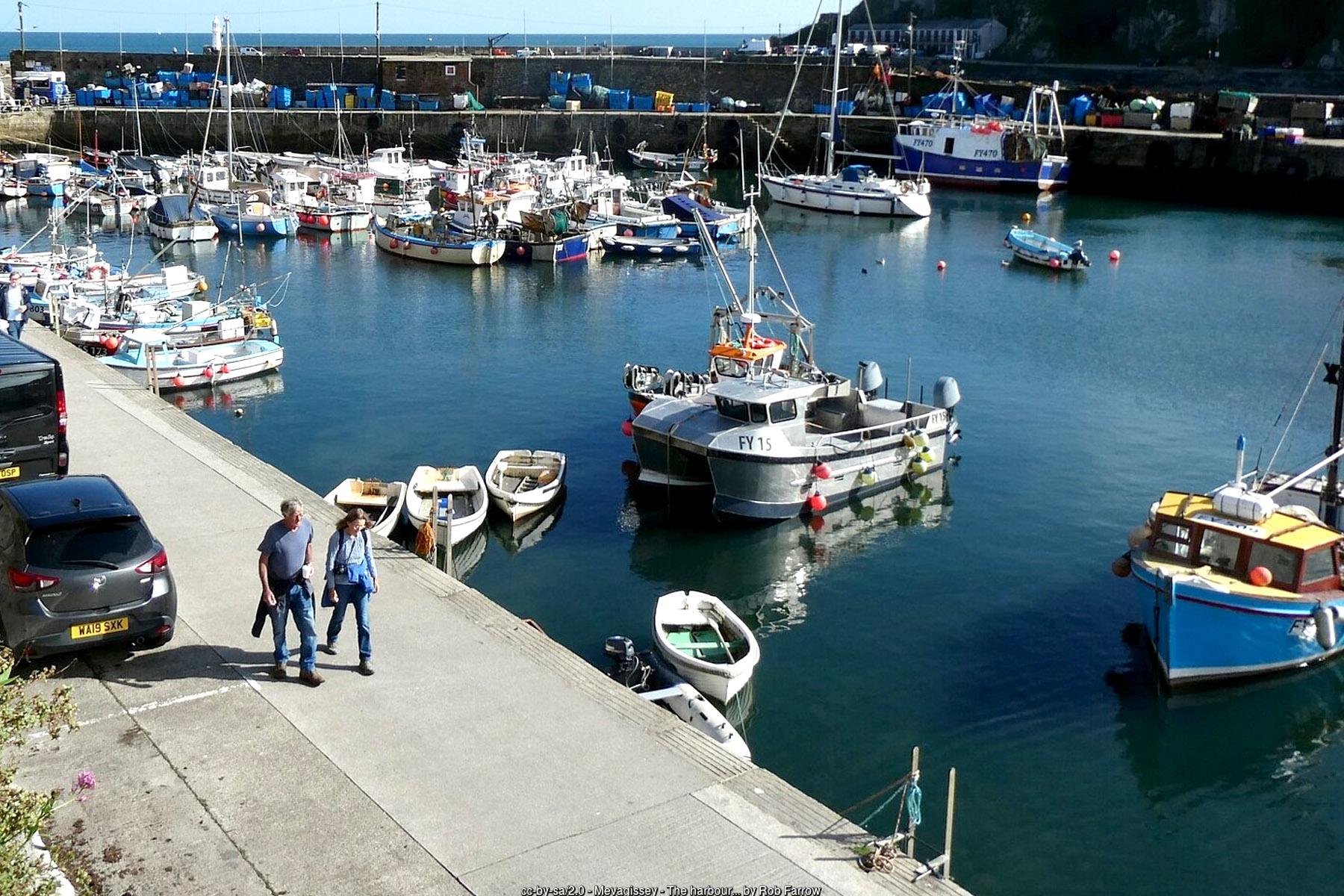
Mevagissey is a genuinely working fishing port before it is a beach resort, and its own "beach" reflects that honestly: a stretch of sand and shingle that appears within the historic inner harbour itself as the tide drops, right among the moored fishing boats, lobster pots and net lofts that still define this town more than any stretch of open sand. It is not, and does not pretend to be, a conventional sunbathing beach - anyone wanting a proper swim is better served a short walk away at Polstreath or Portmellon - but for a genuine sense of what a working Cornish harbour looks, sounds and smells like, few places in the county do it better, and the low-tide beach right in the middle of it all is as good a place as any to pause and take it in.
Mevagissey's harbour has grown over more than two centuries into one of the most complete and best-preserved working harbours on the south Cornish coast. Its inner harbour, with the East and West Quays that still frame the beach today, was authorised by the Mevagissey Pier Act of 1775, replacing an earlier, more basic medieval landing place. As the town's fishing trade grew through the eighteenth and nineteenth centuries, an outer harbour was added in 1888 under a Harbour Order granted two years earlier, giving boats better shelter from the open sea - though that new outer wall was almost immediately tested: the Great Blizzard of March 1891, one of the most severe storms recorded in England in the nineteenth century, seriously damaged it, part of a wider catastrophe along this coast that also claimed the merchant vessel Bay of Panama and dozens of lives. A further Harbour Order in 1892 authorised repairs, and the rebuilt outer wall was completed by 1897, giving Mevagissey the two-harbour layout still visible today.
For most of that history, the harbour's fortunes rode on pilchards. Mevagissey's boats fished for pilchard in vast numbers through the eighteenth and nineteenth centuries, salted and cured on shore largely by the town's women, and exported as far afield as Italy and the West Indies, as well as supplied as provisions to the Royal Navy; the single greatest recorded annual catch came in 1724, and by the early twentieth century the trade still ran to tens of millions of fish a year at its peak. The industry brought real, if sometimes precarious, prosperity, and its physical legacy - net lofts, fish cellars and the narrow, tightly packed streets climbing away from the quayside - still shapes the character of the town today, even though pilchard stocks declined sharply through the twentieth century and the trade never fully recovered after the disruption of two World Wars, both of which stripped the harbour of much of its able-bodied workforce.
The harbour's history is not only one of fishing and storms. Eighteenth-century Mevagissey had a lively, well-documented smuggling trade alongside its legitimate fishery, with French brandy, Dutch gin and other contraband landed via the Breton port of Roscoff and distributed inland through the same network of narrow streets and cellars used for the legal catch - a single successful run could be extremely profitable, and by the 1730s smuggling was a well-established local trade rather than a rare crime. A cholera outbreak in 1866 hit the town hard, and local tradition credits the outbreak's eventual retreat partly to residents' habit of boiling water for tea, inadvertently protecting them from the contaminated supply. A gentler, more curious footnote to the town's story is a long-told local legend - similar tales are attached to several English coastal towns, most famously Hartlepool - of a monkey said to have come ashore here during the Napoleonic Wars and, mistaken by suspicious locals for a French spy, hanged on the beach; the story should be read as folklore rather than documented fact, but it has stuck firmly enough to remain part of how Mevagissey tells its own history today.
Today the harbour remains a genuinely active fishing port rather than a preserved relic, home to more than sixty registered fishing vessels and around seventy working fishermen, landing mackerel, sole, ray, lobster and crab that is sold on directly through the harbourside and supplied well beyond Cornwall. Watching the fleet come and go, and the low-tide beach reveal itself among the moored boats, remains one of the most authentic harbour experiences on this stretch of coast, backed by a working town rather than a purpose-built resort.
Walking the harbourside today, the working character of the port is impossible to miss: net stores and fish cellars converted, in many cases, into shops and galleries rather than demolished, narrow lanes that were built for handling catch and gear rather than modern traffic, and a fleet of working boats tied up alongside pleasure craft and the small passenger boats that run harbour and coastal trips through the summer season. The town's population has grown into a genuine year-round community of around two thousand people rather than a purely seasonal resort, and that everyday, lived-in quality is a large part of what gives Mevagissey's harbourside - and its unusual low-tide beach - a different feel from more purpose-built Cornish resort towns along this coast.
For visitors interested in the harbour's working present as much as its past, the comings and goings of the fishing fleet are best watched from the harbour walls themselves, particularly in the late afternoon and early evening when boats return with the day's catch; fresh fish is often sold directly from the quayside or through harbourside shops rather than exclusively through wholesale markets, giving visitors a genuine, close-up connection to where their seafood has actually come from - a rarer thing to find, in this direct a form, at many larger Cornish harbours today.
Visitor Information
Parking
Mevagissey has several council-run car parks close to the harbour, including River Street and Valley Road, plus the larger Willow Car & Coach Park a short walk into the village. All are a short, level walk from the harbourside.
Facilities
The full range of Mevagissey's shops, pubs, cafés and public toilets is right at hand around the harbour. There is no RNLI lifeguard patrol, and the beach is not maintained or marketed as a swimming beach.
Disabled Access
The harbourside itself is level and easy to explore on foot or by wheelchair, though the beach that appears at low tide is reached down slipways rather than a ramp. No dedicated Blue Badge bays are confirmed at the harbourside car parks - check current signage on arrival.
Things to Do Nearby
- Mevagissey Harbour itself, with boat trips, fresh seafood and the working fishing fleet
- Mevagissey Aquarium, a small local aquarium right on the East Quay
- Polstreath Beach, a quieter shingle cove a short coast path walk north
- Portmellon Beach, a sandy beach around a mile south
- The Lost Gardens of Heligan, a short drive from the town
Places to Stay
Mevagissey itself, right by the harbour, has a good range of places to stay:
Frequently Asked Questions
Page last updated: 16 September 2026.