Back to English Heritage Cornwall
St Just, Cornwall TR19 7NP | 0370 333 1181
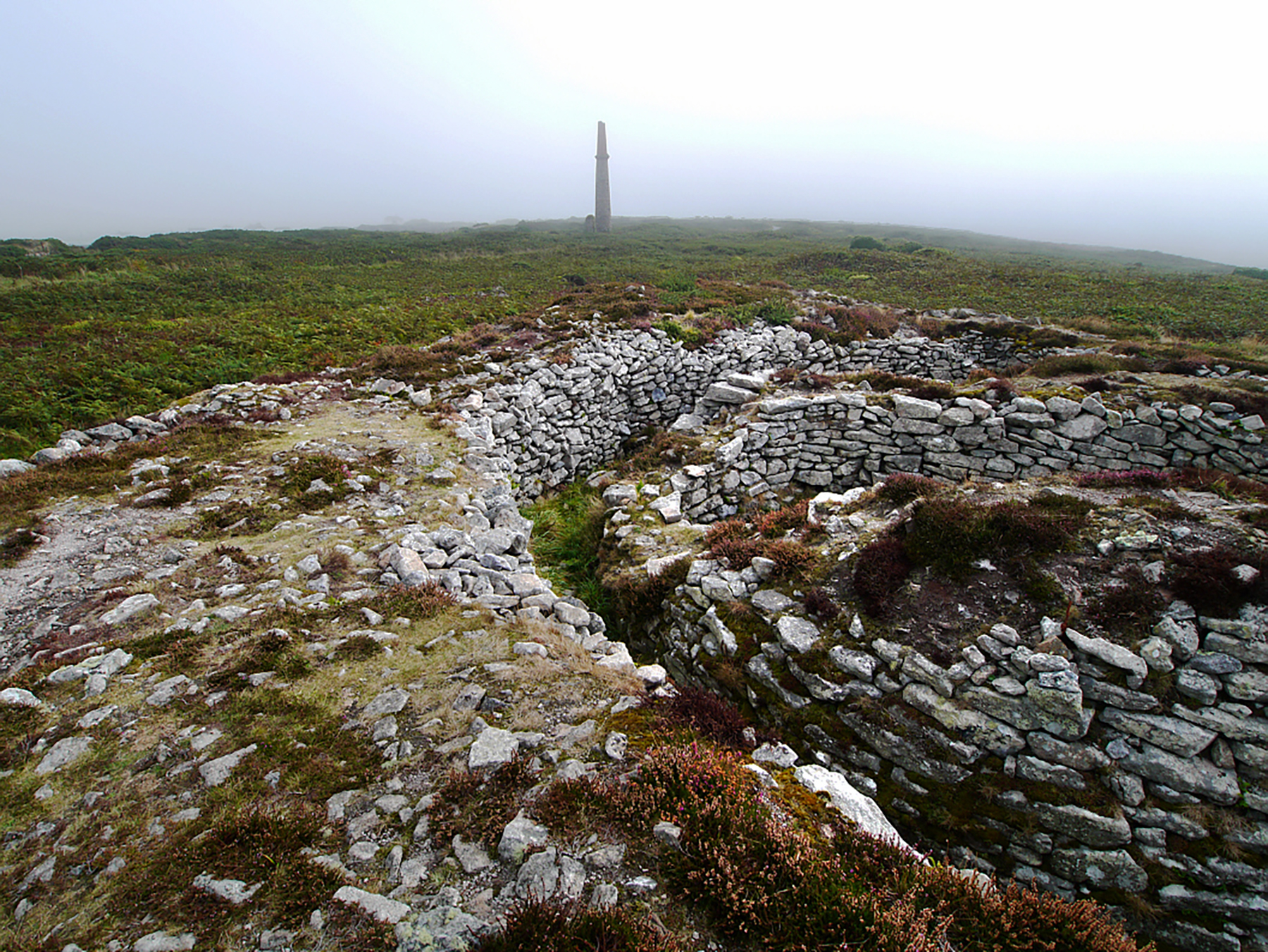
Ballowall Barrow is one of Cornwall's most unusual prehistoric monuments: a Bronze Age entrance grave, rebuilt and extended more than once, standing on open cliff-top ground above Carn Gloose near St Just. Where most barrows are simple mounds, Ballowall is a genuine puzzle — a tangle of chambers, cists and retaining walls whose exact sequence of construction archaeologists still debate. Its setting is as remarkable as the archaeology: on a clear day the views stretch out across the Atlantic towards the Longships Lighthouse and the far tip of Land's End.
The site was excavated in 1878 by the Cornish antiquarian William Copeland Borlase, whose work uncovered the barrow's complexity and, in the process of investigation, altered some of its original appearance — a common story with 19th-century archaeology. What survives today is still one of the most rewarding short stops in West Penwith: a compact, atmospheric monument that repays a slow look, set within a wider landscape of engine houses, cliff paths and older field boundaries that together tell the long story of human life at Cornwall's western edge.
Ballowall makes an easy addition to a day exploring the Tin Coast around St Just and Pendeen. It sits close to Geevor Tin Mine and within walking distance of the coast path towards Cape Cornwall, so it suits visitors combining prehistoric archaeology with the area's more recent industrial heritage. Because it is small, free and unstaffed, it also works well as a short, flexible stop for families and walkers rather than a destination in its own right.
English Heritage cares for the barrow as a scheduled monument, and it remains open to the public at all reasonable times without charge. There is no visitor centre, shop or café on site, so it is best visited as part of a wider trip to St Just, Cape Cornwall or the mining heritage attractions nearby, where facilities and refreshments are readily available.
Location Map
Visitor Guide
Ballowall Barrow rewards a slow, close look rather than a quick glance. From a distance it can appear as little more than a low grassy mound, but on approach the complexity of its construction becomes clear: overlapping chambers, small stone cists and a retaining kerb wall, built up in more than one phase over a long period of use. Visitors should look for the way later building work appears to have deliberately incorporated and reused earlier structures, rather than sweeping them away — a pattern that makes Ballowall unusual even among Cornwall's rich collection of Bronze Age burial monuments.
The clifftop setting is central to the experience. Ballowall stands above Ballowall Common near Carn Gloose, with open views along the coast towards Cape Cornwall and, on a clear day, out to the Longships Lighthouse off Land's End. This is one of the most exposed stretches of the Cornish coast, and the barrow's builders clearly chose a prominent, visible position rather than a sheltered one — a decision that has puzzled and interested archaeologists for well over a century.
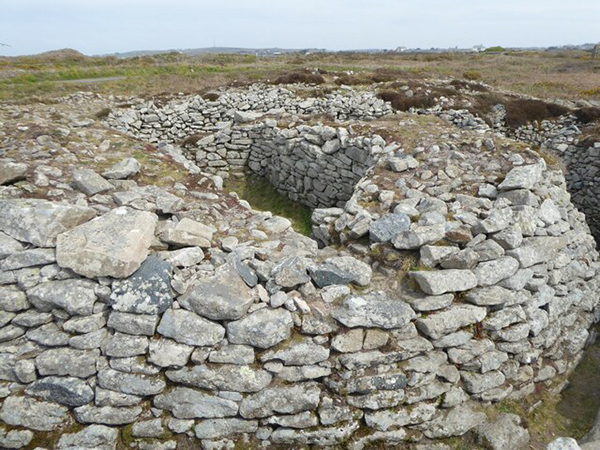
Allow around twenty to thirty minutes for a visit, longer if combined with a walk along the adjoining coast path. There is no set route around the monument, so visitors are free to walk around its perimeter and view the chambers from the paths that cross the open common. Because there are no barriers, sturdy footwear is useful, and care should be taken around the loose stonework, particularly with young children.
Weather can change quickly on this exposed part of the coast, and there is no shelter of any kind at the site, so it is worth checking conditions before setting out, especially outside the summer months. Combined with a walk to Cape Cornwall or a visit to nearby Geevor Tin Mine, Ballowall Barrow makes a memorable and easy addition to a day exploring the far west of Cornwall.
History
Ballowall Barrow is one of the most structurally complex Bronze Age funerary monuments in Cornwall. Rather than a single mound built in one episode, it appears to have developed over successive phases, with earlier burial chambers and cists incorporated into later additions and retaining walls. This layering makes it difficult to assign the barrow to a single precise date within the Bronze Age, but its overall form and the burial practices it represents place it broadly within the second millennium BC, a period when communities across West Penwith were building enduring stone monuments to mark the resting places of the dead.
The barrow's position, on exposed cliff-top ground above Ballowall Common near Carn Gloose, is itself significant. Many Cornish barrows of this period occupy prominent locations, visible from the surrounding landscape and sea, suggesting they were intended as lasting markers within the territory of the communities who built them rather than as hidden or private burial places. The dramatic Atlantic views from the site would have made it a conspicuous landmark for anyone travelling along this stretch of coast in prehistory, much as it remains today.
Antiquarian interest in Ballowall Barrow dates back to the 19th century, when the site was investigated by William Copeland Borlase, a member of the well-known Cornish antiquarian family, in 1878. His excavation revealed the monument's unusual, multi-phase structure, distinguishing it from the simpler burial mounds more commonly found elsewhere in the county. As with much Victorian-era archaeology, the process of excavation itself altered parts of the barrow's original appearance, and later scholars have had to interpret Borlase's findings alongside the physical evidence that survives on the ground today.
Modern conservation has focused on protecting the surviving structure from further erosion, weathering and uncontrolled access, while keeping the complex arrangement of chambers legible to visitors. Ballowall Barrow is now a scheduled monument in the care of English Heritage, forming part of the wider prehistoric landscape of West Penwith that includes nearby settlements such as Carn Euny and Chysauster, and the many cairns, barrows and field systems that survive across this corner of Cornwall.
Important Features
- Multi-phase entrance grave: a rare example of a Bronze Age barrow built and extended in more than one episode, rather than a single simple mound.
- Burial chambers and cists: several stone-lined chambers survive within the structure, reflecting its long and complex use.
- Retaining kerb wall: stonework defining the edge of the monument and helping to hold its structure together.
- Clifftop setting: a prominent, exposed position above Ballowall Common, with sweeping Atlantic views.
- 1878 excavation: investigated by antiquarian William Copeland Borlase, whose work revealed the barrow's unusual complexity.
- Part of the West Penwith prehistoric landscape: one of a dense cluster of Bronze Age and Iron Age sites across far-west Cornwall.
Visitor Information
Parking
A very small layby is available opposite the site, reached via Cape Cornwall Street from St Just town centre, then the turning towards Carn Gloose. Space is limited, so please park considerately.
Facilities
There are no facilities on site. St Just, less than a mile away, has cafés, galleries, shops, pubs and public toilets.
Disabled Access
The ground around the barrow is slightly rocky and uneven, with no formal path from the layby. The site is remote and exposed, with no weather shelter.
- Opening times: open any reasonable time during daylight hours, year-round.
- Public transport: First Kernow bus services run to St Just from Penzance; from the town centre it is just under a mile on foot to the site.
- Toilets: none on site; public toilets are available in St Just.
- Food and drink: none on site; St Just has cafés, pubs and shops within walking distance.
- Shop: no shop on site.
- Dogs: welcome on leads. Smoking, vaping, barbecues and open flames are not permitted at the site.
- Booking: not required — free entry, no ticketing.
- Family facilities: no baby-changing or family facilities on site; nearest are in St Just.
- Additional access: avoid walking on the barrow's chambers or wall tops; loose masonry makes parts of the structure unstable.
- Visit duration: around twenty to thirty minutes, longer if combined with a coastal walk.
Things to Do Nearby
Geevor Tin Mine
Pendeen, nr. St Just
One of Cornwall's best-preserved tin mine sites, part of the Cornwall and West Devon Mining Landscape World Heritage Site.
Find Out MoreLand's End
Sennen, nr. St Just
Mainland Britain's most westerly point, with dramatic clifftop scenery and family attractions.
Find Out MoreSt Just
Less than a mile away
A characterful mining town with independent shops, cafés, galleries and pubs around a granite market square.
Find Out MoreCarn Euny Ancient Village
Sancreed, nr. Penzance
An atmospheric Iron Age and Romano-British settlement with stone houses and a famous fogou.
Find Out MoreChysauster Ancient Village
Newmill, nr. Penzance
One of Britain's best-preserved Romano-British villages, with distinctive courtyard houses.
Find Out MoreFrequently Asked Questions
Official English Heritage Site
For the latest access information, events and any temporary restrictions, check the official English Heritage page for Ballowall Barrow before you travel.
Explore More Cornwall Heritage
All English Heritage Sites Cornwall Attractions National Trust Cornwall
Page last updated: 24 August 2026.