Back to English Heritage Cornwall
Newmill, Penzance, Cornwall TR20 8XA | 0370 333 1181
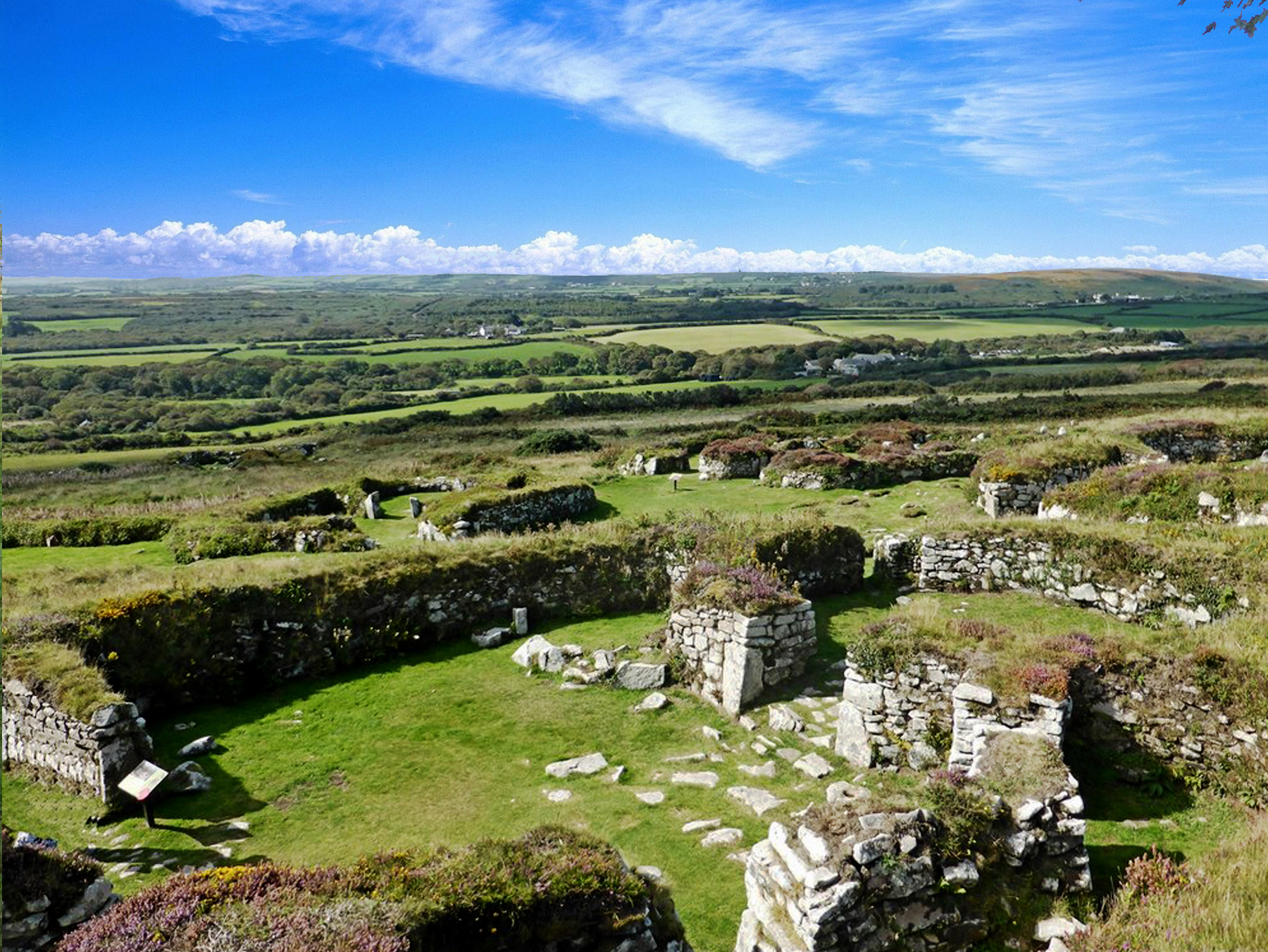
Chysauster Ancient Village is one of Britain's best-preserved Romano-British settlements, a cluster of nine distinctive stone courtyard houses arranged in two rows on a gentle hillside near Newmill, just outside Penzance. Unlike most Cornish prehistoric sites, which survive only as low foundations, Chysauster's walls still stand to a genuinely impressive height in places, giving visitors an unusually clear sense of how an ordinary Romano-British farming community actually lived.
The village takes its character from the courtyard house, a building style found only in far-western Cornwall and the Isles of Scilly, in which a group of rooms is arranged around a central open yard and enclosed within thick stone walls. Chysauster preserves this arrangement across nine separate houses, home to an estimated fifty to seventy people at its height between the first and third centuries AD, making it one of the most complete examples of everyday Iron Age and Roman-period life anywhere in Britain.
Beyond the houses themselves, the site includes a fogou — a stone-built underground passage characteristic of this part of Cornwall — and an elevated viewing platform giving a bird's-eye view over the whole settlement. Springtime brings a carpet of bluebells across the site, adding an extra reason to combine archaeology with a walk through the West Penwith countryside.
Chysauster is managed by English Heritage, with free entry and opening hours of 10am to 5pm daily; as with any site, it's worth checking the official website for the latest information before travelling, particularly outside peak season. The site pairs naturally with a visit to nearby Carn Euny Ancient Village, a few miles away, where a similar community's stone houses and fogou survive in an equally atmospheric, quieter setting.
Location Map
Visitor Guide
Visitors reach Chysauster on foot from a car park about half a mile away, along a track of gravel and grass that can become slippery after rain. The walk itself is part of the appeal, crossing open West Penwith countryside with views towards the surrounding hills, and in spring the approach and the site are often carpeted with bluebells.
Once at the village, informal paths lead between the nine courtyard houses, allowing visitors to walk through the remains of individual homes and pick out rooms, doorways and hearths in the substantial surviving stonework. The elevated viewing platform above the village gives a valuable bird's-eye perspective, making the overall layout of the settlement, with its two parallel rows of houses, much easier to appreciate than at ground level alone.
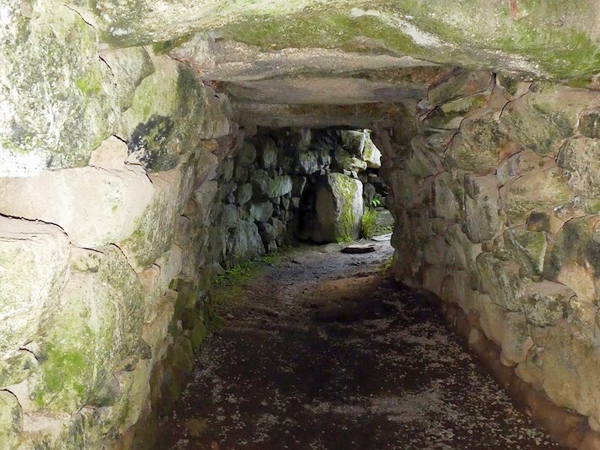
To the south of the village lies the fogou, a stone-built underground passage typical of far-western Cornwall. Its purpose remains uncertain, with storage, shelter and ritual use all suggested by archaeologists, and its condition and accessibility can vary, so it's worth checking current arrangements with English Heritage before your visit if exploring it is a priority. Above ground, the village's information panels help explain what visitors are looking at, and there is plenty of space to wander at a relaxed pace.
Allow around an hour for a visit, longer if combining it with a walk in the surrounding countryside or a stop at the viewing platform to take in the wider landscape. There are no facilities on site, so pack water and any refreshments you need, with Penzance around six miles away offering a fuller range of cafés, pubs and shops.
History
Chysauster's visible houses date mainly from the Romano-British period, though the settlement most likely developed from an earlier Iron Age community on the same site. Between the late first and third centuries AD, an estimated fifty to seventy people lived here in a group of courtyard houses, a building type distinctive to western Cornwall and the Isles of Scilly, in which rooms were arranged around a central open courtyard within substantial stone walls.
Life at Chysauster continued with relatively little disruption from Roman administration. The inhabitants farmed the surrounding fields, kept livestock, and most likely continued to speak a Celtic language ancestral to Cornish, much as communities did across far-western Britain during this period. The settlement's distinctly local architecture and layout show that Roman-period Cornwall retained a strongly independent, agricultural character even while connected to the wider Roman world through trade.
Chysauster appears to have been abandoned in the third century AD, without evidence of violent destruction, suggesting a gradual decline or shift in settlement patterns rather than a sudden event. Nearby prehistoric field systems indicate that the surrounding landscape had a much longer history of use, stretching back well before the courtyard houses were built.
One of the site's most intriguing features is its fogou, a stone-built underground passage probably dating from the later Iron Age. As with other Cornish fogous, its exact purpose remains uncertain, with storage, refuge and ritual use all put forward as possible explanations by archaeologists over the years.
Antiquarian interest in the site began in 1873, when William Copeland Borlase carried out the first significant excavation, with further investigation and consolidation work following in the 20th century. Today Chysauster is cared for by English Heritage and stands as one of Cornwall's most important archaeological landscapes, offering an unusually vivid and well-preserved picture of everyday life nearly two thousand years ago.
Important Features
- Nine courtyard houses: substantial stone-walled dwellings arranged in two rows, among the best-preserved examples of this unique Cornish building type.
- The fogou: a stone-built underground passage to the south of the village, probably dating from the later Iron Age.
- Elevated viewing platform: gives a bird's-eye view of the whole settlement and its layout.
- Village street: the route between the two rows of houses is still clearly traceable.
- Prehistoric field systems: traces of the wider farmed landscape survive around the village.
- West Penwith setting: part of one of the densest concentrations of prehistoric and Romano-British remains in Britain.
Visitor Information
Parking
A car park is located about half a mile from the village, open until 5pm (April–October) and 4pm (November–March).
Facilities
There are no facilities on site. Pubs and cafés are available in surrounding villages, with a fuller range in Penzance, about six miles away.
Disabled Access
The half-mile approach uses gravel and grass paths that can be slippery when wet, and the site has uneven ground throughout. Sturdy footwear is recommended.
- Opening times: daily, 10am–5pm. Check the official website for any seasonal changes before travelling.
- Public transport: limited rural bus services run towards Newmill; Penzance, about six miles away, has the nearest regular services and railway station.
- Toilets: none on site; nearest facilities are in Penzance.
- Food and drink: none on site; pubs and cafés are available in nearby villages and in Penzance.
- Shop: no shop on site.
- Dogs: welcome on leads.
- Booking: not required — free entry, no ticketing.
- Family facilities: no baby-changing facilities on site; the gravel and grass approach makes pushchair access difficult in places.
- Additional access: the elevated viewing platform and fogou both involve uneven or confined conditions; visitors with access needs should contact English Heritage ahead of a visit.
- Visit duration: around an hour, longer if combined with a wider walk.
Things to Do Nearby
Carn Euny Ancient Village
Sancreed, nr. Penzance
An atmospheric Iron Age and Romano-British settlement with stone houses and a famous fogou.
Find Out MorePenzance
About 6 miles away
West Cornwall's largest town, with shops, restaurants, a harbour and the Penlee art gallery.
Find Out MoreSt Ives
Nr. Newmill
A picturesque harbour town famous for its art galleries, beaches and the Tate St Ives.
Find Out MoreGeevor Tin Mine
Pendeen
One of Cornwall's best-preserved tin mine sites, part of a UNESCO World Heritage Site.
Find Out MoreLand's End
Sennen
Mainland Britain's most westerly point, with dramatic clifftop scenery and family attractions.
Find Out MoreFrequently Asked Questions
Official English Heritage Site
For the latest opening times, admission details, events and any temporary restrictions, check the official English Heritage page for Chysauster Ancient Village before you travel.
Explore More Cornwall Heritage
All English Heritage Sites Cornwall Attractions National Trust Cornwall
Page last updated: 24 August 2026.