About Lanhydrock House
Often called the finest house in Cornwall, Lanhydrock stands at the bottom of a wooded valley near Bodmin, reached by a long avenue of beech and sycamore that sets the scene before the house even comes into view. It sits within an estate of almost 1,000 acres of parkland, woodland and heath, with two miles of the River Fowey running through it, and is encircled by gardens of rare shrubs and trees that give colour whatever the season. Despite its scale, Lanhydrock has the unmistakable feel of a family home rather than a grand showpiece — the kind of house that was lived in right up until it passed to the National Trust, and it still shows.
Inside, visitors can explore 49 rooms across the house, offering a genuinely two-sided view of Victorian life. On one side are the family's own rooms — richly furnished sitting rooms, bedrooms, and a nursery wing kitted out for a large Victorian household of children. On the other is the world that supported them: a vast kitchen, larders, a dairy, and the maids' and menservants' bedrooms, all preserved as they would have been run day to day. Few houses in Cornwall show both halves of that life so completely, or in such close detail.
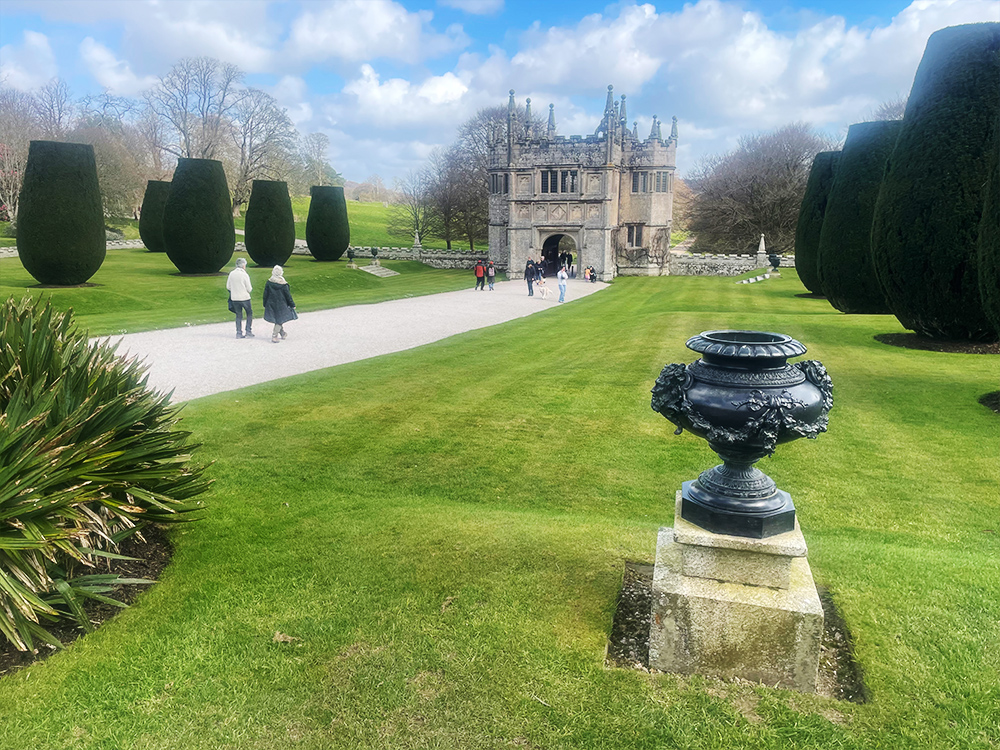
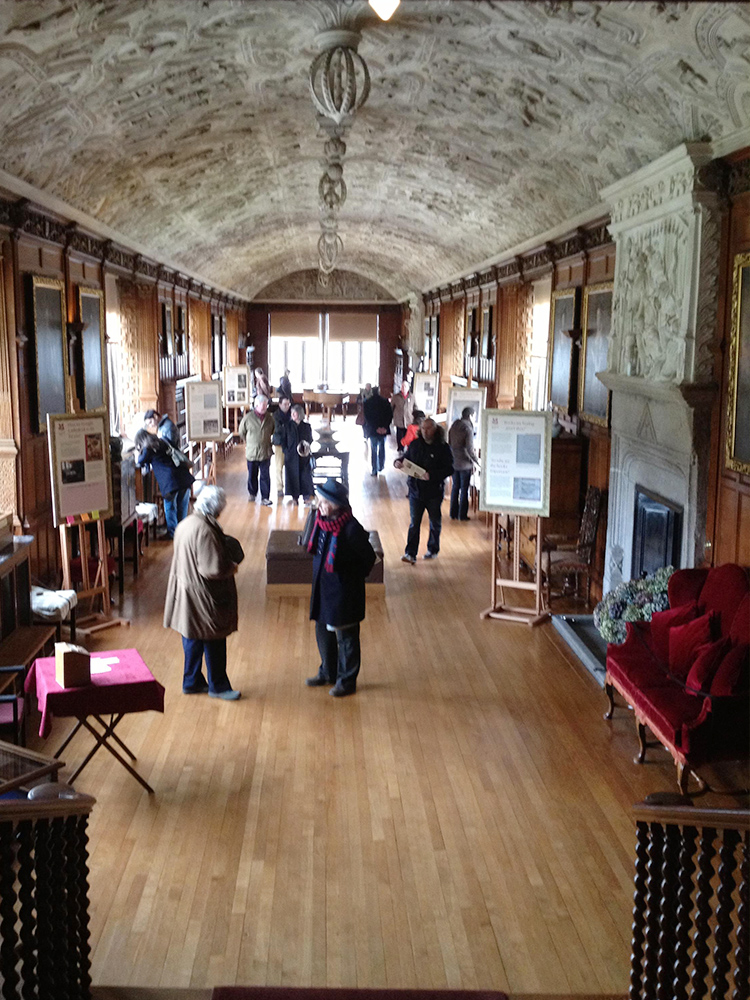
First built in the 17th century and largely rebuilt after a devastating fire in 1881, the house's principal rooms retain their beautifully worked plaster ceilings, which somehow survived the blaze intact. Most famous of all is the Long Gallery, where a mid-17th-century ceiling — one of the finest of its kind in the country — illustrates scenes from the Old Testament in elaborate plasterwork relief. Visitors pass into the grounds through a crenellated gatehouse, built in 1651 and one of the few parts of the original house to survive the fire untouched. From there, an idyllic walk leads down through the parkland to the River Fowey at Respryn Bridge and back through the woods — not to be missed if you have the time.
Gallery
Inside the House
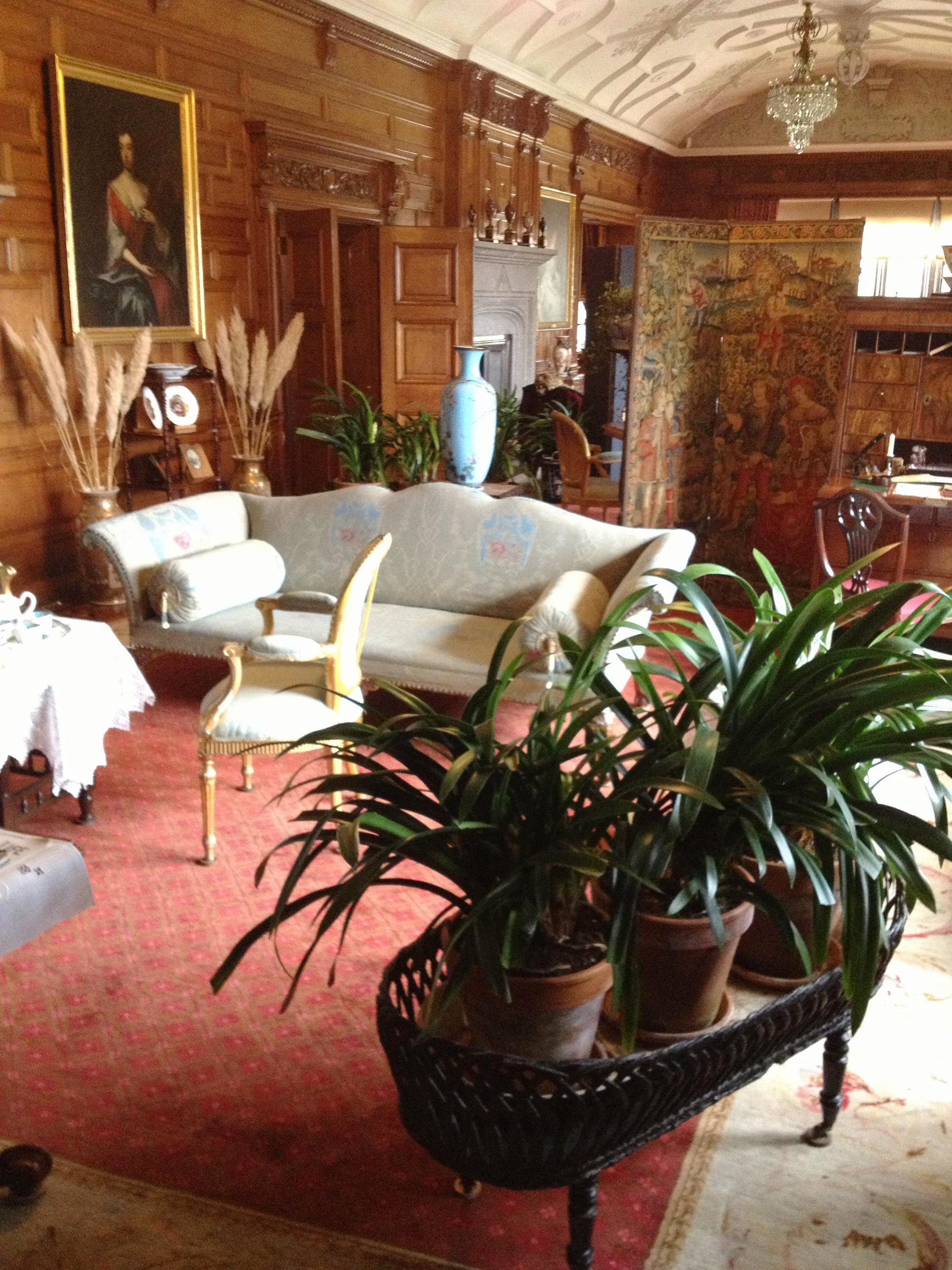
Lanhydrock offers a rare window into both sides of Victorian life. The kitchen, larders, and dairy still hold the utensils and equipment once used to feed a great household, while the cellars, bakehouse, and servants' quarters are open to explore alongside the family's own apartments.
The undoubted highlight is the Long Gallery in the surviving north wing, where an elaborate plaster ceiling — created by local craftsmen in the mid-17th century — depicts scenes from the Old Testament. The house is furnished largely in Victorian style, though it also holds earlier 18th-century furniture and tapestries.
A Cornish Family's Rise
The Robartes family rose to prominence in the 16th century through the Cornish tin trade, working as merchants and bankers. Richard Robartes was knighted in 1616, and by 1625 he was wealthy enough to be made Baron Robartes of Truro — a title reportedly costing him £10,000 in the process.
Lanhydrock's history reaches back much further, though. The estate began as a monastic barton (farm) belonging to the Priory of St Petroc in Bodmin. After the Dissolution of the Monasteries, it passed to the Glynn family, then by marriage to the Lyttelton family, and later to Thomas Trenance. In 1620, Trenance's son sold the estate to Sir Richard Robartes, beginning more than three centuries of Robartes ownership.
Sir Richard died in 1634, leaving his son John — already a leading figure among Cornwall's Parliamentarians — to continue the building work, including the gatehouse, completed in 1651. When civil war broke out, John declared for Parliament and garrisoned Lanhydrock, but in 1644 Royalist forces under Sir Richard Grenville seized the estate. John escaped by sea to Plymouth, though his children were held prisoner at Lanhydrock. He later became governor of Plymouth and helped raise the Royalist siege of the town.
Fire and Rebirth
Thomas James Agar-Robartes took the Robartes name in 1822 and inherited the estate from his mother in 1861. He was created Baron Robartes of Lanhydrock and Truro in 1869 — but on 4 April 1881, disaster struck: a fire tore through the house, leaving only the north wing, entrance porch, and gatehouse standing. Lady Robartes, then 68, was rescued by ladder from an upstairs window but died from shock days later. Lord Robartes never recovered from the loss of his wife and family home, and died the following year.
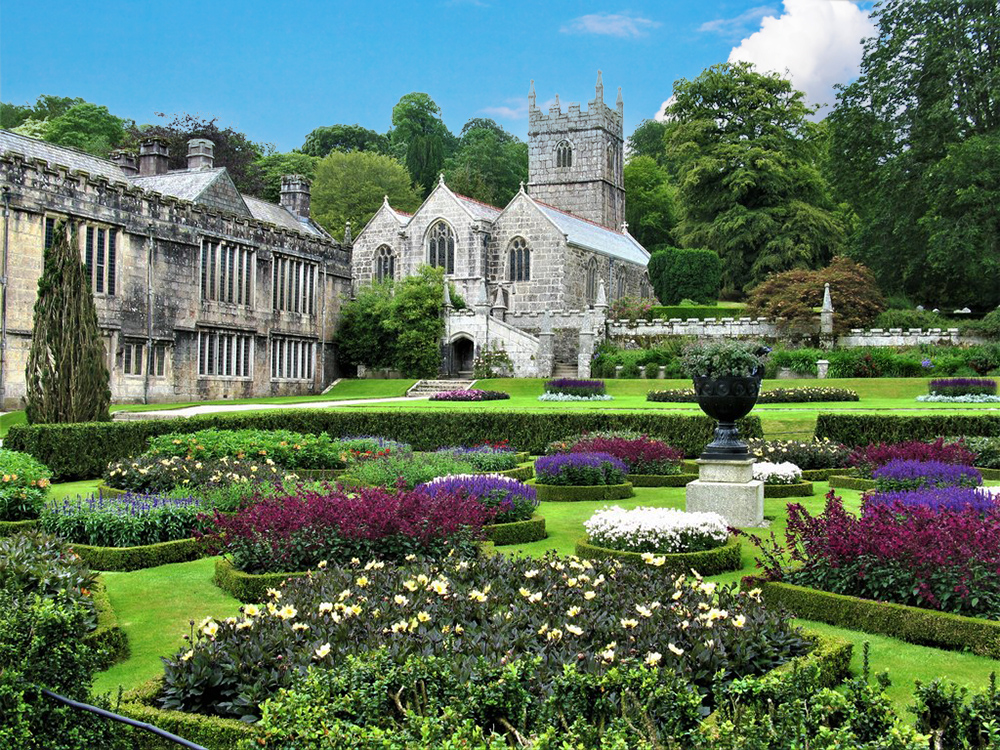
Their son, Thomas Charles Robartes, succeeded as 2nd Baron Robartes and rebuilt Lanhydrock using the original grey granite, creating the symmetrical house — arranged around three sides of a courtyard — that visitors see today. Once complete, he restored the neighbouring church in memory of his parents.
Lanhydrock remained in the Robartes family until 1953, when the 7th Viscount Clifden gave the house and estate to the National Trust.
The Gardens
Around 30 acres of garden surround the house, and there's genuinely something in flower here whatever the season — this isn't a garden that peaks for a few weeks and then goes quiet. Snowdrops and magnolias open the year, herbaceous borders and roses carry the display through summer, and camellias and rhododendrons bring colour back again into autumn and early spring. It rewards a proper wander rather than a quick circuit.
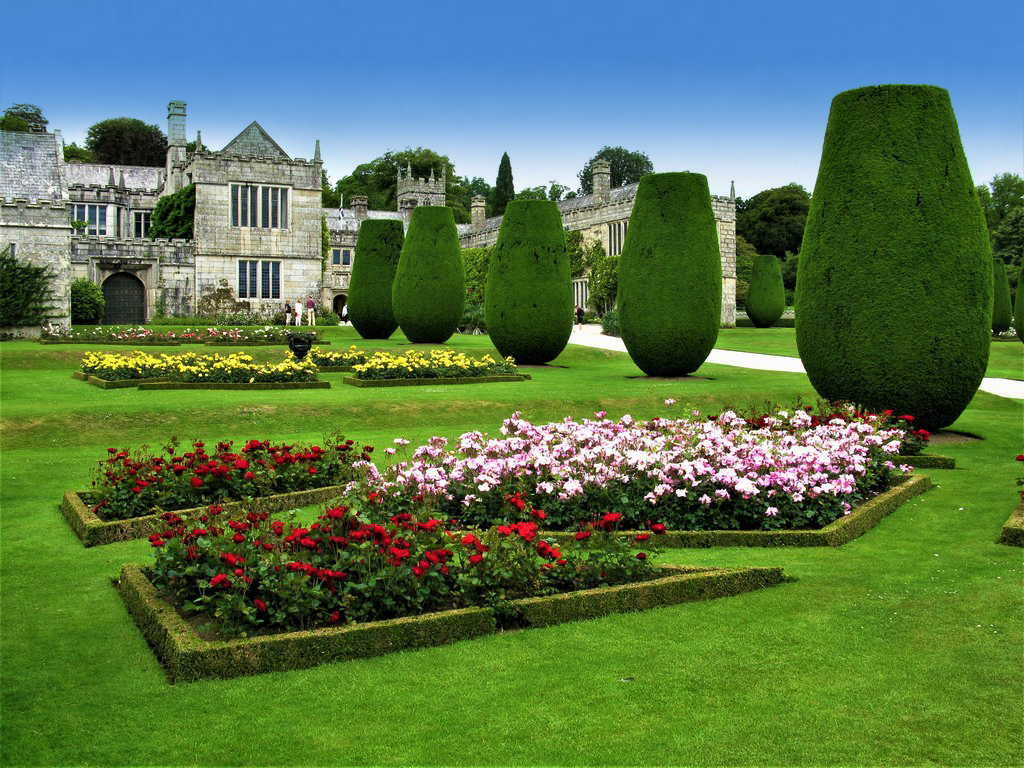
In front of the house, an enclosed formal garden is dominated by 28 mature Irish yews, planted in 1857 and still hand-pruned into their tight, sentinel columns every summer — one of Lanhydrock's most photographed sights. Alongside them, a fabulous formal parterre and box-edged rose beds bring a touch of grandeur, with beautiful herbaceous borders running along the garden's edges at their fullest through the summer months. Look out for the bronze urns dotted through the parterre — originally from the Château de Bagatelle in Paris, they were brought to Lanhydrock by the 7th Viscount Clifden in the 1920s.
Higher up, the garden turns more informal and semi-wild, with colourful woodland planting of camellias, magnolias and rhododendrons thriving on the sloping ground and blending naturally into the surrounding oak and beech woodland. The magnolia glade is the standout in early spring, but camellias and rhododendrons keep the higher garden going well beyond it.
Beyond the garden walls, the wider parkland opens out into almost 1,000 acres of woodland, heath and meadow, including two miles of the River Fowey. Ancient avenues of beech and sycamore, veteran oaks, and a network of footpaths and cycle trails make this as much a place for a long walk or ride as a house and garden to explore, with the landscape shifting from clipped formality near the house to wilder, older woodland further out.
Visitor Information
- Address
- Lanhydrock, Bodmin, Cornwall, PL30 5AD (main car park: PL30 4AB).
- Opening times
- House and garden open daily, roughly March to October — typically house 11am–4.30pm, garden 10.30am–5pm. The house and garden close over winter, but the parkland, woodland trails and Park Café stay open year-round, dawn to dusk. Hours vary by season, so check the official Lanhydrock page before travelling.
- Admission
- Free for National Trust members. Non-member admission charges apply for house & garden — check the National Trust website for current pricing.
- Facilities
- Park Café and Stables Café (Courtyard Restaurant), gift shop, plant centre and a second-hand bookshop in the courtyard.
- Dogs
- Allowed in the gardens (except the Herbaceous Circle), parkland, wider countryside, courtyard area, cafés and the second-hand bookshop. Assistance dogs only in the house and shop.
- Accessibility
- Several steps, ramps and slopes; an access buggy runs between reception and the gatehouse daily. The lift in the house is in operation, and manual wheelchairs and powered mobility vehicles are available. Accessible toilets are opposite the Park Café and in the Stables courtyard.
- Note
- Bags larger than 36 x 26 x 12cm aren't permitted inside the house and must be left in the free lockers at the bag drop.
- Contact
- 01208 265950 / lanhydrock@nationaltrust.org.uk
Opening times, admission prices and facility availability change seasonally — please confirm details on the official National Trust site before your visit.